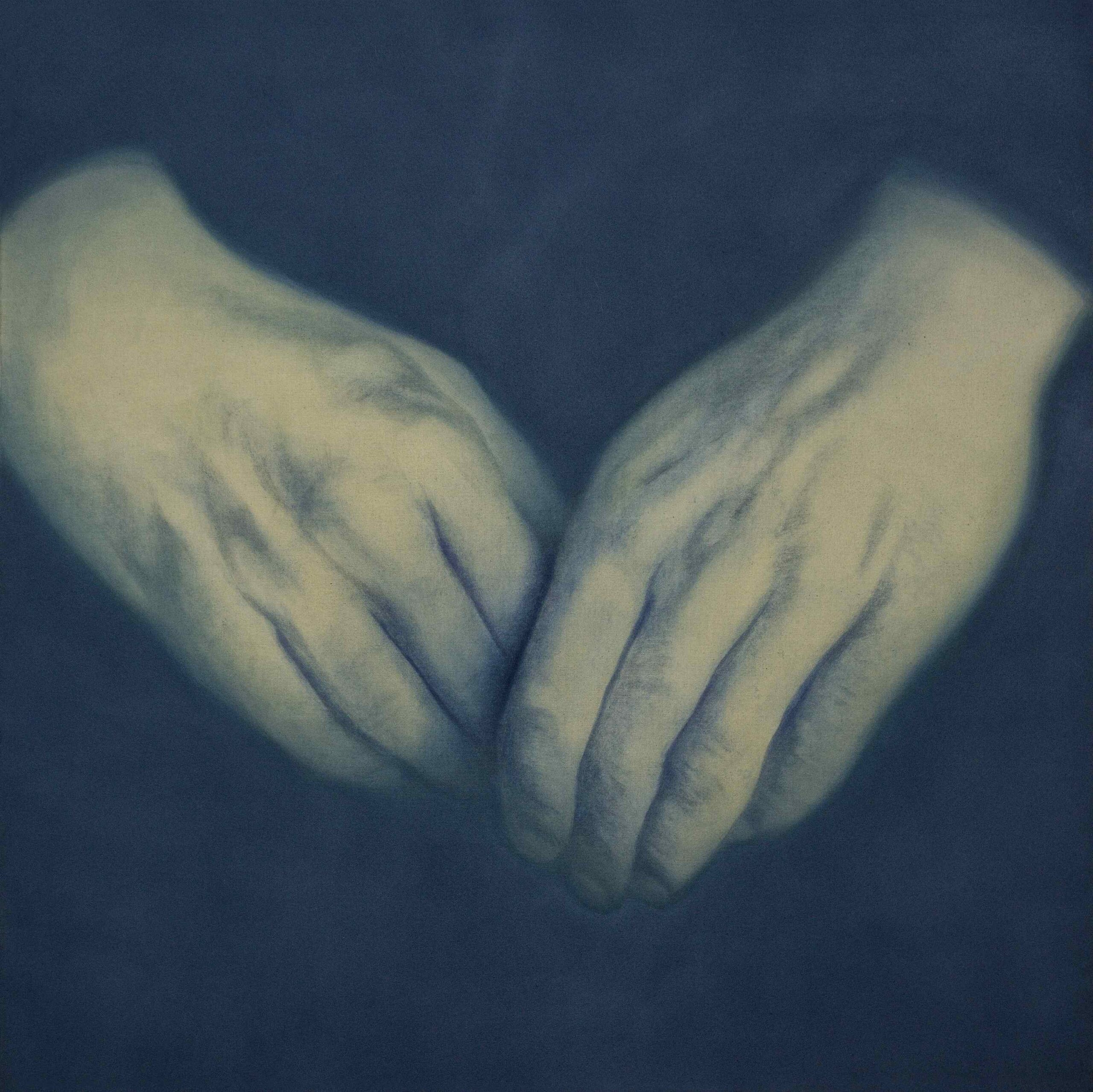
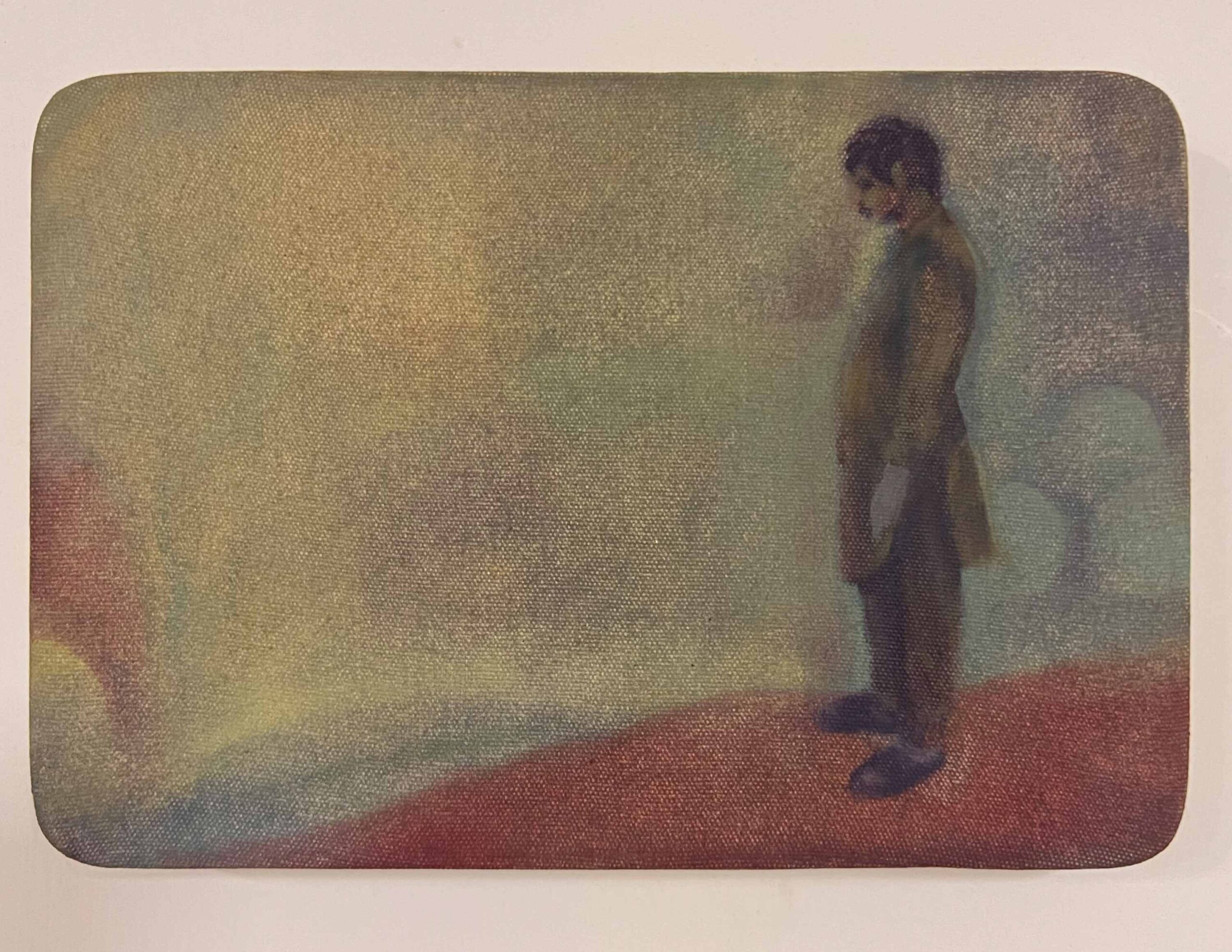
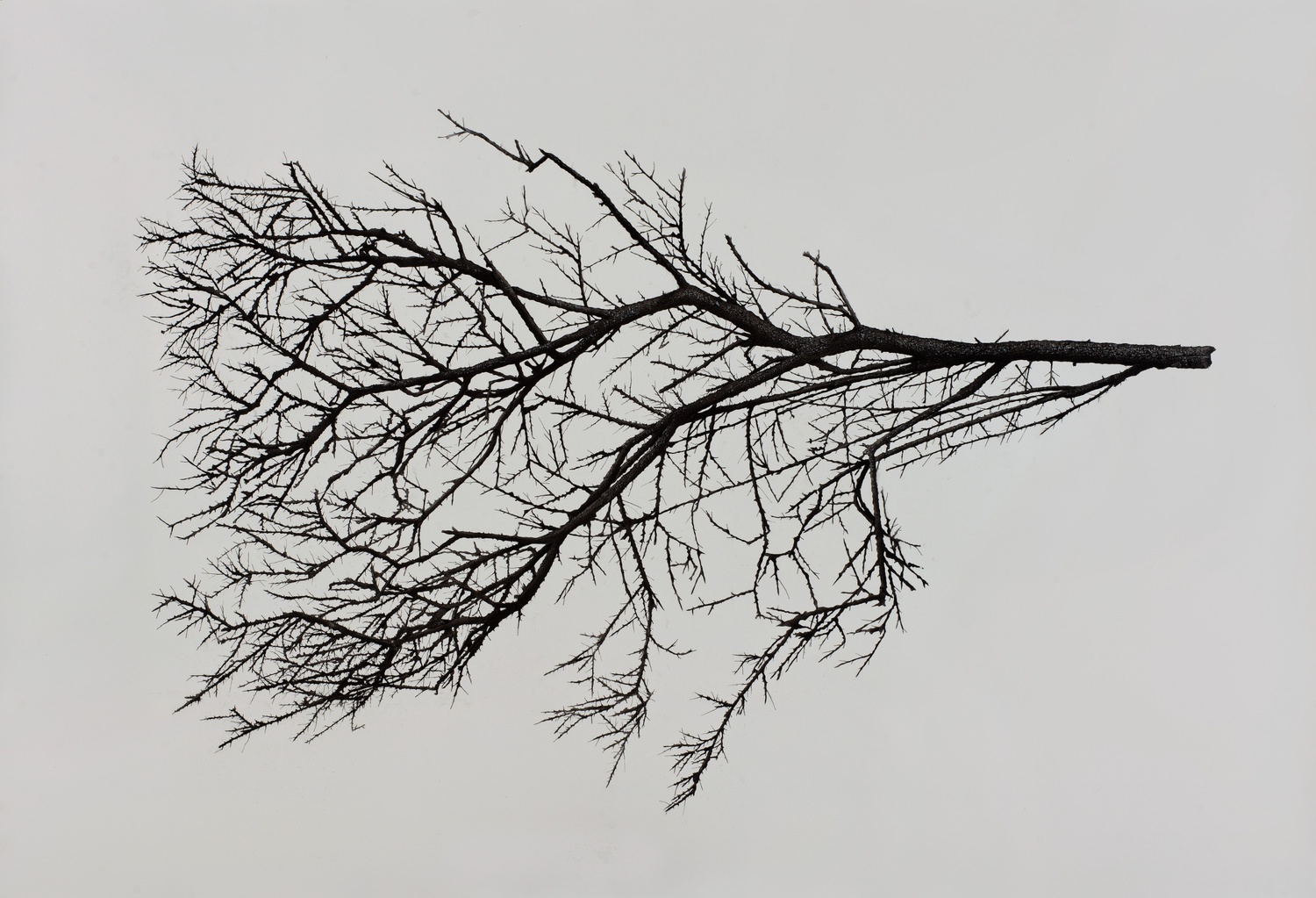
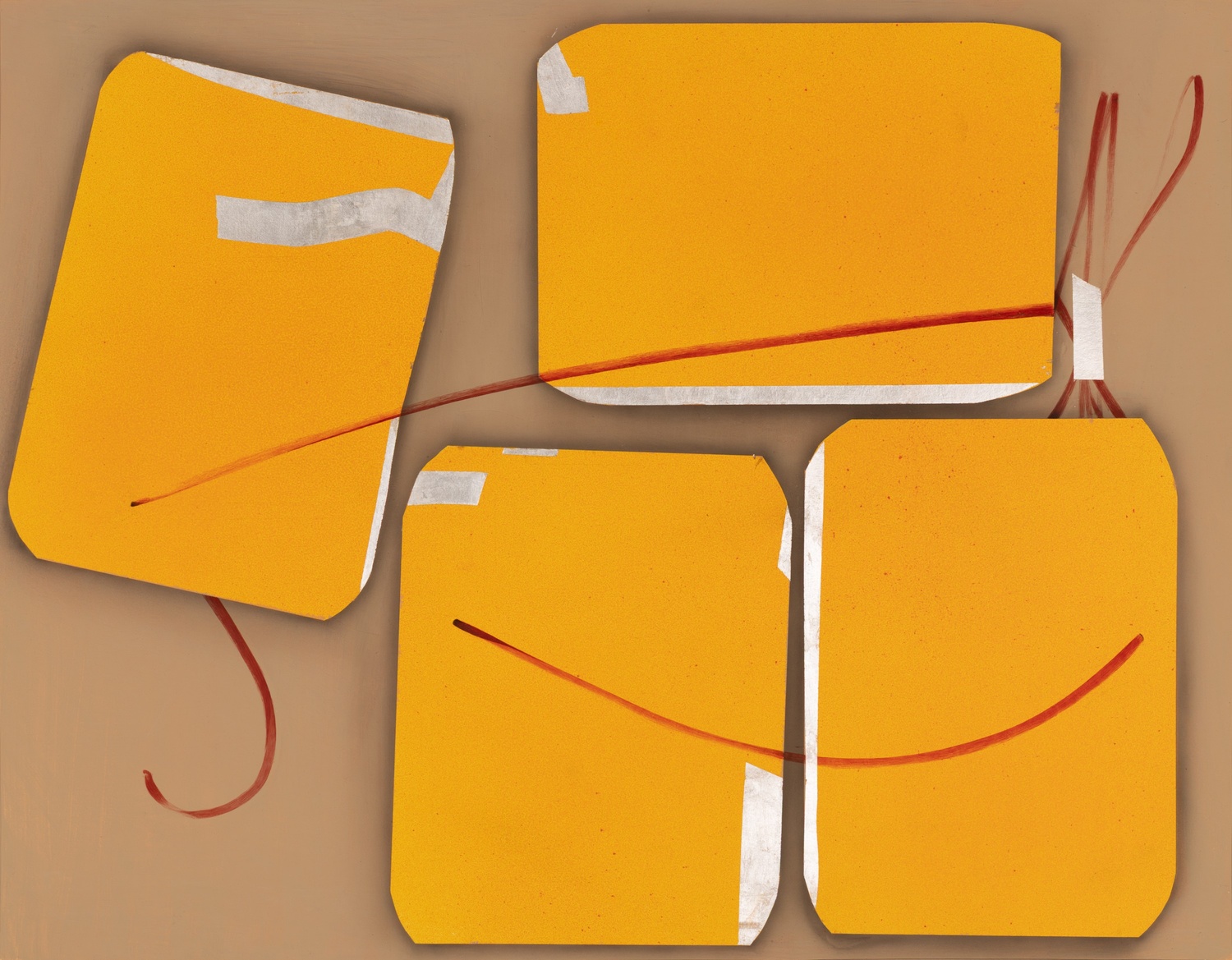
Sahyr Sayed examines the contradictions of loss and yet vulnerable tentative hope of domestic hoard. She complicates our understanding of such an impulse to be more humane than mere pathology. The desire to collect useless odds and ends is inwardly imagined as moral, a protest against waste and relentless rapid cycles of obsolescence. From a female perspective, Sayed’s work evokes a nuanced appreciation of objects as keepers of potential, as fragments of a future that might call them back into purpose. She draws on the generational labor, care and inventive thrift in making and maintaining a home. The hoard is thus imagined as an extension of the female body, stretched implausibly, called to countless arbitrary tasks, its form never fully demarcated.
However, Sahyr treads carefully around this empathetic perspective of domestic hoarding and is careful not to slip into tropes of sentimentality. Her works are cognizant of the Sisyphean nature of collecting, caring for, and maintaining objects, recognizing that cracks and imperfections are, by design, inevitable.
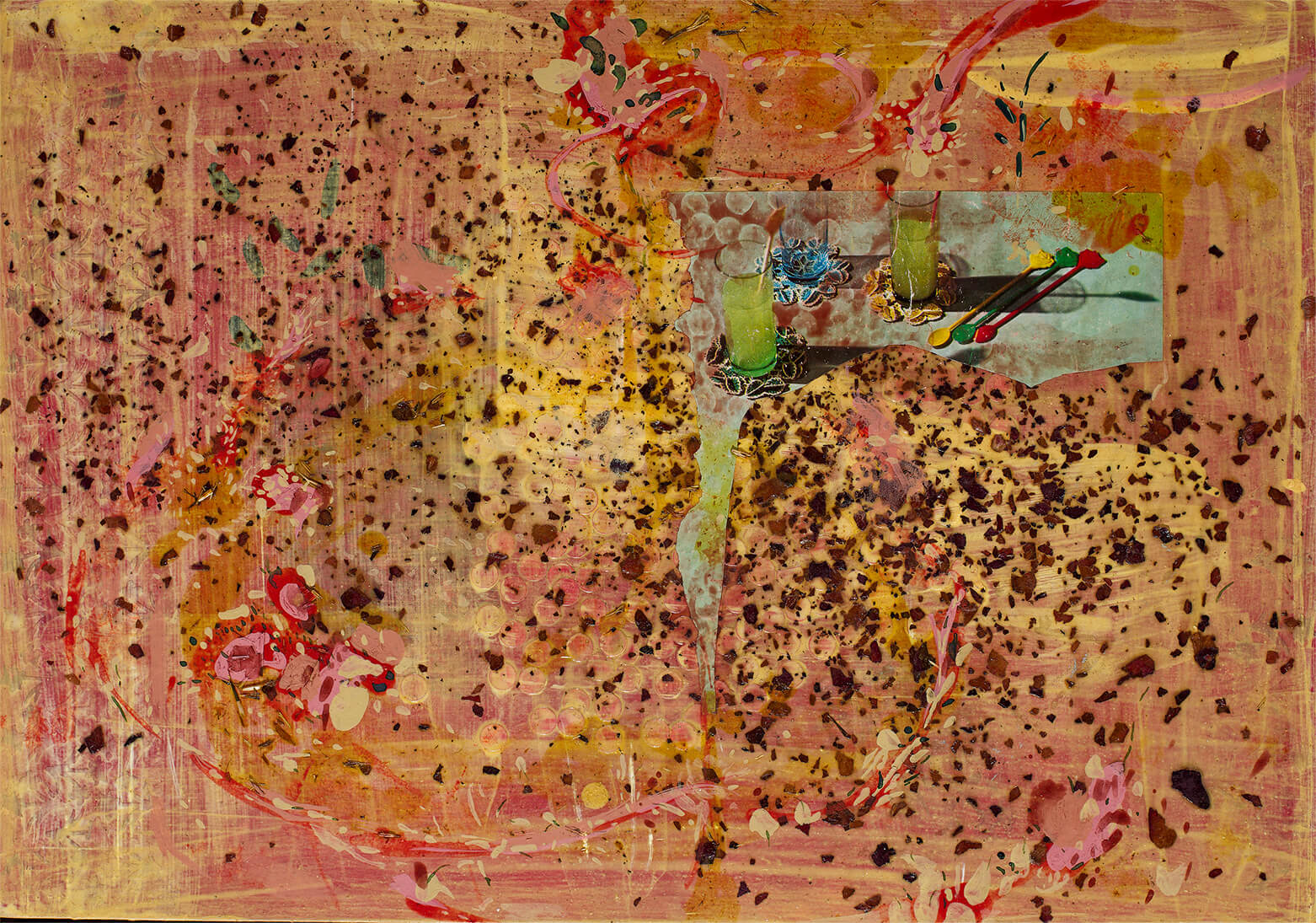
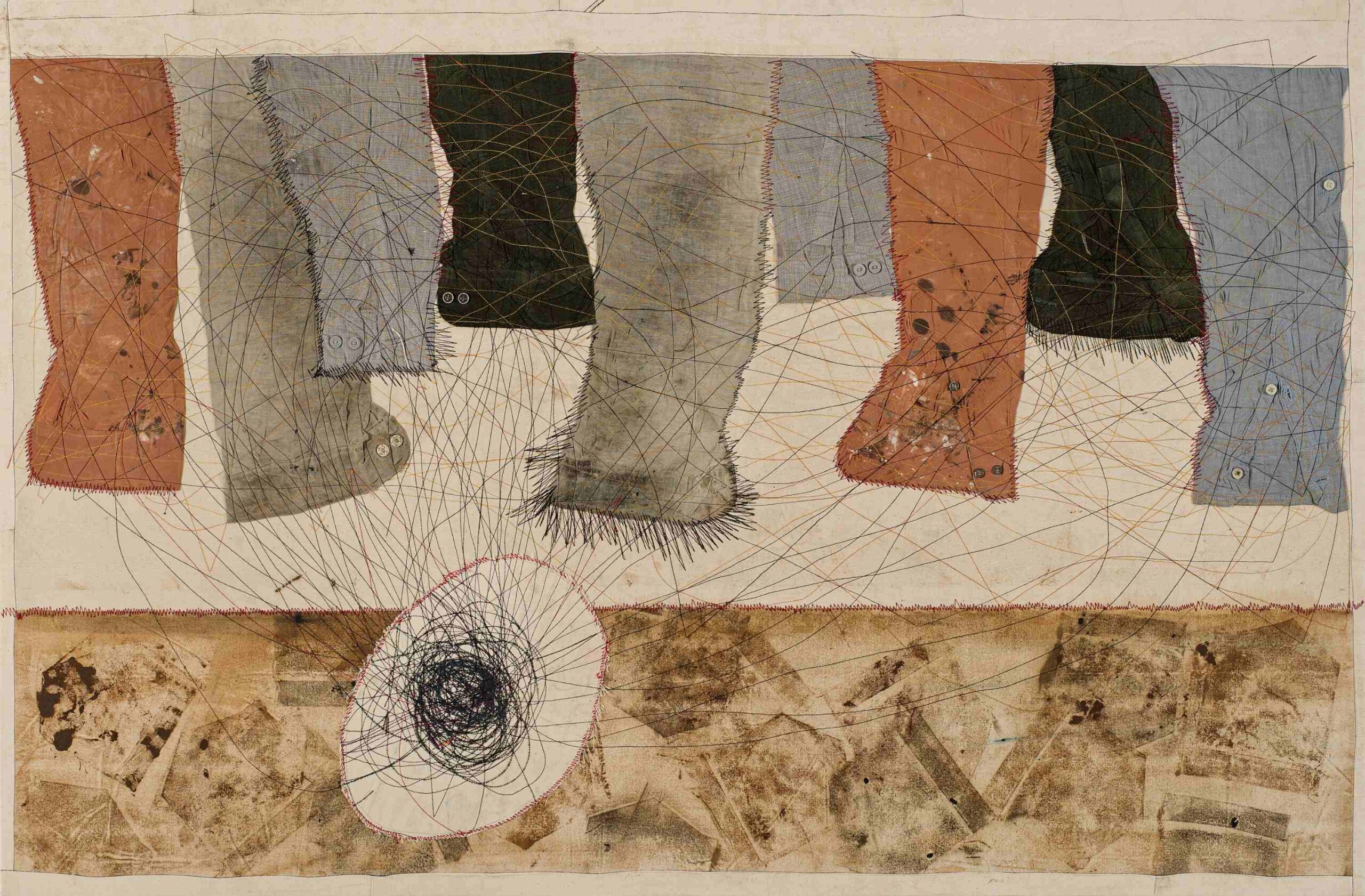
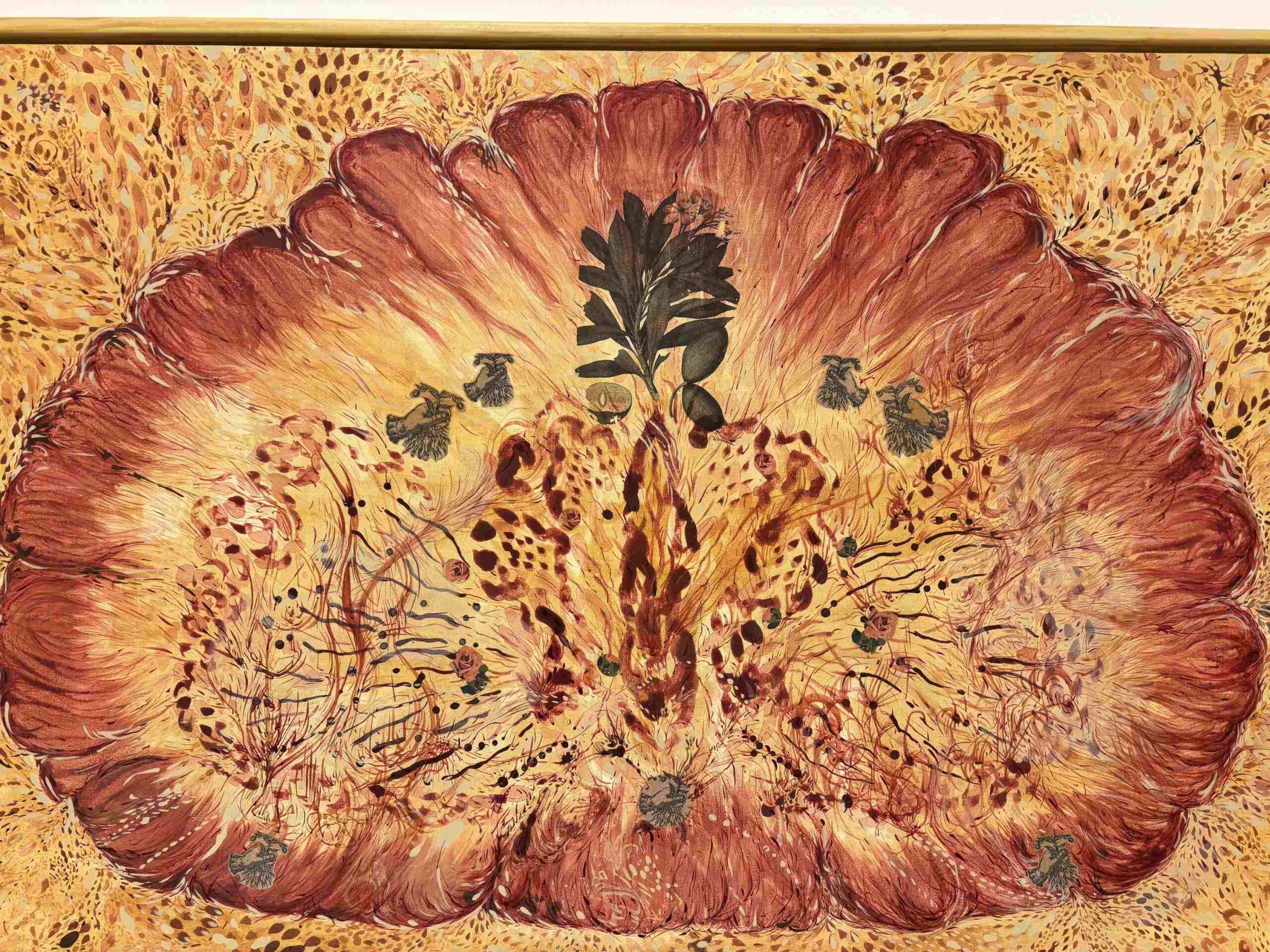
Sahyr’s processes are a microcosm of her concerns. She sources indiscriminately from materials of repair, home improvement, natural debris, vernacular archives, found images, textures and others. The resultant works are complex layered images that appear to coalesce and disintegrate at the same time. They are rich with hints of representation: a glimpse of a fleshy fruit, a stroke suggesting the flow of water, another resembling a botanical ornament, a serving tray or a window grill. Yet, the primacy of gesture remains the overwhelming appeal of these images. These gestures are amassed into a calligraphic swarm, resembling networks and schematics. Thus, Sahyr transforms the specificity of personal reference into the universality of abstraction. The complexity, depth and sensitivity of this works invites a return, a second look for these are surely designed to reward a prolonged and sustained engagement.