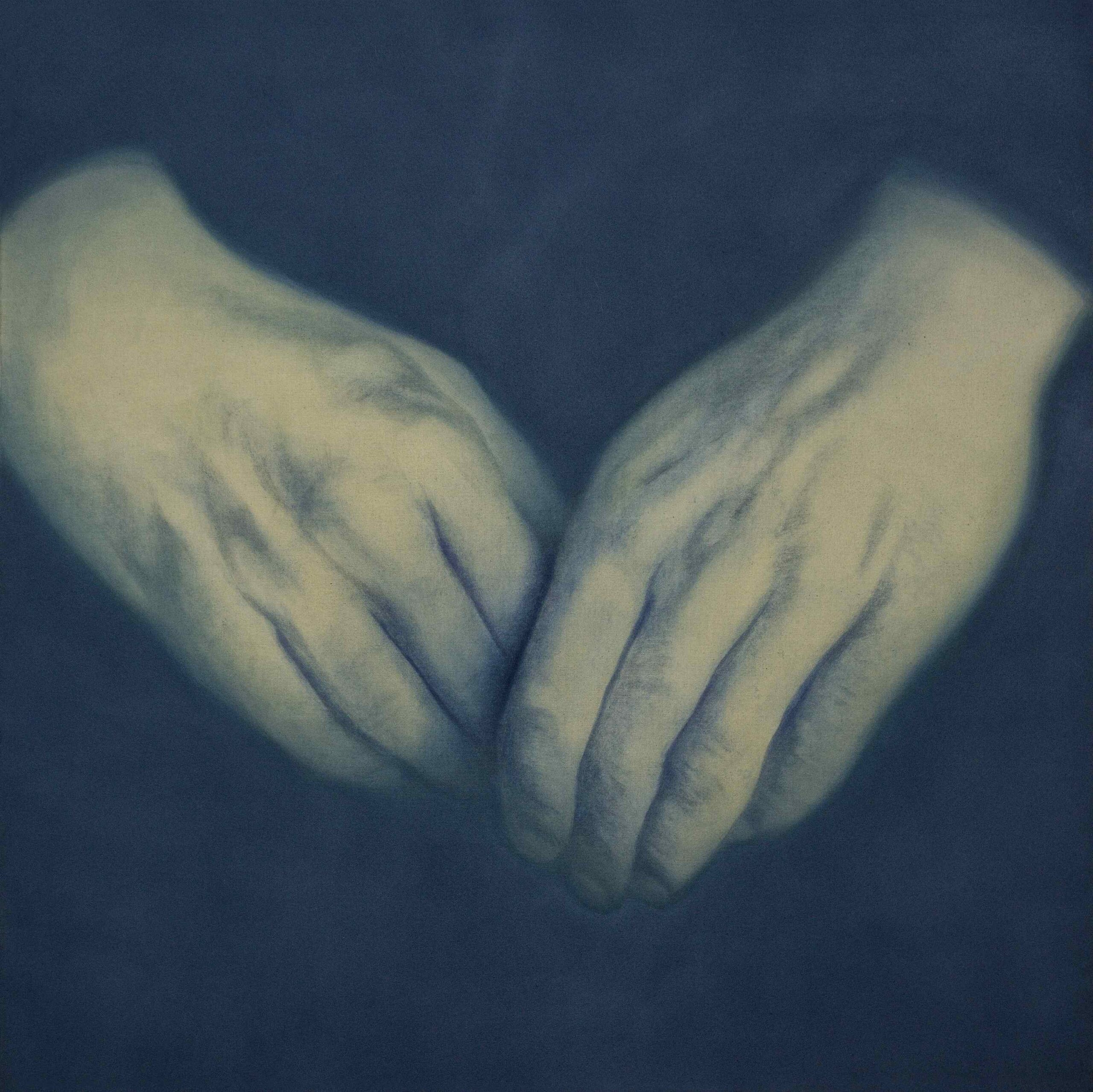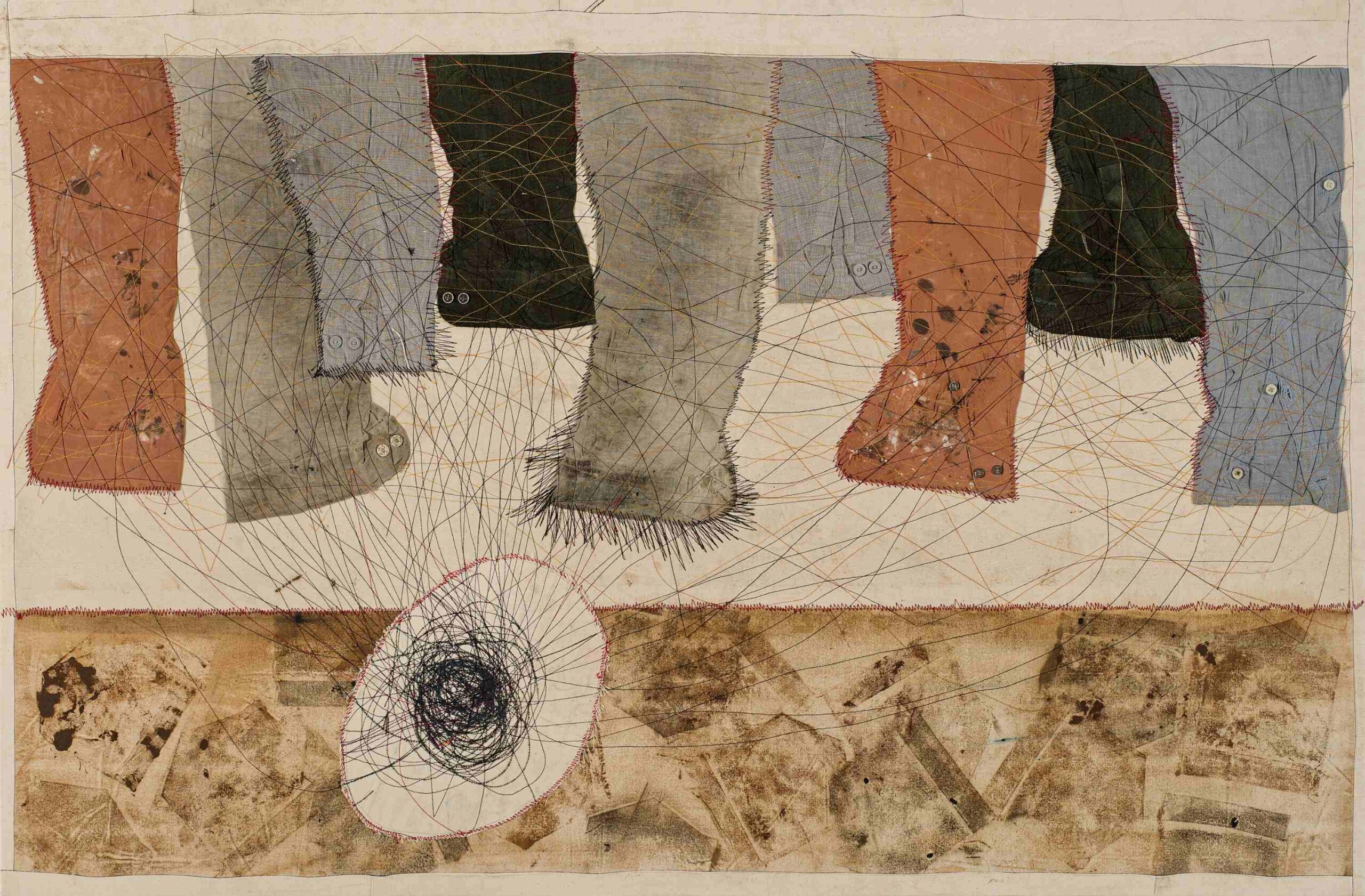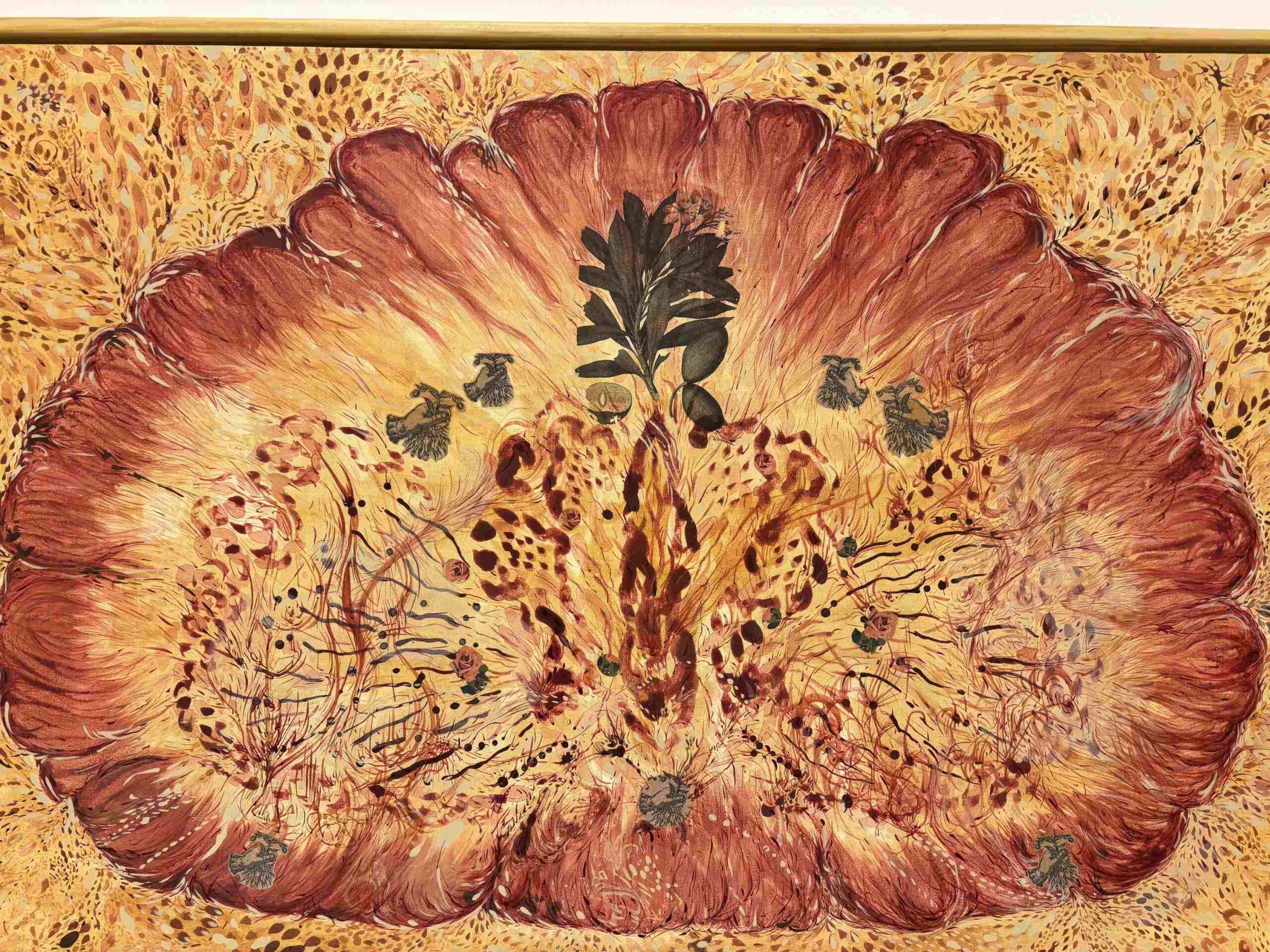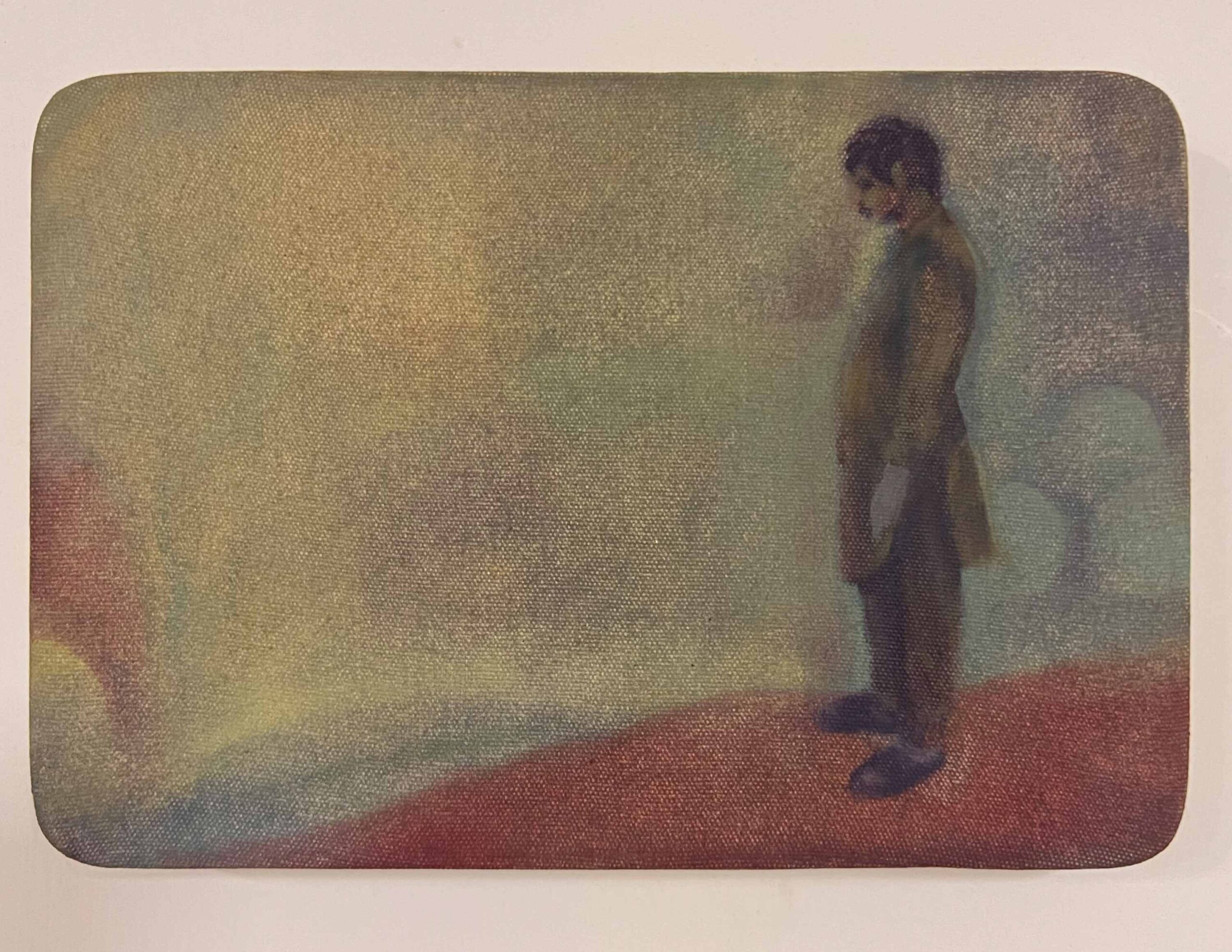
The first line made on a surface for a drawing can be interpreted as a kind of gesture. This mark may have been made in seconds but the casual effortlessness- its spontaneity- belies the endless hours of practice and discipline that was required to master its immediacy. The primacy of the gesture has been central to the mythology of modern painting and at first glance this is what we assume is being presented to us as we view Hammad Gillani’s works. On closer inspection one senses a paradox: the strokes are neither singular not spontaneous. Each line has been reconstructed through the layering of innumerable dots and strokes; they are built up in layers but the gesture itself appears as if it was produced almost instantaneously in seconds. Rather than recording a moment or event, Gillani fabricates it. This mimicry of gestural or spontaneous sketching reconfigures our understanding of time when we look at Gillani’s style of constructing the stroke. Infact the longer we look, the more certain we are that the coherent, resolved gesture in drawing so central to Europe/Western tradition is no longer materially embedded on the surface of Gillani’s paintings. Its veracity has been compromised.
Historically, the sketch and process in general was often overshadowed by closure that came in the form of painterly expression and skill; the sketch was followed by a painting. Although many skilled draughtsmen cemented the contribution of drawing but in the hierarchy of art, painting existed at
the very top which meant that it was the pinnacle of refinement. With the arrival of Pollock and his eureka moment of discovering his signature style, the gesture was transformed into an event. Mythologized and finally commodified, this deification came at a cost. The processes of making were eclipsed by the myth of the inspirational moment till a barrage of other movements followed that gradually supplanted their own discourses, ushering in a new era.
Gillani toys with this history of the embodied gesture. He lulls the viewer into what can best be described as an elusive ontological trap. We admire the effort that went into the creation of each work but the visibility of the mark now exists both as an illusion and as a site of labour-intensive making. One is forced to contend whether the whole is greater than the sum of its parts or vice versa. The weight of the gesture is now at odds with the compression of time. This destabilizing of time is the fulcrum or pivot of Gillani’s practice. Through this inversion of the sketch-like gesture the viewer’s sensory and optical experience hovers between the conception of the gesture and the laborious temporality of its making.
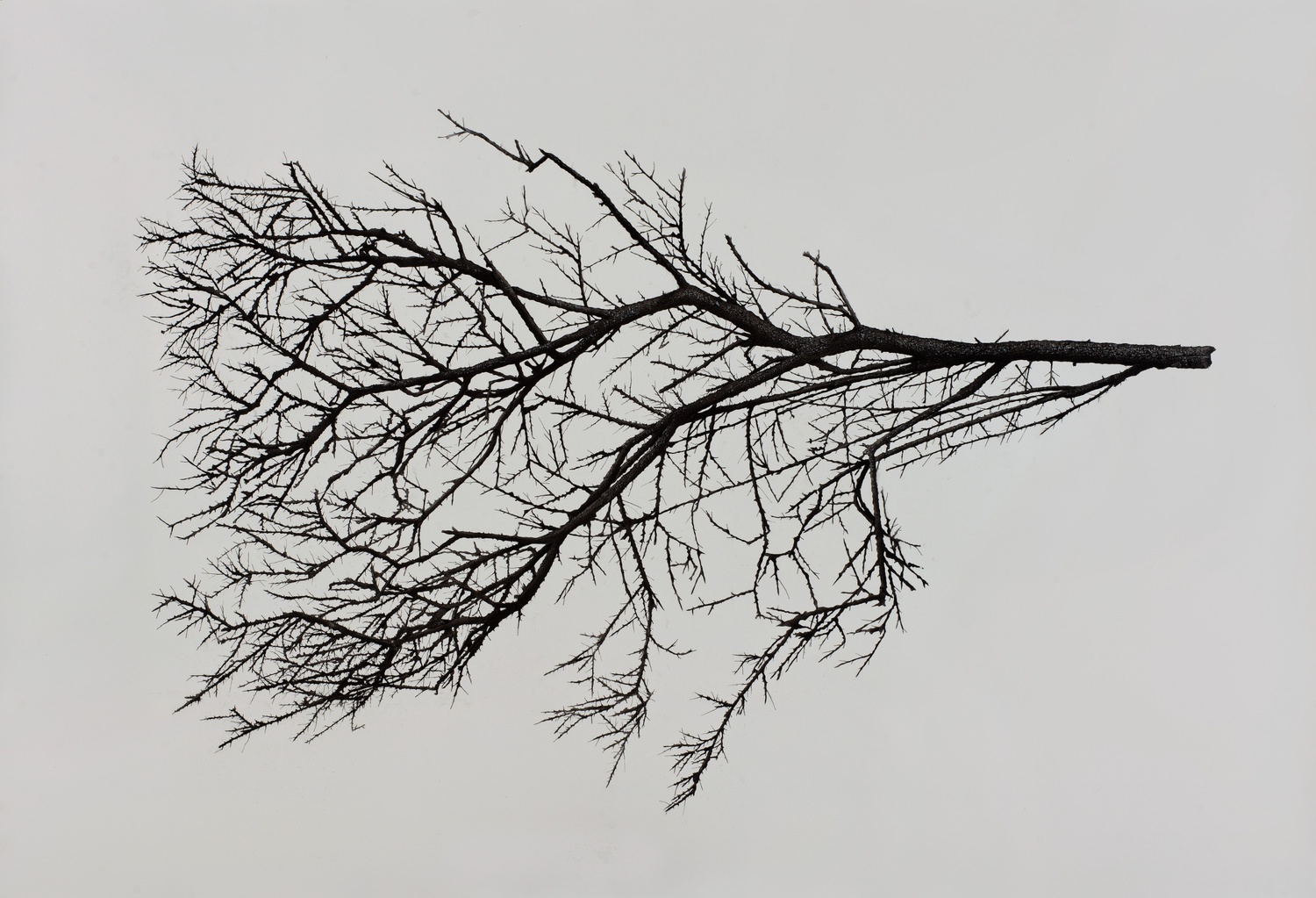
The result is a state of uncertainty in perception that lends itself perfectly to unsettling images of both beauty and/in violence. This is apparent in the duality of the title which evokes two different states of mind and their tension: “War and Peace.” The simultaneity and its contradiction is not lost on the viewer. Deeply held assumptions of what visually constitutes as beauty, life, flowers in a field, a gun, a fallen tree trunk, violence can now be challenged as they are caught in the crosshairs of an existential crisis. What constitutes as a painting if the moment of its origin-its truth in the form of a singular mark vaunted and mythologized by structures, institutions, traditions and history- is suspect because it too is now revealed to be the cumulative result of laborious and exacting hours of time?
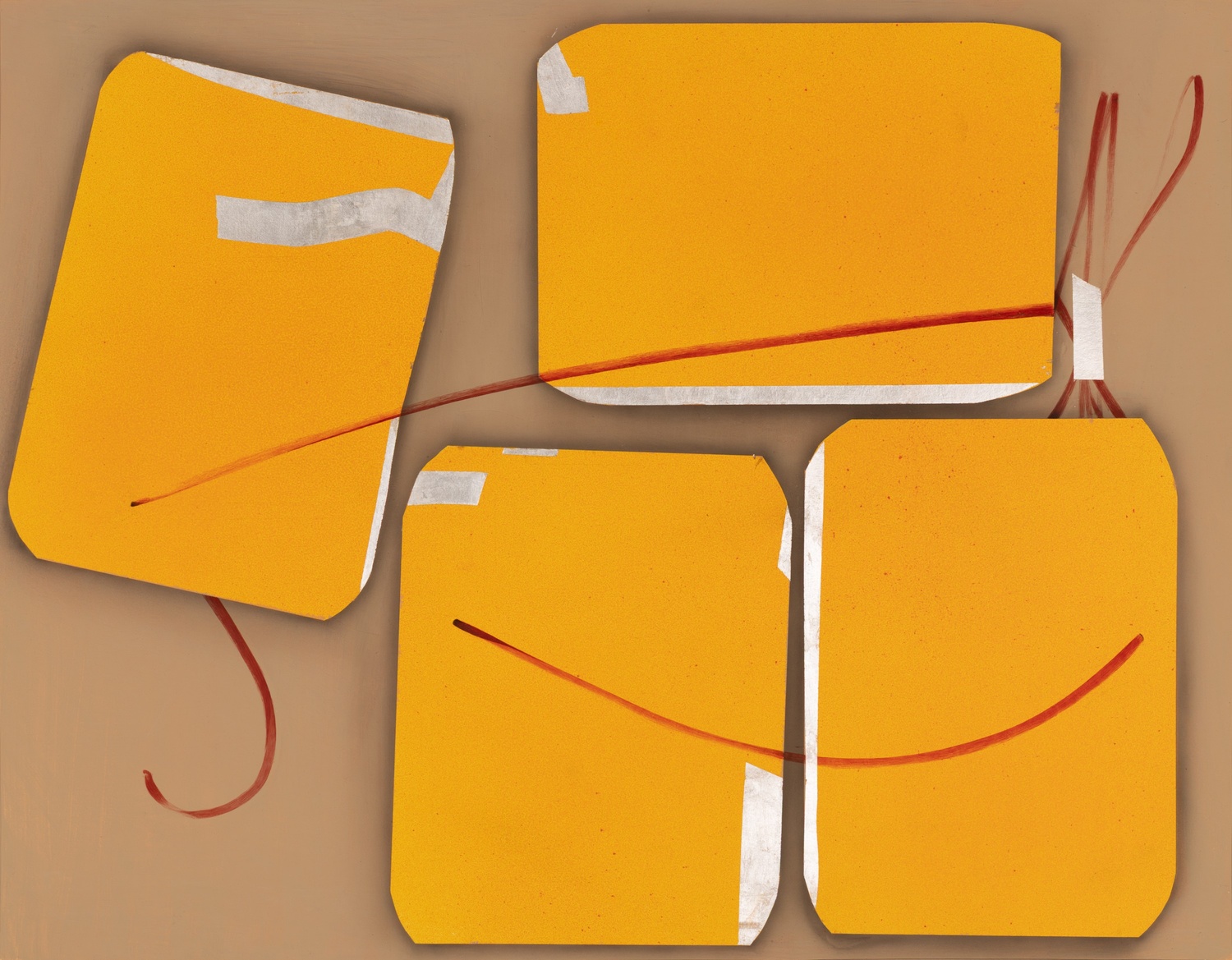
Gillani’s body of work can be divided into smaller thematic clusters but on first glance one can see an interest in both abstract and representational forms. Some of his experiments with non-representational expression consist of paintings of marks that explain the process, indecisiveness and struggle of understanding line and its immediacy.
In “War and Peace’ most of his works use the temporality and instantaneousness of line as a measure of speed. The staccato of a gun, the speed of bullets ricocheting off walls, ripping through flesh, tearing and decapitating with precision; the theatre of violence is stripped down to the parsimonious gesture. This distillation of the indexical power of an act of violence exposes the apparatus at play in the execution of its brutality: whether it is a felled tree or a shrouded corpse the presence of the executioners fills the space. Despite the lack of lurid, graphic detail we are so use to consuming as visual noise can such a pared down image still compel us enough to evoke revulsion for the cold-blooded dehumanization it is meant to convey? It can and that too with a flourish. Hot red lines are overlaid on the suggestion of corpses: rough, agitated horizontals, vicious zig zags and angry squiggles. There is beauty and an intense struggle to grapple with emotion in this bloodbath. Yet the force of Gillani’s expression remains tied inversely to an austerity of detail. This kind of uncertainty is productive. It is this tension in Gilani’s practice that helps locate it at the threshold of representation.
Many of his works suggest prone, lifeless bodies lying in rows next to rows of sketch-like forms of rifles as if they will be readied for a post-mortem after this spectacle ends. There is little colour. Chilling as it is, most of these works are labelled “Stillifes.” This diagrammatic impulse and its objectivity is presented as a contrast to primal forces. The red is meant to suggest blood but in other works the marks could be splatters floating as amorphorously as the spectral forms. Or perhaps they are petals dispersing into the air? Gillani’s images are explicit in their execution of violence, however they are not borne of the mere saturation of images but of an aversion to their ubiquity: he uses his gestural technique to expose the vacuousness of a world that has too much visual stimulation but no answers that can compensate for these tangible, visceral, senseless acts.
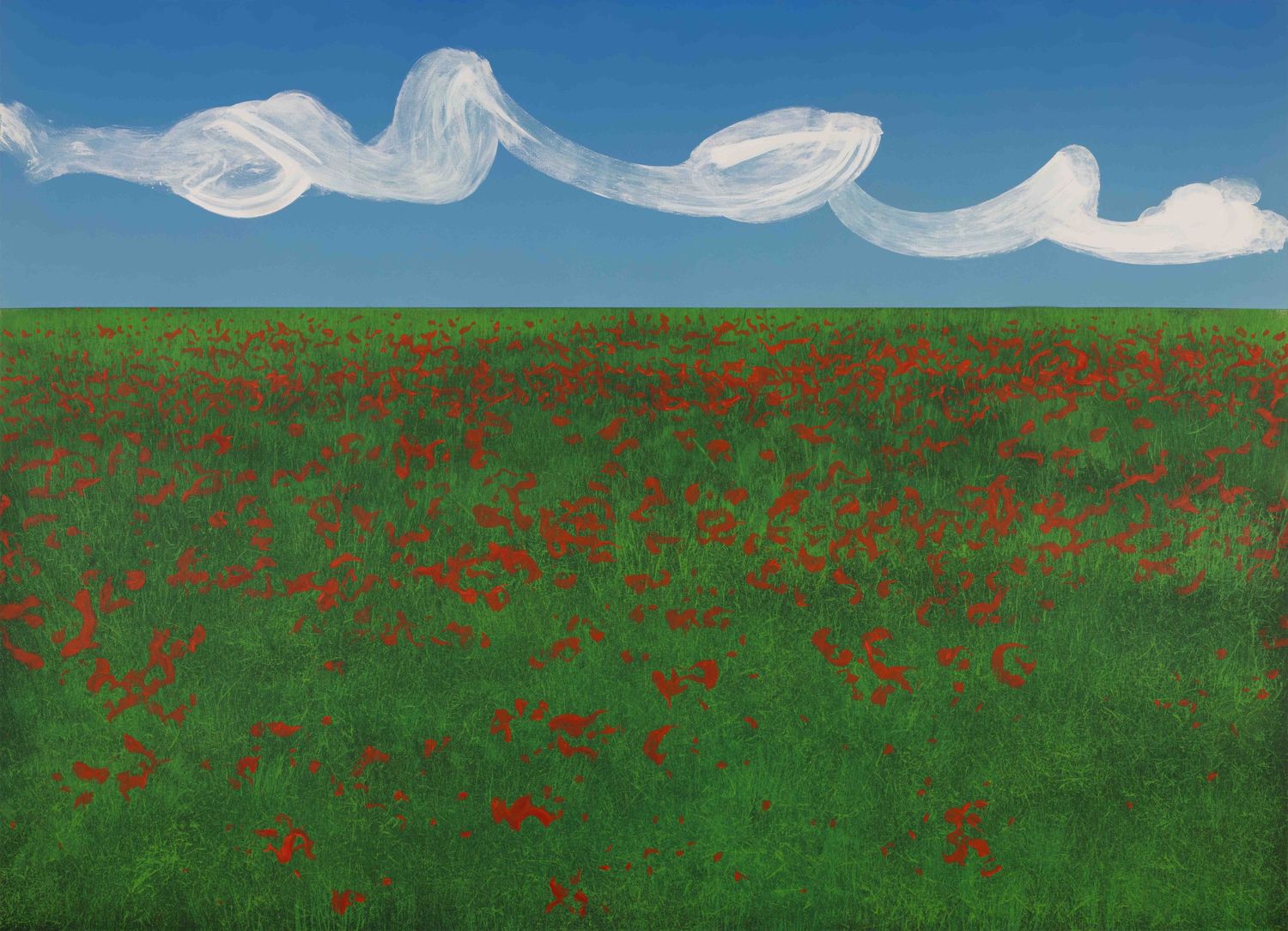
Perhaps that is why we also yearn to look for hope in the banal and mundance such as in Gillani’s staid stillifes of red flowers. His landscape paintings consist of both barren and verdant spaces. Acrylic paintings featuring emerald green fields are splattered with ebullient daubs suggestive of tulips. One of the works also considers the sky as a space for gestural expression above a lush landscape. A singular but playful, undulating puff of a white line streaks its way across the sky as it disappears in a trail. Culturally, tulips are considered symbols of martyrdom. Yet this is the closest we come to seeing a silver lining, so to speak.
Perhaps the pathos in Gilani’s works can be aptly summed up through a verse from a poem by Iranian poet, lyricist and musician Abolqassem Aref Qazvini. “Az Khoone Javanane Vatan” was composed by Qazvini during the Persian Constitutional Revolution in the early 1900s. His opening verse is as
follows:
The blood of our homeland’s youth has dawned as red tulips,
As crimson tulips
Mourning for those tall trees
Has bent the cypress
O God!! The cypress bends
Is Gllani’s work a direct expression of the artist’s presence in a certain historical time? Stylistically is it a rebellion against the romantic notion of what constitutes as “tradition”? This is relevant because Gillani has trained as a miniature painter at the National College of Arts, Lahore. His initial practice of tracing, studying and learning about the tenets of miniature painting from references at art school often involved concealing the mark of the individual artist, sometimes at the cost of mastering painterly artifice. Through “War and Peace” Gilani demonstrates that his practice mirrors the vagaries of his time. An image can hover between representation and mark making. It can emerge from an accumulation of marks and simultaneously conceal its reality. Yet everything is suspect.