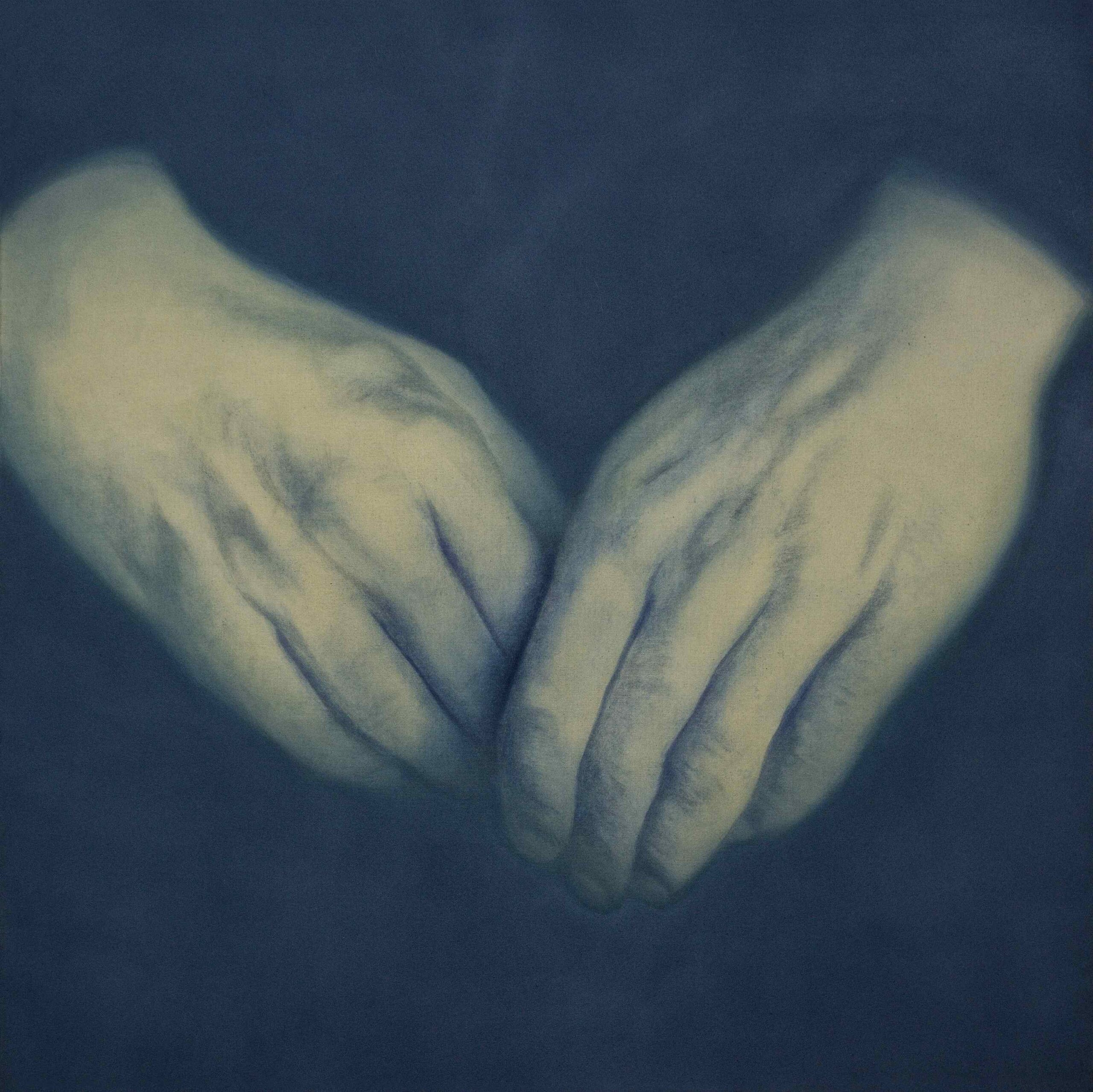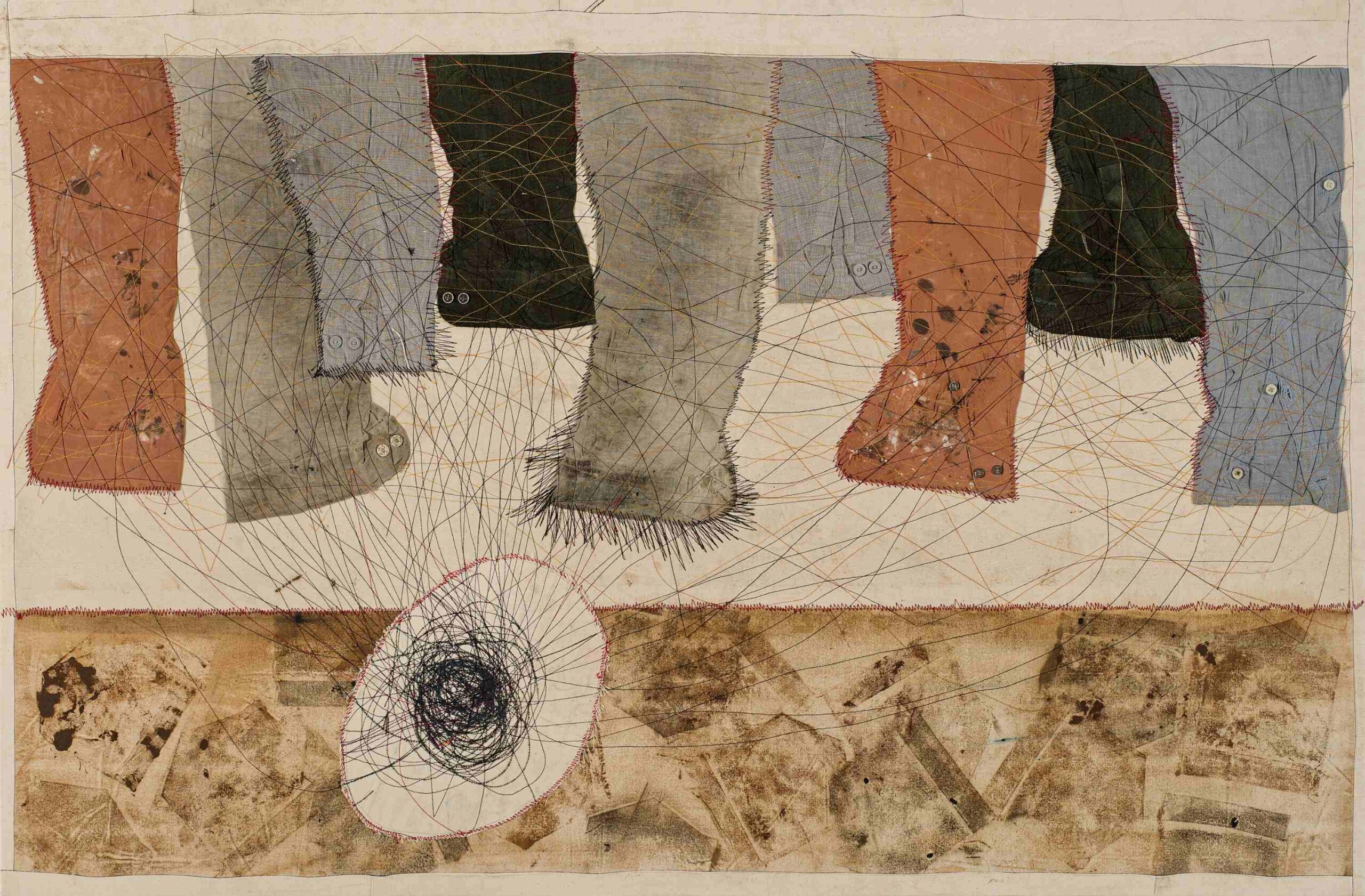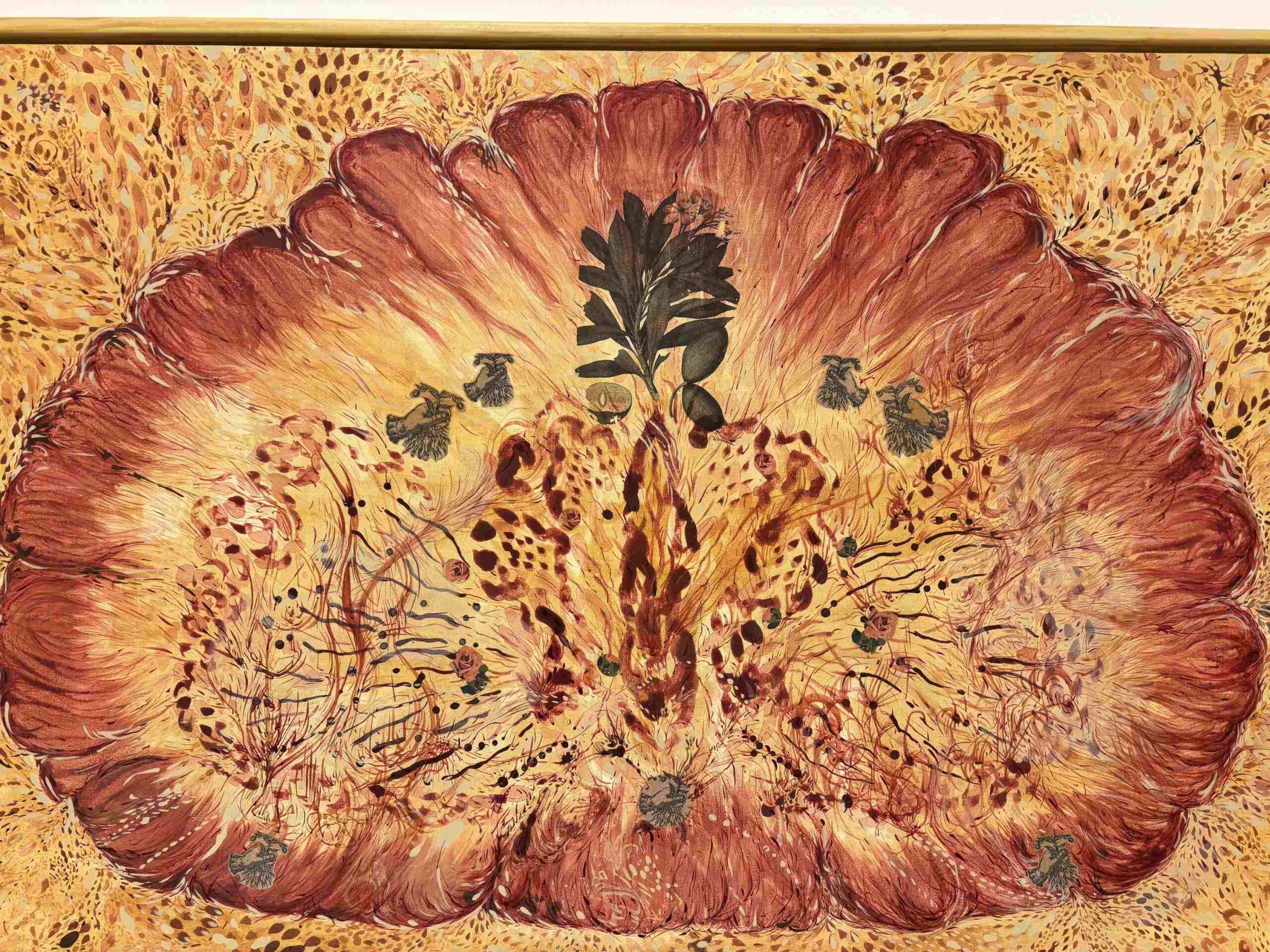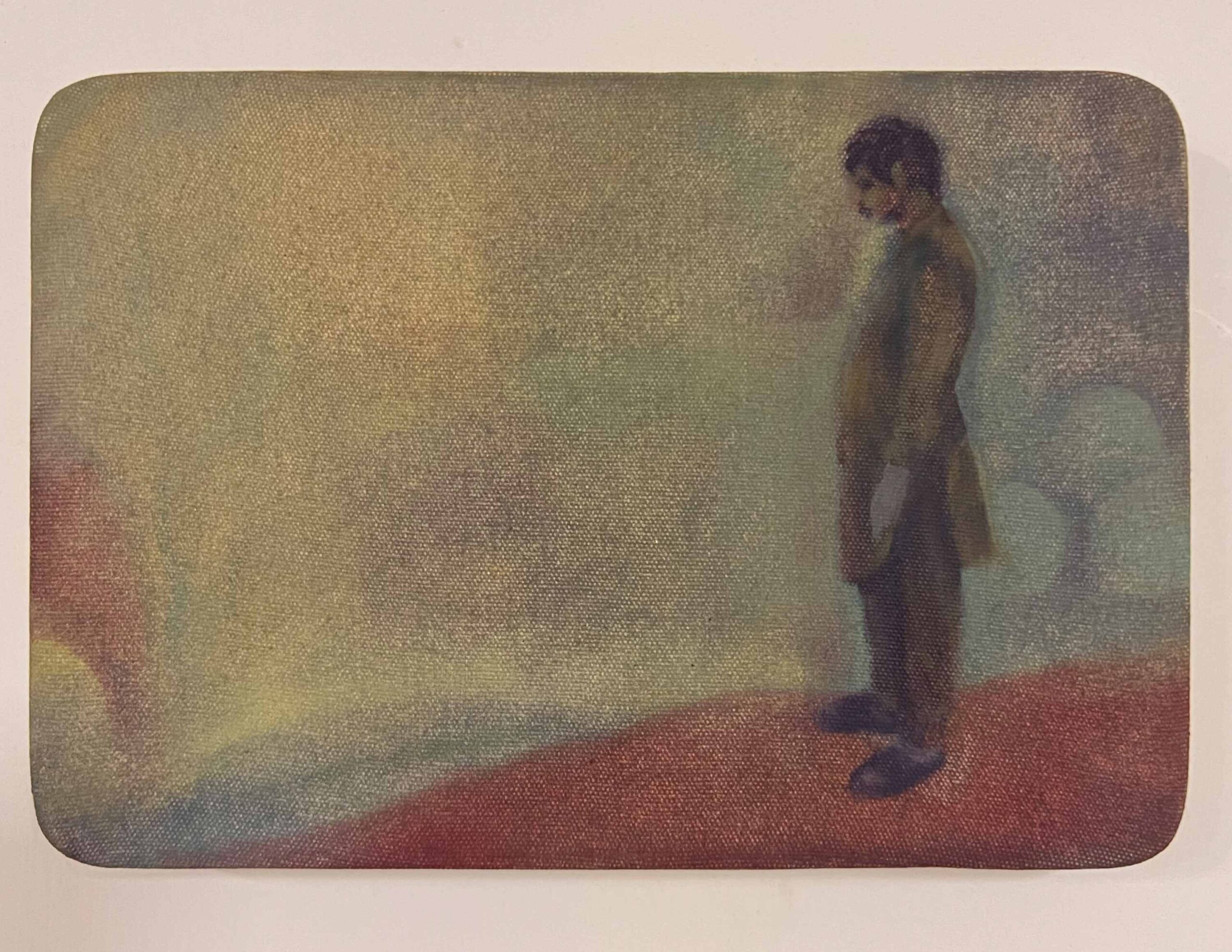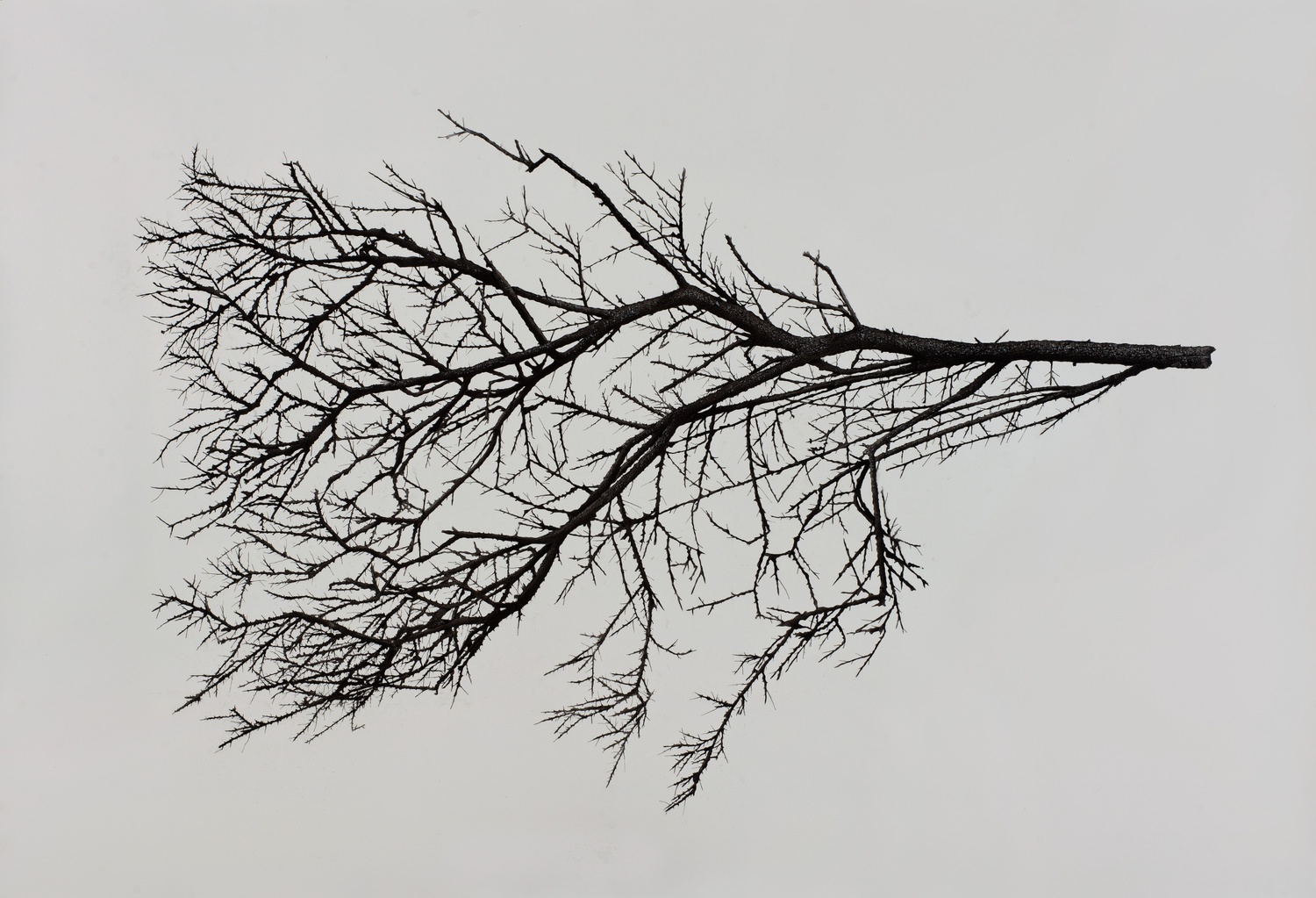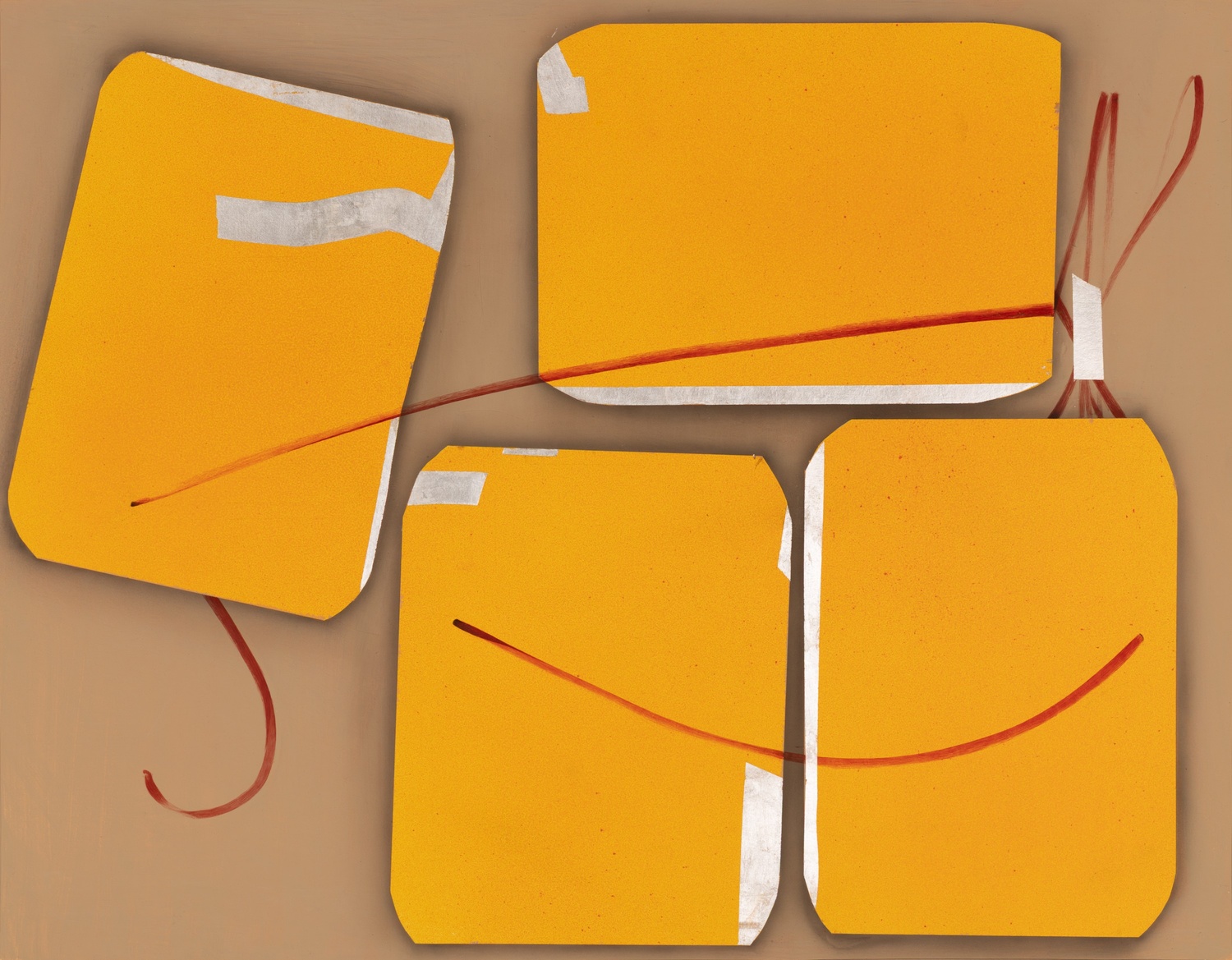
Drawing is a deceptively complex word. Most people drew in childhood, though often so subconsciously that it needs its own special term: doodling. Must mark-making be planned and controlled, or can a drawing be made with arbitrary marks achieved randomly through chance. Or if there’s no applied medium, such as ink or watercolour, graphite, charcoal or pastel, and the work is created using paper by piercing holes, folding, tearing or burning or, for that matter, stitching, can this still be called a drawing?
Sana Zaidi and Rehana Mangi challenge the complex interplay of cognitive, somatic and material conventions that define drawing today. They consider the tensions that exist in drawing between blankness and trace, its multifaceted identity and fundamentally relational character, and reflect on how drawing responds to the temporalities that structure our everyday life. It used to be commonplace to consider drawing as a daily practice. In everyday life, we afford drawing a place in the continuum of activities that go almost unnoticed, from telephone scribbles to the ubiquitous children’s drawings so often brought up as the paradigm of accidental meaning.
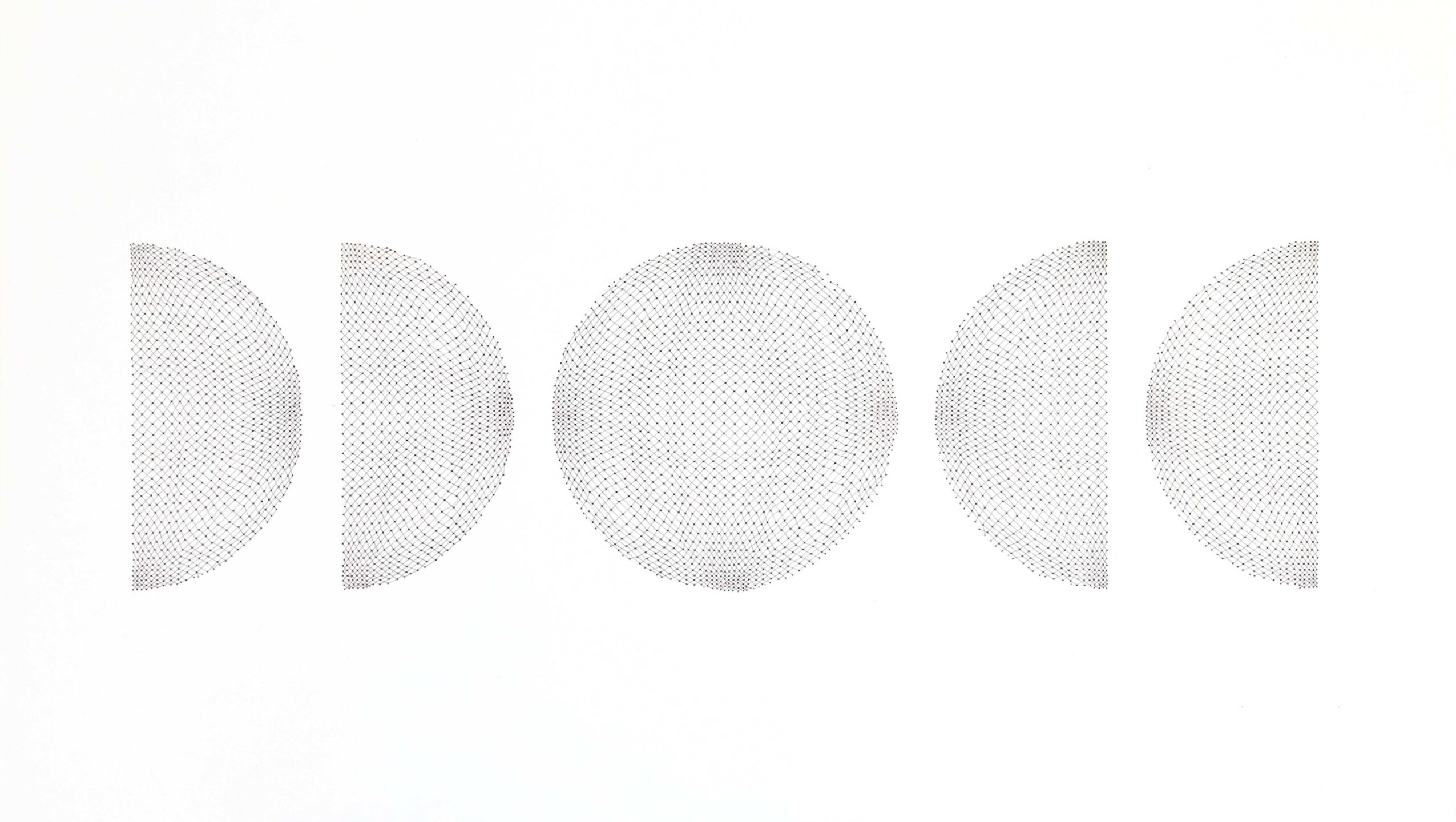
Rehana Mangi’s minimal and meditative drawings are object-lessons in patience and control. She began honing her craft in Larkana, Sindh at a young age, and gained an acute understanding of the properties of shadow, weight and volume. The ‘rules’ of her practice place her in a lineage of artists who choose to liberate their creativity by setting themselves limitations. Fallen hair woven into concentric shapes reverberate like perfectly formed expressive marks, as if strokes have been frozen in time. The careful manipulation of the circle, and the astonishing spatial illusion it produces, is reminiscent of the Op art movement. In her work, space is as much a formal property as it is a means of expressing emotional states of being. To follow the undulations of light and depth is to find oneself immersed in silent contemplation.
An infinity of fine lines set within circles, creates an optical allure and sense of vibration that saturate the sublime works of Mangi on wasli. The arrangement and visual order form a placating composition that inspires infinite calm. The emotional bearings the work and the choice of material hold can be both spiritual and ritualistic, allowing her to heed her lived experiences. A continuity in the repetition of shapes encourages meditation, while the absolute symmetry and meticulous detail generate a spiritual energy. Circles, twisted swirls and rectilinear lines neatly cross-stitched into paper recall the repetitive details in Islamic tiles and mosaics.
To Rehana Mangi, the process feels monastic. Indeed, since time immemorial, drawing has served as a vital tool of self-healing and centering, linked undoubtedly to its foundation in the act of touch. She feels a chorus in her space of solitude – a collective presence. Her chorus includes her memories of her grandmother who taught her to embroider in cross stitch as a young woman coming of age. She enlists drawing with human hair both as a way of diagramming and charting terrains – through weaving and knotting her hair, she braids the past, creating a formal vocabulary that reinterprets abstract geometries on her own terms.
What political ethos follows from the democratic partitioning of a circle into equal constituent sectors? Rehana Mangi’s meticulous drawings imbue geometric abstraction with a meditative resonance that instigates these kinds of far-reaching, associative questions.
Her predominantly small, tight drawings mine geometry’s metaphorical and metaphysical possibilities. Their intimate but carefully measured aesthetic of mathematical precision seems to express an entire worldview premised on rigorous, hand-crafted order. When she generates vibrational fields that pulse within their bounds, luminosity accrues. But the strong affinity that her repetitive mark-making shares with manual craft aligns itself closest with textiles. Stitching and embroidering inform Mangi’s drawings both on the micro level of texture and line and on the macro level of overall pattern and composition.
Between its reality as material mark and its mimetic responsibility in the creation of the visual fiction of the image, the drawn line exists, like the surface on which it is applied, in potentia. Movement is necessarily enacted as we follow the course of a line over a page, or as we read the haptic ambition of the drawing hand, the repeated attempt to reach the object, to secure it for the grasp. It is this kind of unresolvable ambition that the artist Sana Zaidi enacts, as she presents drawing to search ceaselessly without presuming to find. Learning to draw is teaching yourself how to see, as Cecily Brown reminds us.
Zaidi’s work, born out of a collaboration of sorts with her unschooled children deny coherence by offering fragmentary moments that subtly alter our perception. The drawings, some furiously scribbled and scrawled or scored, represent a torrent of subconscious energy all the more concentrated for their creation within the tightly confined space of the paper. These free-range drawings by young children stand for unrestricted expression – outside pedagogy, although, ironically produced by the artist’s children; individual, yet part of a seemingly collective project. The results have an irresistible vivacity,
authenticity and charm. Some are playful, whimsical or humorous, others agitated expressions of pent-up frustration. Drawing, as it appears, became especially important for Sana Zaidi as a way to channel her anxiety and restless energy.
Whereas drawing’s nature can be defined as a universal human endeavour, a shared visual language of expression, Sana Zaidi also uses drawing to pragmatically sketch her own maps and plans, and dream in doodles and scribbles by her children. What begins in spurts and fits, with false starts and unclear endings are valued for their immediacy, for the insights they offer in child psychology into the process of the creative act, and for their intimacy and directness; in other words, in drawings Zaidi seeks truth, not power. She states that her grandfather’s poetry inspired her to write poems that configured as drawings on paper. It was only when her younger son ‘defaced’ her drawings with innocent scribbles and scrawls
(what she initially saw as an accident) that she began to see the uncanny juxtaposition and overlap not as an accident but as improvisation, giving birth to a suite that she baptised as Mama and Us, I Love my Mom and Dad, Birthday Card, etc.
Though the range of work presented in Innocence to Experience is astonishing, due to the difference in materials and art forms the artists have employed, what is ultimately most intriguing – and perplexing – are the interrelationships among the two principal bodies of work. The categories that may be employed to classify their production may range to every rubric used to situate the work of autodidacts whose practices lie outside the art world’s mainstream network. This litany of concepts – primitive, visionary, art brut, outsider, selftaught and folk – corresponds to the twentieth century’s attempts to deal with the work of the socially marginalised creators. However, many of these terms can be deeply problematic in the case of Sana Zaidi and Rehana Mangi. Coined to reflect notions of the innocent and naïve, primitive and transgressive, which this art can be held to embody, these appellations suggest how autodidacts came to serve as models for professional artists who sought to unlearn conventions and formulations inculcated during their academic training. In an art world whose pantheon now includes several luminaries, the work of so-called outsiders finds immediate points of reference with dominant idioms rather than providing
alternatives to current conventions. Sublimating such polemics, the laconic title of the present show may indicate not only a wish to avoid pigeonholing the artists’ work in what can be contentious, even ghettoising, categories but also an attempt to place the work on par with that of any other accomplished practitioner.