There are parts of a life that never become stories. They remain as impressions, habits, gestures, obligations, fragments of conversation. They stay with us without always announcing themselves. A person may carry something for years without ever having to name it: a responsibility, a memory, a particular way of seeing, a feeling attached to an ordinary moment. Much of human experience exists in this half articulated space, where what is felt exceeds what can be said.
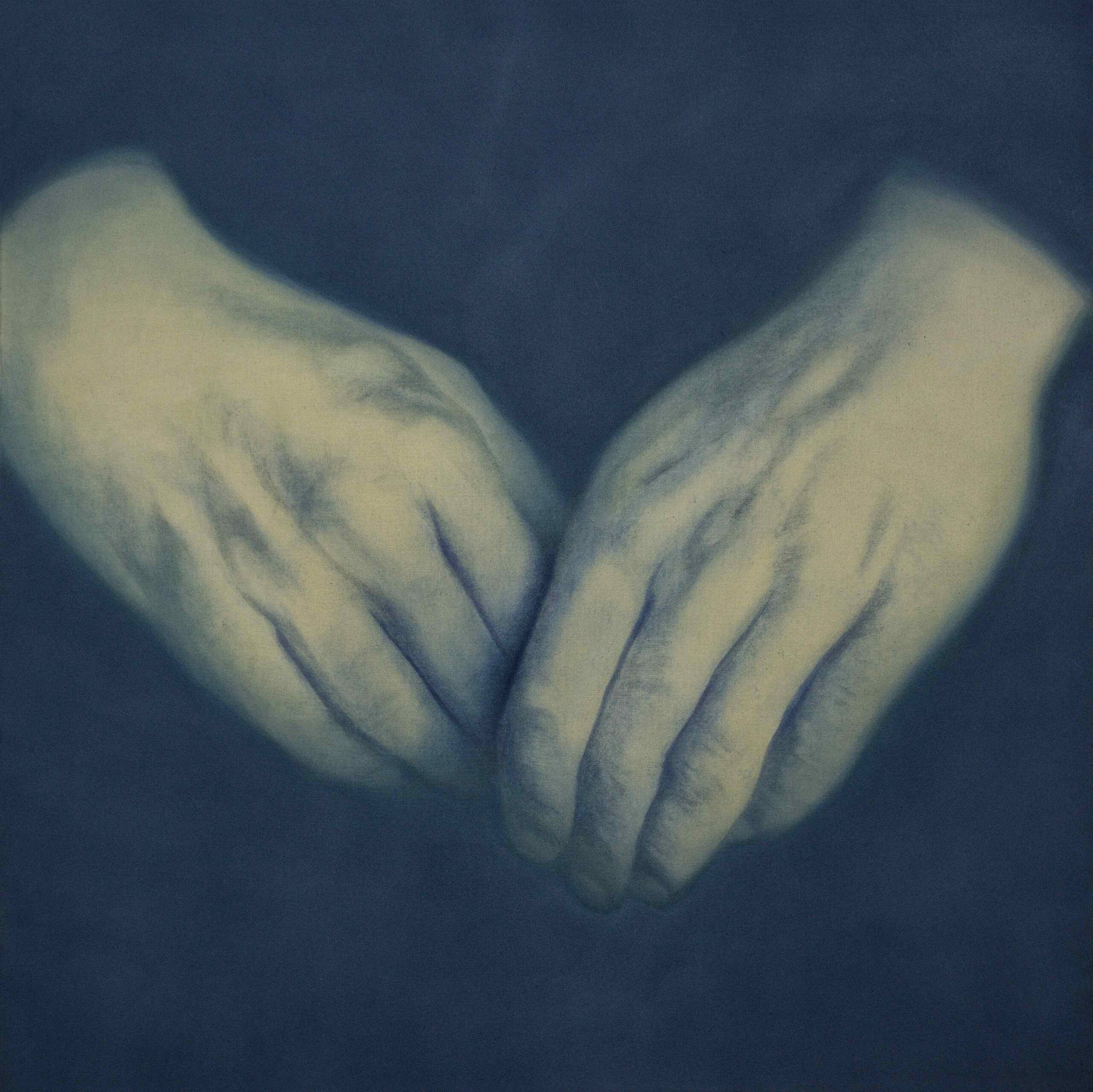
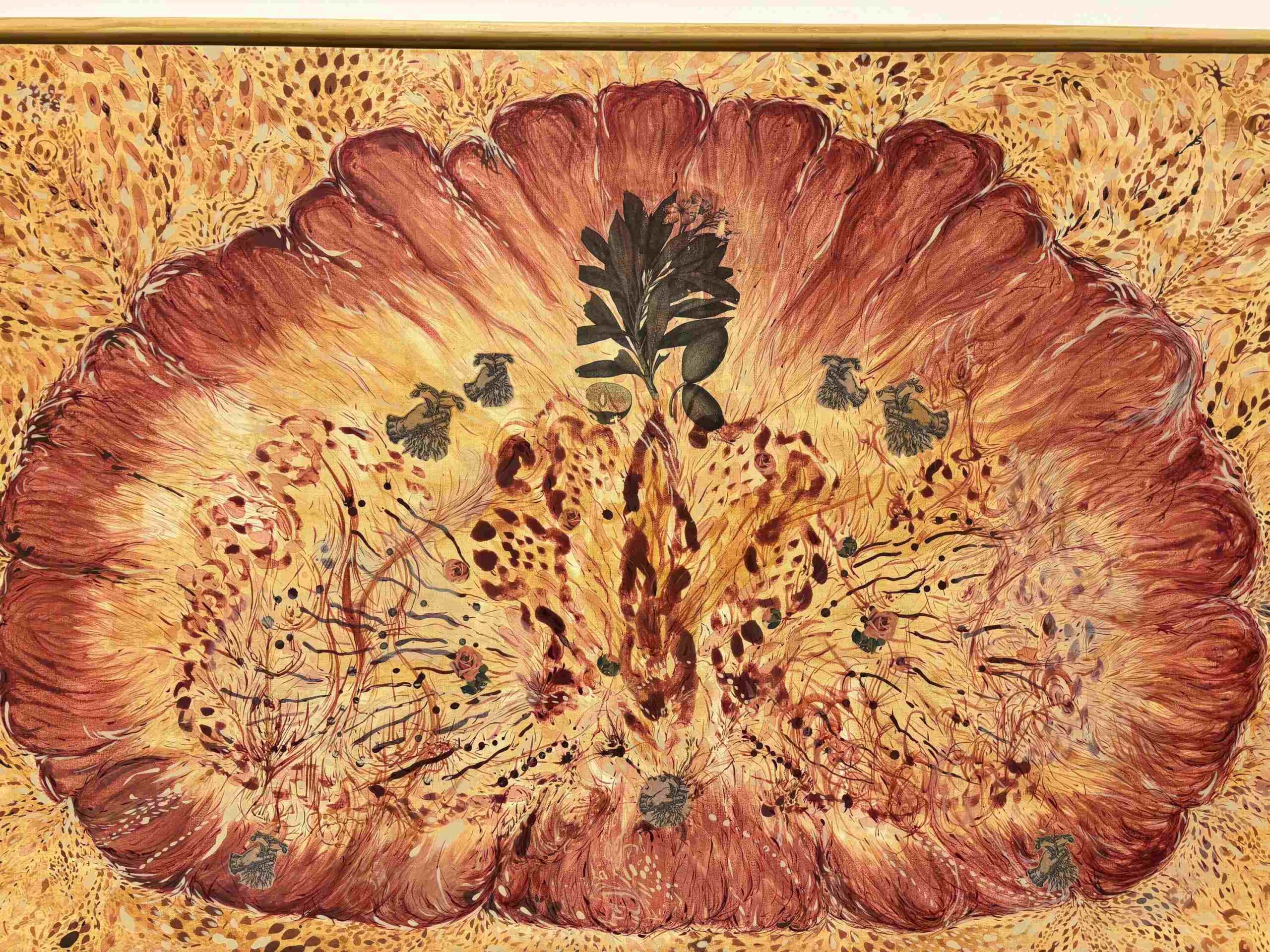
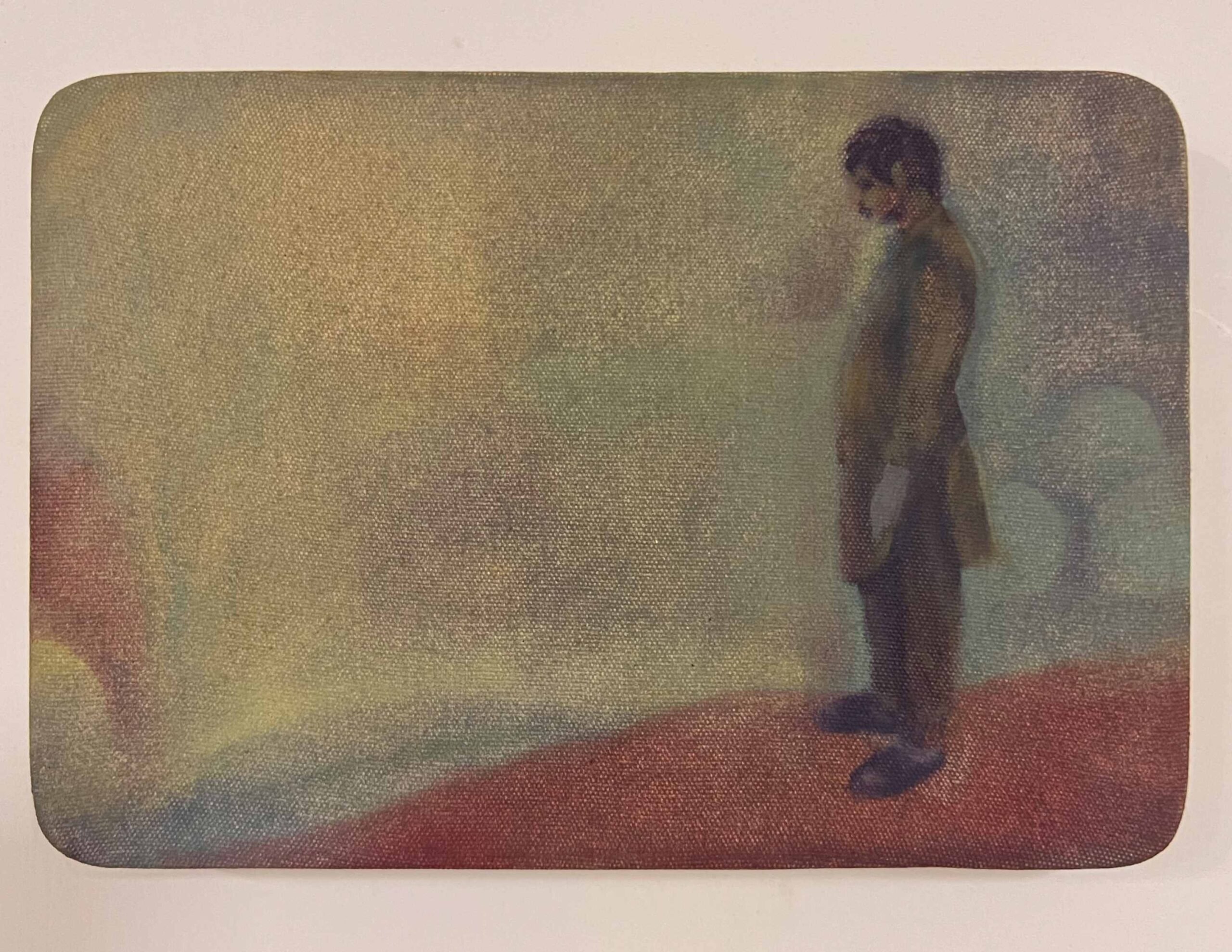
Abbas Ali’s work seems to enter precisely there. His practice brings together what has been lived and what has been remembered, what has acquired a history through use and what is subsequently transformed through the act of making. His statement describes a movement from colour towards “broken threads,” imagining fibres as witnesses to the pursuit of a dream and to stories concealed within the image. He speaks of giving new life to what has been discarded, transforming remnants into a material language through which the narratives of everyday individuals and their less visible experiences can emerge.
The significance of the remnant is that it is never the whole thing. It bears evidence without providing complete knowledge. An object can have been handled, worn, worked with, lived alongside; yet none of these facts grants access to the life surrounding it. Its material presence establishes proximity while preserving distance.
This makes Abbas’s choice of material more consequential than a simple movement from one medium to another. The fabrics enter the work already burdened with an existence outside it. They are not neutral surfaces upon which meaning is subsequently imposed. Their prior histories remain materially present even as they are cut, layered, painted and stitched into another configuration.
The artwork does not begin with a blank surface. It begins with something that has already been lived with.
Here, Abbas’s practice intersects with the history of assemblage and the found object, but it also departs from the logic of the readymade. The significance of these materials does not lie principally in their displacement into the gallery. It lies in the histories they have already accumulated before that displacement. What the artist retrieves is not merely an object but the possibility of an object’s previous life continuing to register within another form.
This is where Derrida’s notion of the trace becomes productive. The trace unsettles the opposition between presence and absence: something is present precisely through the indication of something that is no longer fully available. Abbas’s remnants function within this instability. The person is not contained within the fabric, nor is the experience recoverable from it. What remains is a residue of contact; enough to suggest a history, never enough to possess it.
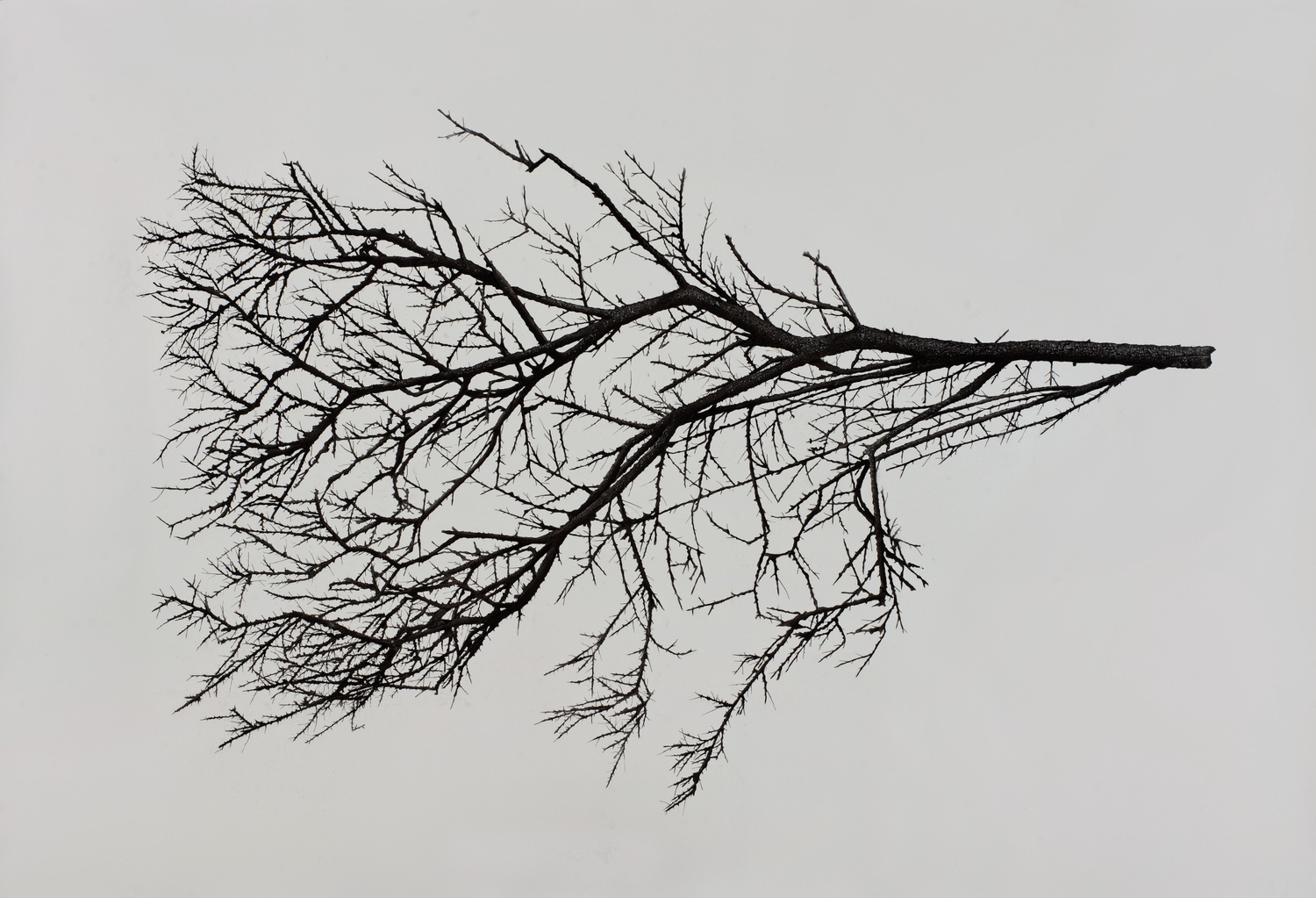
The language of the titles repeatedly returns to this condition. ‘Remnants of a Shadows’, ‘Stitched Shadows’ and ‘Unspoken Presence’ all invoke forms that occupy the threshold between visibility and disappearance. A shadow is not the body that produces it; a remnant is not the life from which it came. Yet both make absence perceptible.
The surface seems to become a threshold: not a membrane concealing a hidden narrative that can simply be uncovered, but a site where different orders of experience meet.
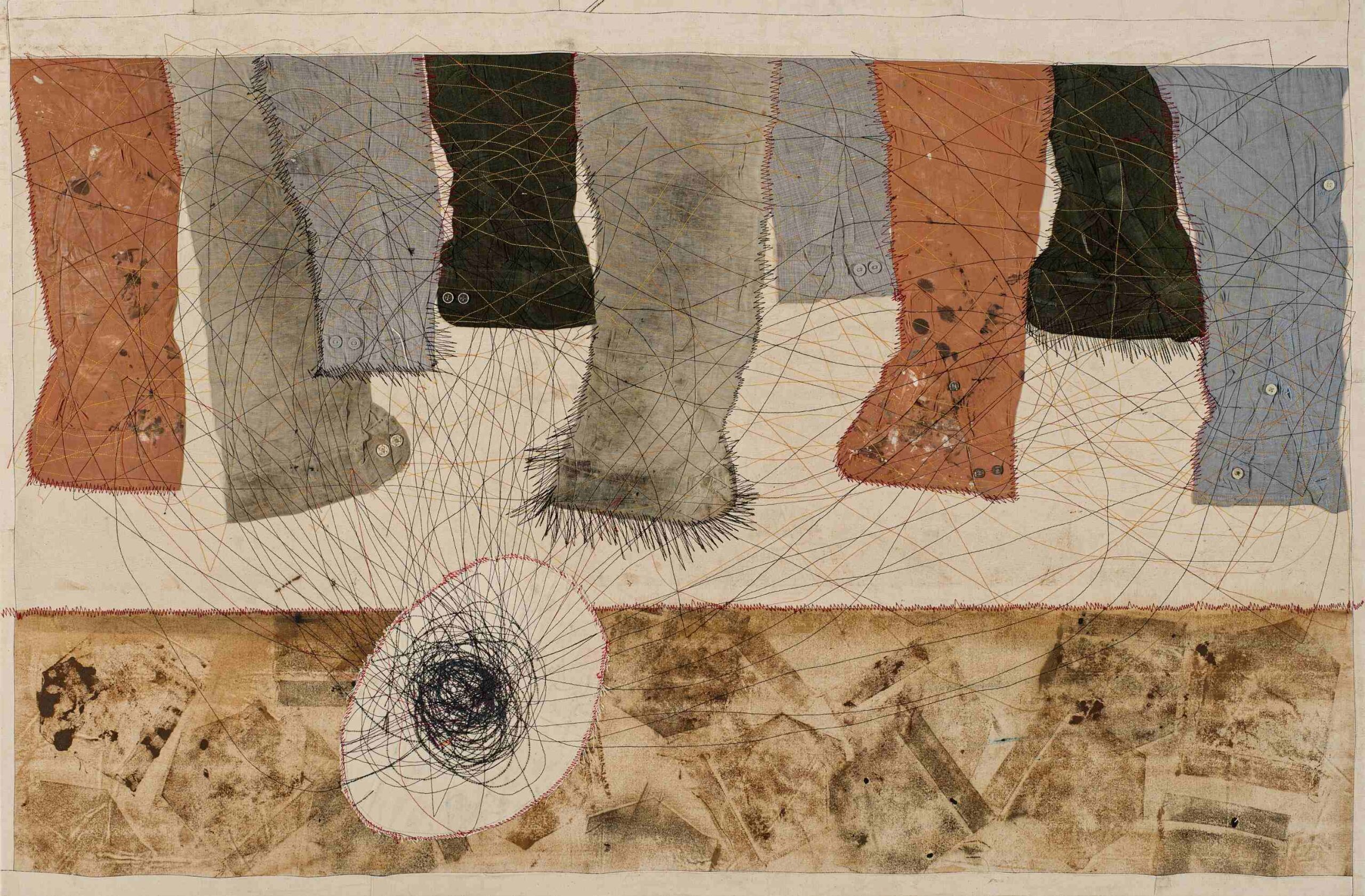
‘The Two Stories’ makes this especially apparent. Against a dark ground, pale stitched forms accumulate into an almost cloud-like configuration, while recognisable gloves remain below. The gloves introduce the specificity of physical use; the forms above them move towards abstraction. The title establishes a relationship between two stories without closing the distance between them. One history belongs to the material; another is produced through its transformation.
The work consequently does not illustrate a story so much as stage the problem of how experience becomes image.
This distinction is crucial. Abbas’s encounters with people and their material remnants do not produce direct testimony. They produce translation. Something heard, observed and materially encountered passes through the artist’s perception before entering the work. The final image therefore occupies an unstable territory between documentation and invention, between another person’s lived reality and the artist’s interpretation of it.
Stitching becomes the central mechanism through which this instability is held together.
Unlike drawing, a stitch does not merely mark the surface; it passes through it. It joins separate pieces by physically binding them. Repeated often enough, the individual stitch loses its singularity and becomes structure. It can repair, secure and connect, but it can also tighten, constrain and enclose.
Abbas himself describes the repeated stitching as resembling a “cage”, relating it to the responsibilities attached to different positions within everyday life; as a brother, father, son or parent. This introduces a productive ambiguity into the gesture. The same structure that holds things together may also become the structure within which one is held.
Responsibility, in this sense, is not simply an external burden. It becomes internalised through repetition until obligation can become indistinguishable from identity. The roles we occupy are continually performed until they acquire the appearance of inevitability.
Nietzsche’s thinking around repetition and amor fati offers an interesting counterpoint here. To affirm one’s fate is not merely to endure what has happened but to incorporate it into one’s becoming. Abbas’s stitching can be read through a similarly complex condition: repetition is simultaneously constraining and constitutive. The repeated gesture does not merely depict endurance; it produces a structure through which endurance becomes materially visible.
This tension between structure and instability recurs throughout the works.
In ‘Unraveling Grid’, dark textile forms occupy the lower portion of the composition while an accumulation of intersecting lines rises above them around a pale, almost floating form. The grid suggests order, measurement and containment, yet its proliferation begins to undermine precisely those qualities. The structure becomes excessive; organisation approaches disintegration. The title is therefore more than descriptive. The grid is both present and coming undone.
Abstraction here becomes a way of transferring psychological and social conditions into formal terms. Rather than depicting responsibility, repetition or uncertainty, Abbas allows density, enclosure, interruption and accumulation to perform them.
‘Endless of Harsh Boundary’ pushes this further. Geometric lines construct an architectural framework around irregular blue textile forms, while a proliferation of loose marks extends beyond the apparent boundaries of the composition. The geometry attempts to define space, but the material repeatedly exceeds its definition. The boundary becomes less a limit than a negotiation: between inside and outside, structure and excess, what can be contained and what continually escapes containment.
This is perhaps one of the more compelling aspects of Abbas’s work. The psychological is never presented as an illustration. It is translated into material behaviour.
The same is true of time. ‘Uncounted Hours’ presents a large, heavily worked textile form beneath a dense accumulation of linear marks. Its title introduces duration as something almost impossible to measure: the hours absorbed into repetitive labour, routine and obligation.
The making of the work begins to echo what the work is concerned with. Stitching takes time. Repetition accumulates time. The material itself carries another duration:
the time embedded in its previous use.
Two temporalities seem to converge within the same surface. The work does not merely represent duration… It contains duration.
This gives Abbas’s use of textile a place within a broader history of artists who have unsettled the hierarchy between fine art and forms of making associated with domestic or manual labour. Yet the importance of stitching here does not rest simply on its craft associations. Its conceptual force emerges from the correspondence between method and subject: binding becomes a language of attachment; repetition becomes a language of persistence; repair becomes a language of survival.
‘Patches of Healing’ introduces another dimension to this vocabulary. Fragments gather around a larger textile form, producing an image that resembles repair without restoring the material to an original condition. A patch exists because something has already been altered. Healing appears not as erasure but incorporation; the wound becomes part of the object’s subsequent history.
This is also what gives the discarded material its particular force. To discard something is to declare its previous function exhausted. Abbas reverses that judgement without returning the material to its former usefulness. The remnant acquires another existence: from utility to testimony, from remainder to image, from discarded matter to something capable of carrying memory forward.
Yet the works never allow this transformation to become sentimental. There remains an irreducible distance between the artist and the lives from which these materials emerge. To encounter another person’s experience is not to possess it. The artwork can preserve a trace of an encounter, but it cannot recover the totality of the life behind it.
Perhaps this is the deeper implication of Abbas’s invitation to move “beyond the image.” The ‘beyond’ is not necessarily a hidden narrative waiting to be decoded. It is the recognition that every visible thing points towards something that cannot be made entirely visible.
Behind the image is a material history, and behind that history is an encounter, behind which is another life. And that life remains, finally, more than the image can contain.
This is where the works derive their quiet tension. They do not resolve the distance between presence and absence, object and memory, experience and representation. They hold these oppositions together.
A shadow is not the body… A remnant is not the life… An image is not the original experience… Yet each can make what has passed perceptible.
In Abbas Ali’s work, what remains is therefore not simply what survives after something has disappeared. It is what acquires another form of existence through transformation. The remnant becomes image; the fragment becomes relation; repetition becomes structure; the surface becomes a place where lived history can continue to register without being fully explained.
What remains of a life may not be its complete story.
Sometimes it is only the trace that refuses to disappear.