Of the many ways we can travel to the past, my favourite is a walk through an old book bazaar or a secondhand book shop. Aimlessly wandering through stalls or between shelves, taking out books at random and rifling through them is transportive in ways perhaps a real time machine would not yield. Books upon books that speak to the lives of other people; lives lived as scribbles in the margins, as endearing dedications to friends or lovers, as forgotten bookmarks or even a careless coffee stain. Waterlogged edges and spilt ink offering further glimpses into these lives removed from mine.
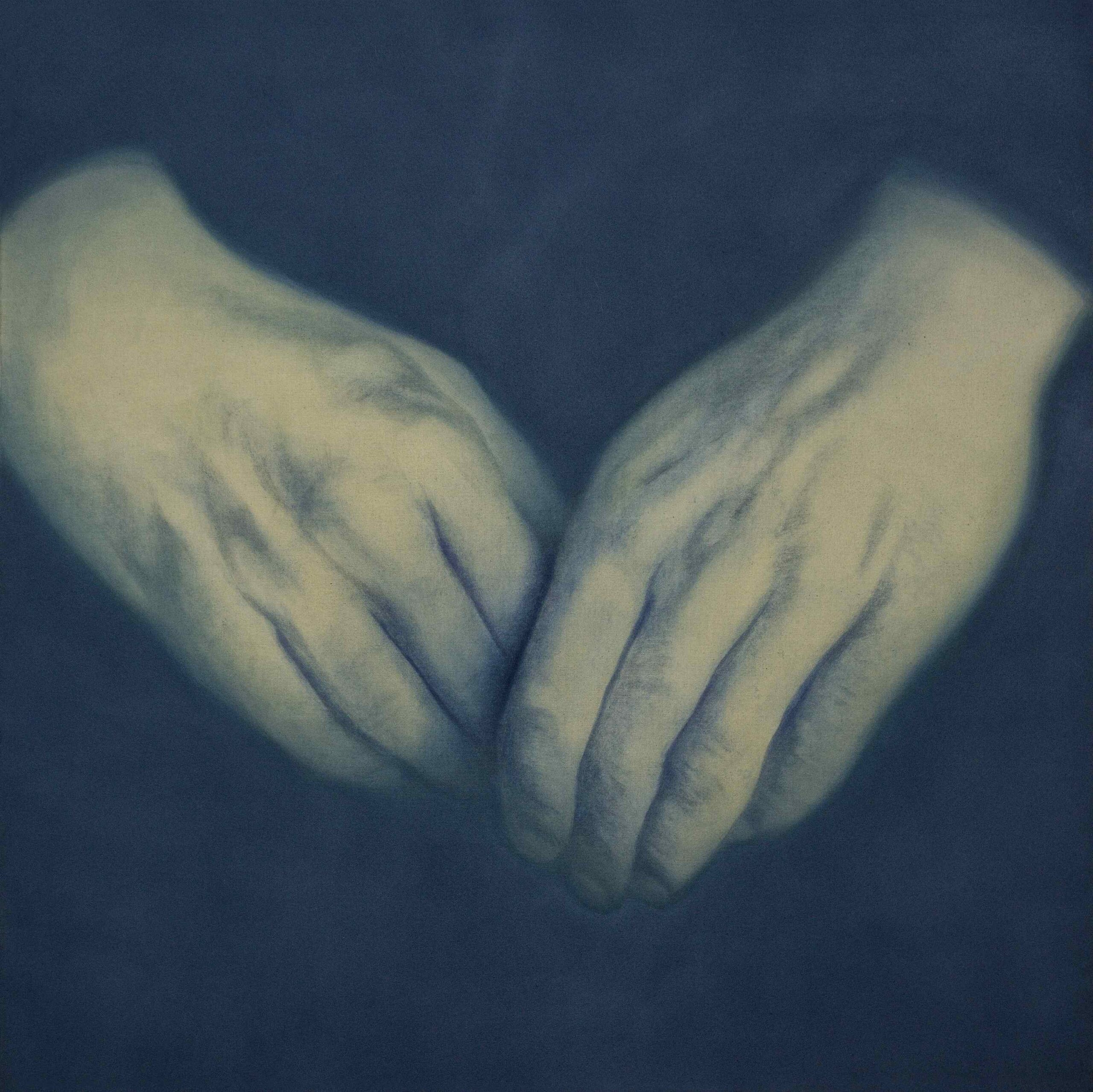
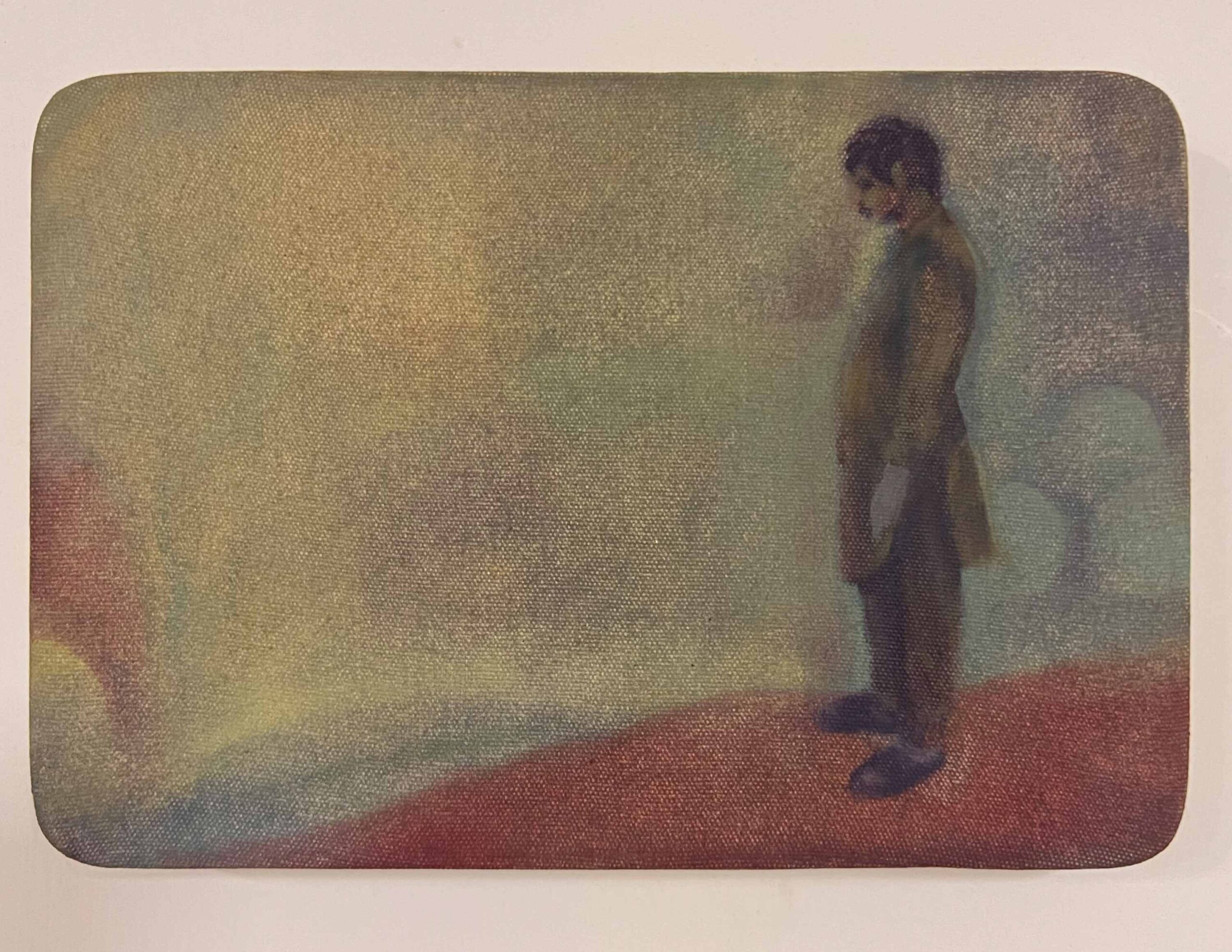
Attiya Javed’s creations for ‘A Thread That Remembers’ reminded me instantly of these moments that serve as vignettes into other lives. Her work at first seems quite personal: familial archives arranged sensitively as record-keeping, but it in fact encapsulates a universal experience. The pieces on display represent a global feeling of looking at the past, not necessarily only to understand it, but to respect it and preserve it. Remembering the past is one of the most Sisyphean tasks we undertake. With every new memory made, there is a memory somewhere that is challenged. Memories are also lost—to time, to health. Yet, this is a task that artists continually engage in. Memory and nostalgia remain a rich repository to mine from when it comes to a creative practice, but it is the act of memory-making that defines the value of that work.
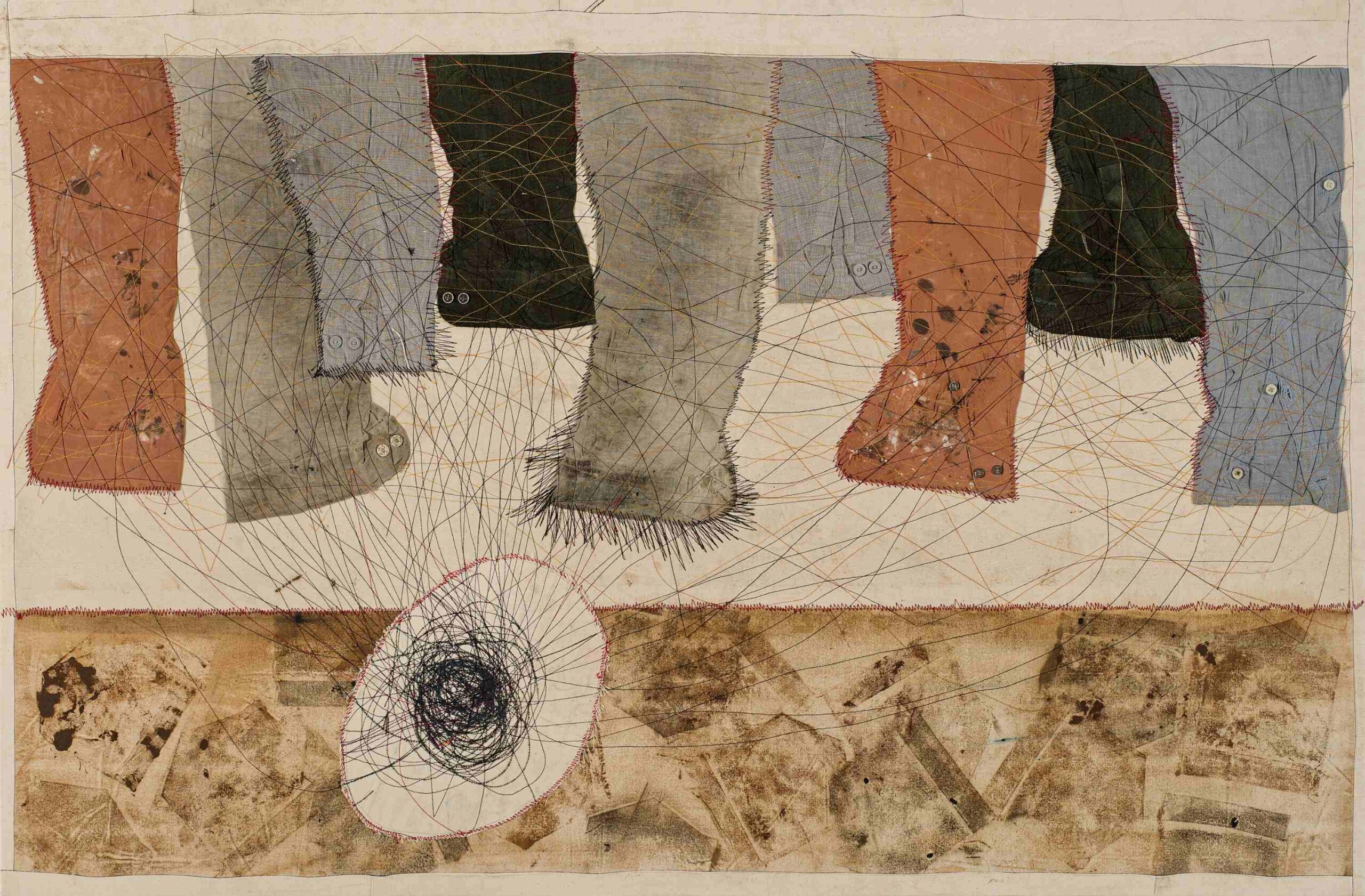
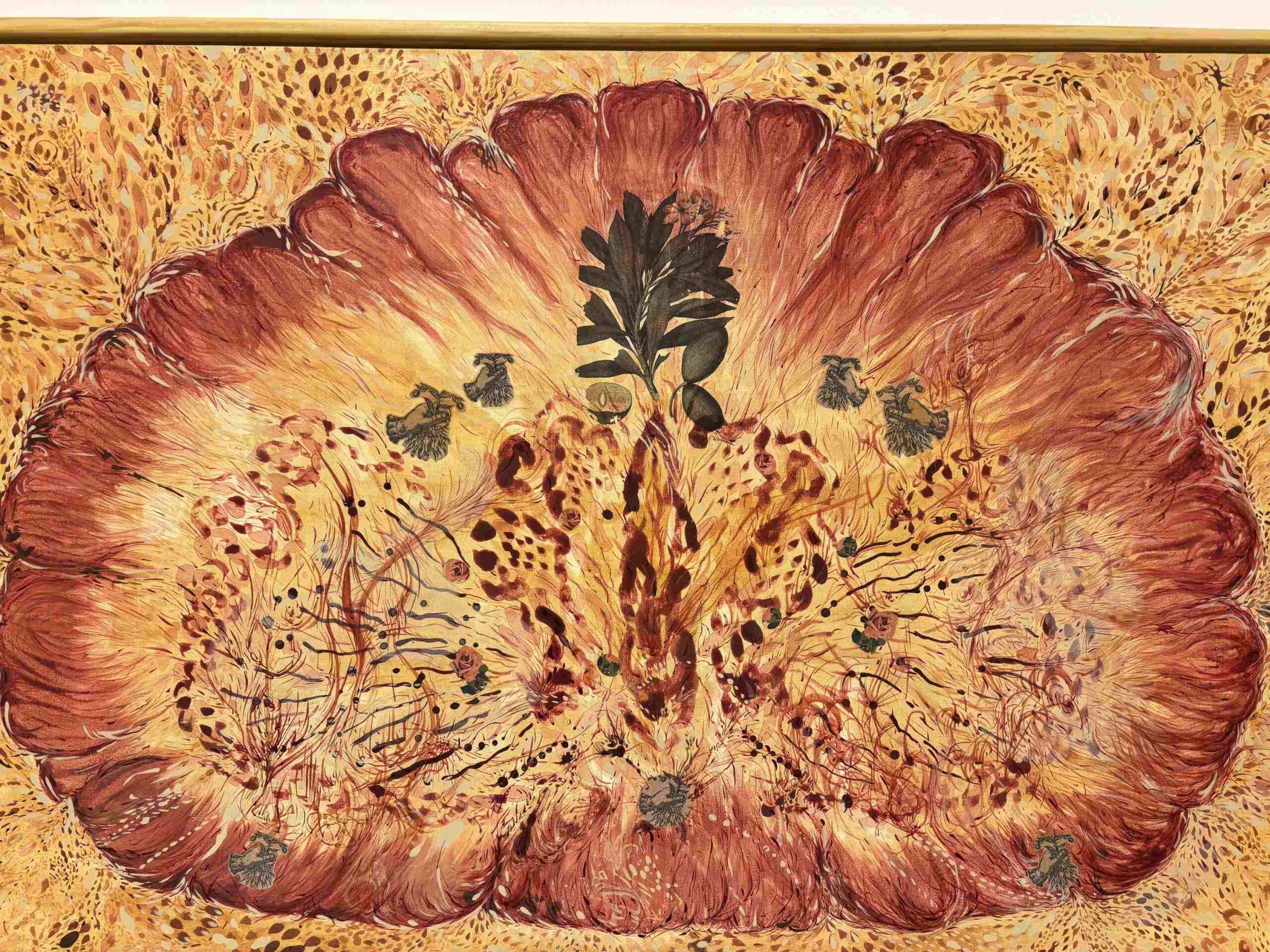
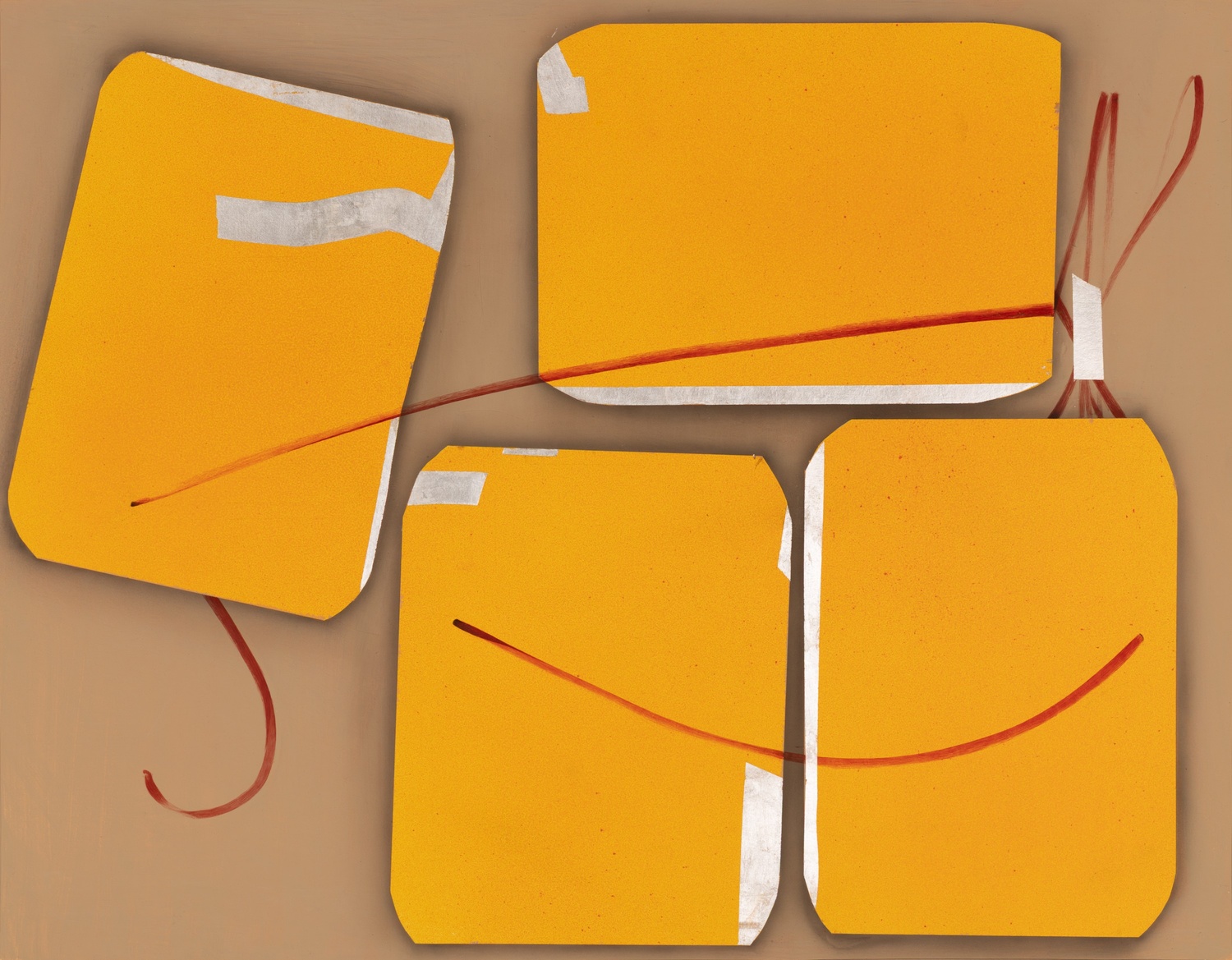
‘A Thread That Remembers’ is a careful synthesis of this intentional making and unmaking. Attiya’s collages bring together various elements, even as they distress them. Created using sustainable materials (a nod to her background in textile innovation) and natural dyes, the handcrafted works symbolise all that she has collected and carried with her throughout her life—in some cases this is literal, such as a letter written by her mother. What is immediately noticeable, though, are the threads that weave their way through the work.
The late American poet Merwin famously related needlework and absence in his short poem Separation:
Your absence has gone through me
Like thread through a needle.
Everything I do is stitched with its colour
I feel that is what is happening here—in collecting a past, Attiya has documented a becoming. A cyclical journey that allows her to share the most intimate recesses of her world with us. In choosing to incorporate delicate needlework and threads, Attiya not only pays homage to her mother, but also imbues her own self in each work. Needlework is a repetitive exercise; the hand moves rhythmically to create pattern, the rhythm almost devotional in nature. With every stitch, the sower leaves a part of herself in the work. Naturally, this is why Attiya’s presence is felt, even as she sows absences of others.
Interestingly, the threads also evoke images of neural networks; their frayed, spare nature a marker of memories fading over the years. Attiya also focuses on the backs of these works which, as anyone who has turned a piece of embroidery inside out or flipped it knows, are not as neat as the front. The emphasis on the backs of her pieces demonstrates the care with which the artist looks at the messy, dysfunctional nature of memory-making. Ultimately, Attiya’s threads are symbolic bridges between the past and the present, but they are even more potent in their literal representation of the material holding her various forms together.
Accompanying the threads are the almost ubiquitous circular motifs, functioning dually as voids and memory gaps, but also as eyes through which we view another’s life. I’m reminded of pinholes or peepholes that only show you a limited view of reality. But is that not what memory itself is? A limited view of reality.
Her work represents the many things that are left unsaid, which is how it always is, because we are not required to know everything about our forebears. There’s a balance between what is lost to time and what is lost deliberately at the artist’s hands.
Walking through Attiya’s work is akin to an estate sale. However, unlike those most garish public displays of a private life, her work is not presented as voyeuristic spectacle, but as a celebration. As remembrance of the trials and tribulations of her parents, as symbolic markers of their lives.
With this show, Attiya includes us in her ritual of memory-making, this time not through physical participation, but through the sheer experience of viewing and seeing and creating memories of our own.