One of the first images ever known was of animal. The relationship between man and animal has been a subject of contemplation throughout history. From cave paintings to contemporary art, animals have played a significant role in our culture and symbolism. John Berger, in his essay “Why Look at Animals?” offers a critical examination of this relationship, exploring how the human gaze toward animals reflects broader themes of power, control, and empathy. The representation of animals has shifted from a focus on their symbolic and functional roles to a more abstract and distant observation. This shift reflects broader changes in how we perceive and relate to the natural world.
Musawir’s work can be seen as a part of this evolving dialogue. By focusing on animals alongside his self-portraits, Musawir engages with both historical representations and modern existential questions.
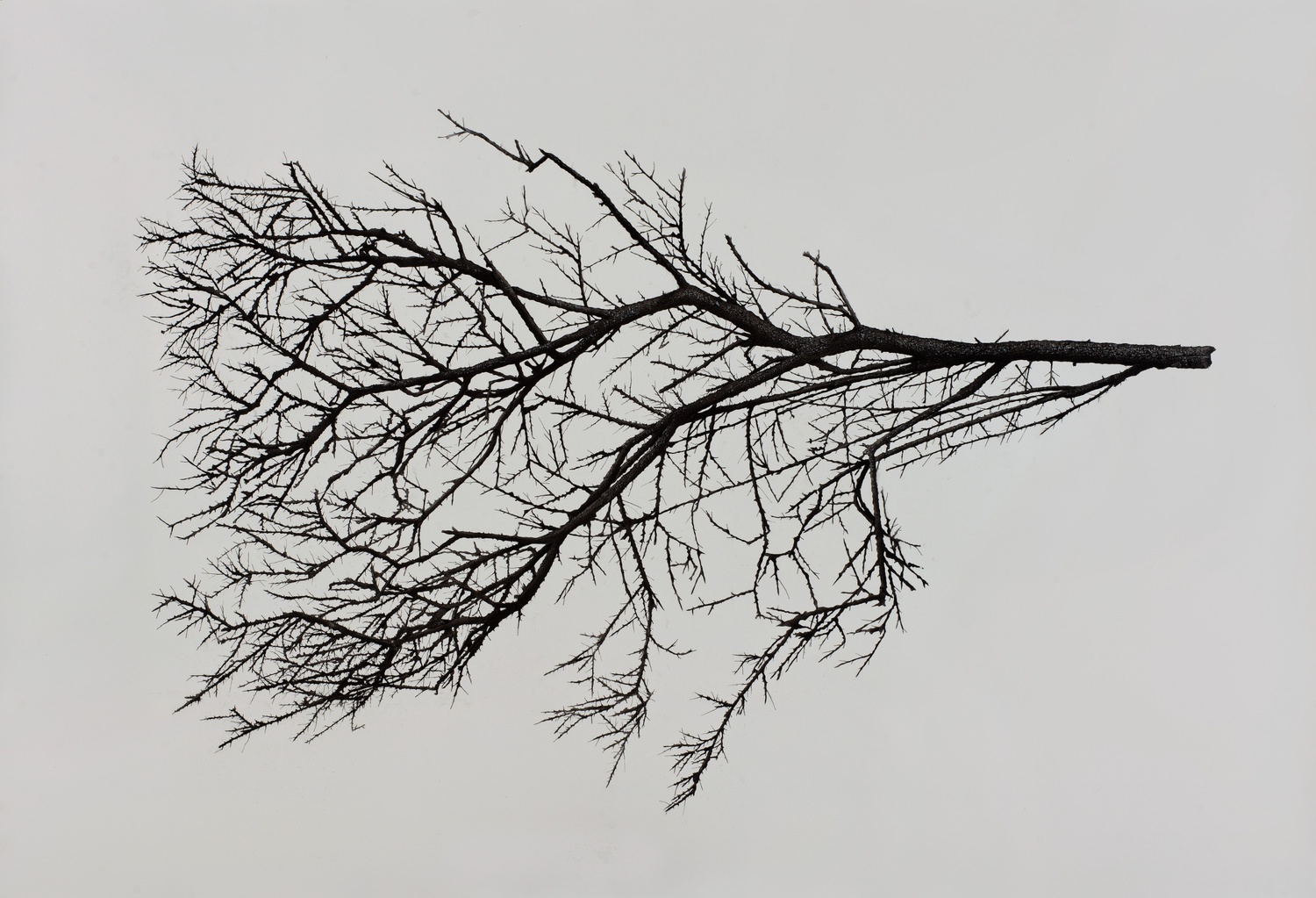
In his series of prints titled “18 Birds”, we see eighteen drypoint etchings of dead birds at different stages of “disappearing,” or rather, a clean decay of sorts. The bodies are inert and seem to be dissolving into an empty space. We are reminded of still-life paintings and studies of the 16th and 17th century featuring dead animals. It makes us pause and marvel at how these beautiful beings, which once inhabited the air, are now petrified in this state, serving their new role as memento mori or an object to be studied and scrutinised. In “Heavily he flies,” we see a highly detailed rendering of a bird, wings sprawled open, ready to fly or be dissected (or is it a dog’s head as seen from above?). The ambiguity and incompleteness of the image again suggests decay and dismemberment, or a shamanistic totem bridging the animal and human worlds.
Similarly, in the etching “Skin,” we see an incomplete form of a dog, all skin and bones. Raw in its execution, it represents a departure from traditional portrayals of animals. In this print, Musawir reflects his broader thematic concerns with existential dread and the inherent violence of life. Unlike more sentimental or idealized depictions, the dogs in his work are portrayed with a sense of brutality and disquiet, emphasizing the visceral and unsettling aspects of existence.
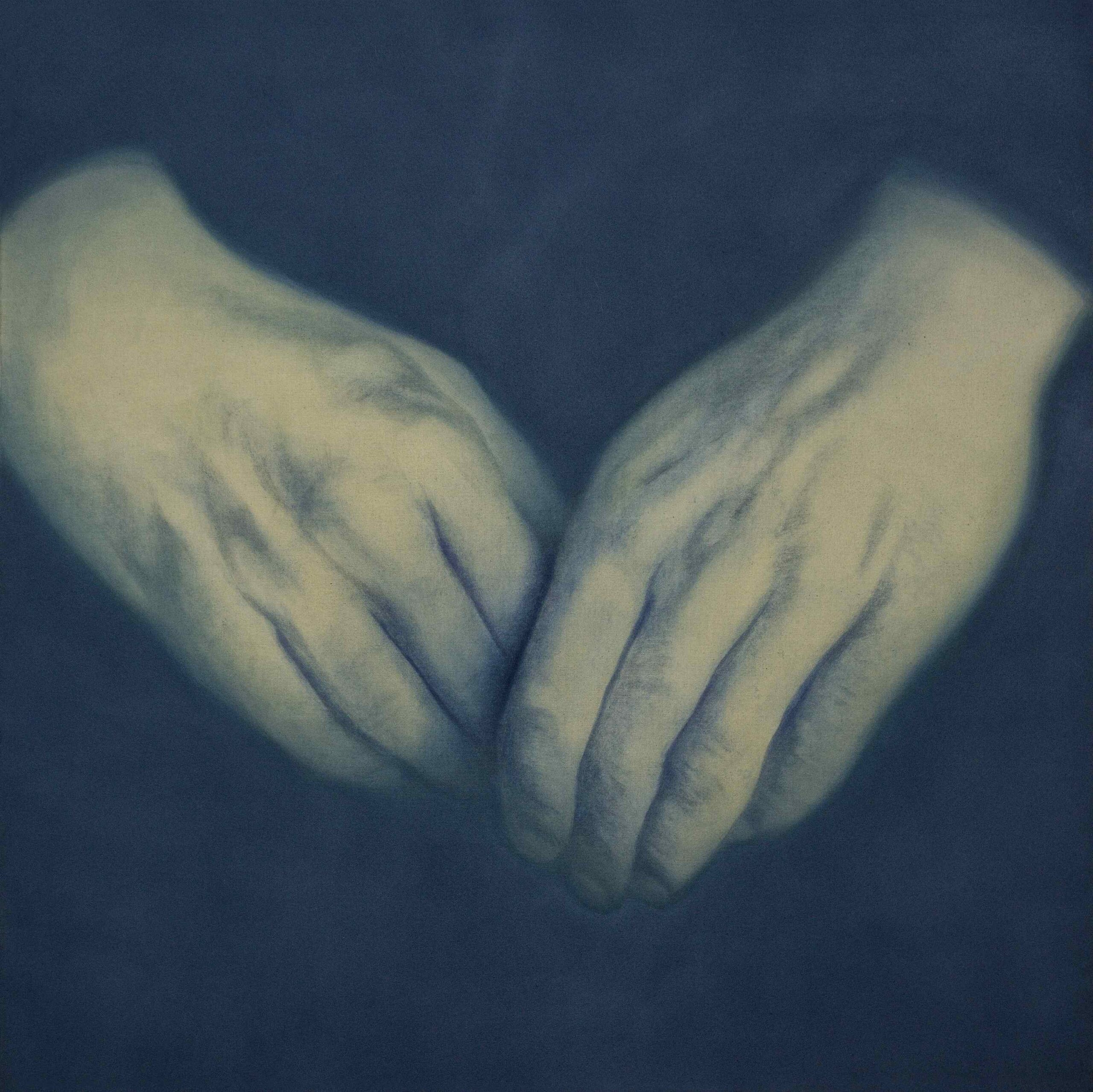
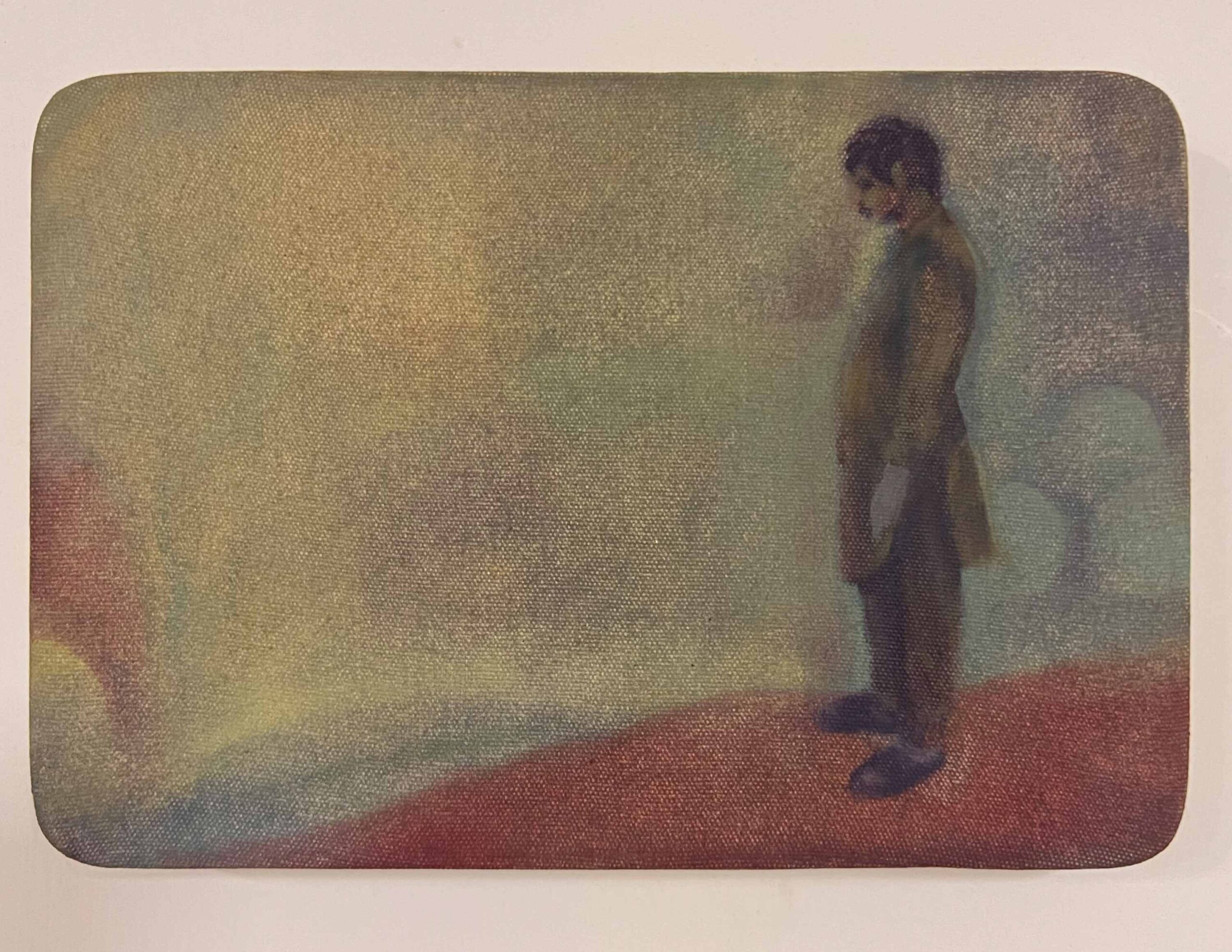
Finally, in the Self-Portrait series, executed in etching with Chine Colle, we see the artist in varied positions of performing (praying or presenting) and resting (sleeping), almost shamanistic in their visuals. There is a constant interplay between quiet and loud, looking away and staring, introspective and confrontational. We are both invited in and made to feel like intruders as we view these images.
Musawir confronts fundamental aspects of human experience in this show, delving into themes of identity, existential vulnerability, and the beauty of life’s transience through a complex animal-human bond.