It all began with a wall; not just any wall, but a white one. The kind that whispers seriousness, smells faintly of fresh paint and conceptual ambition, and prompts viewers to adjust their posture ever so slightly, as though standing straighter might help them “understand” contemporary art better. In Lahore, where white walls are practically a civic aesthetic, White Wall Gallery emerged last year as yet another immaculate cube in the city’s cultural architecture. Except, this one had a different plan. A plan that involved risk rather than reassurance, experimentation rather than easy grace, and a quiet, strategic rebellion underneath its polite façade.
There is something deliciously ironic about naming a space White Wall in a city already saturated with white-walled galleries selling predictable works to predictable buyers. The name sounds like an inside joke; a sideways wink at the modernist white cube that Brian O’Doherty roasted decades ago. But while most galleries deploy whiteness as a brand of neutrality and commercial confidence, White Wall uses it as a Trojan horse. Beneath the pristine surface, the gallery has spent its inaugural year behaving like a space determined to complicate its own architectural ideology.
For founders and curators Ejaz Saeed and Sajid Khan, both trained in the meticulous world of miniature painting, the white wall is not a frame for purity but a surface for possibility. Their curatorial model reinterprets modernist austerity as a place where things can be rearranged, challenged, stretched, and tested. In a city where commercial galleries often appear allergic to risk, White Wall has chosen to adopt the white cube only to gently, persistently misbehave inside it.
This mischief extends into timing. The gallery’s first anniversary exhibition, Another Milestone, arrives in the same year that the National College of Arts (NCA) celebrates its 150th anniversary, an alignment that feels almost scripted. If NCA represents Lahore’s long, sometimes tumultuous artistic genealogy, White Wall feels like one of its newest, liveliest offshoots. And fittingly, the anniversary show brings together all twelve artists who exhibited with the gallery over its first year, turning the exhibition into a living archive and an intimate collateral companion to the NCA Triennale.
Where the Triennale stretches across institutions and national frameworks, Another Milestone compresses a year’s worth of experimentation into one room, offering a micro-history of artistic risk unfolding within the white cube that refuses to behave.
If the gallery itself is a paradox; a white cube determined to behave badly, then Another Milestone is its proof of concept. This group exhibition functions like a retrospective of White Wall’s first year, revisiting each of the twelve artists who crossed its threshold and left behind both artworks and arguments. Seen together in a single sequence, these works form a quiet archive of the gallery’s aspirations: experimentation, risk, sincerity, and the refusal to tidy up artistic complexity for commercial comfort.
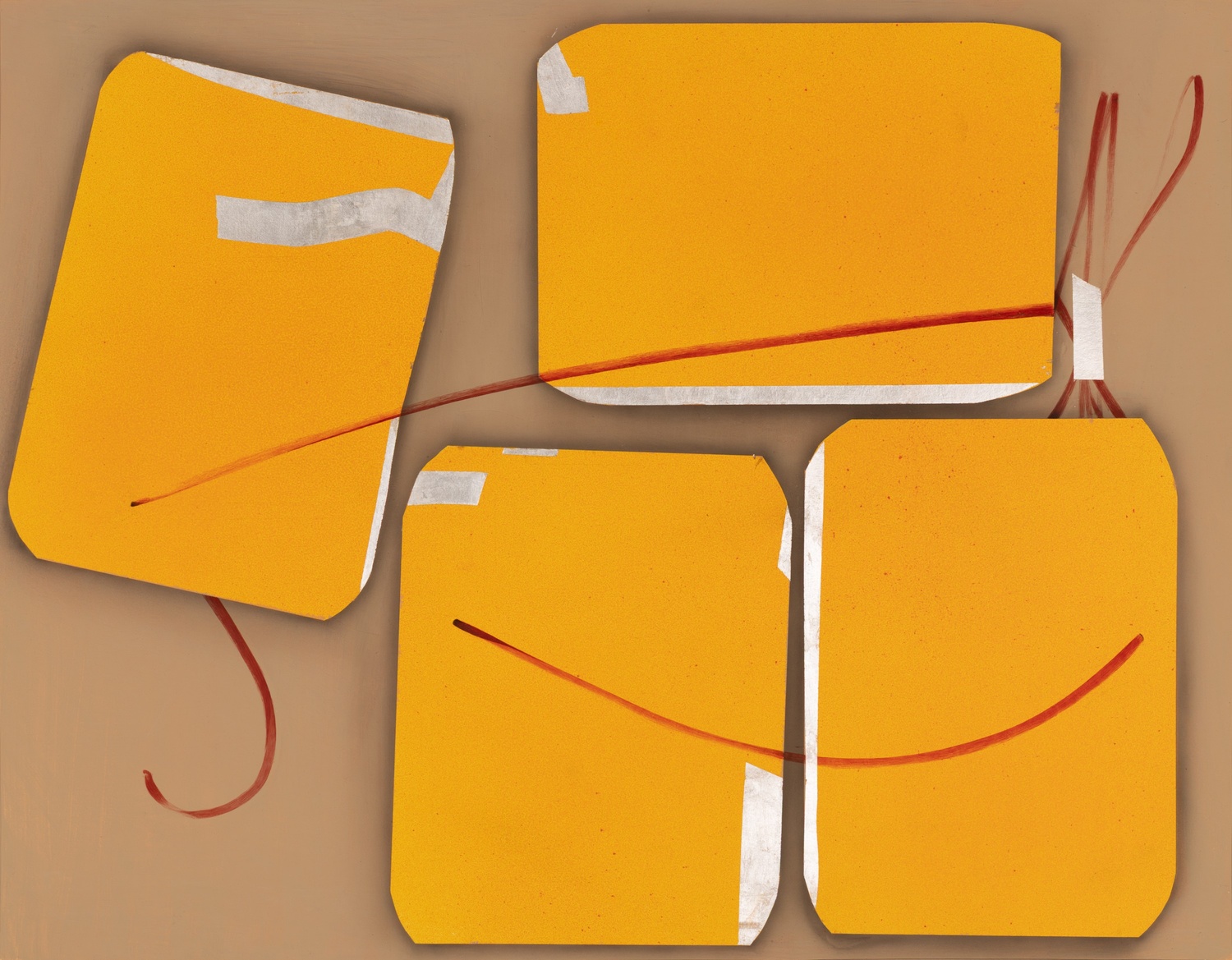
The exhibition opens with Shakir Ali’s Untitled, a work whose modernist discipline still carries the unmistakable scent of the early Lahore School. Its careful order and geometric clarity feel like an anchor dropped at the edge of the exhibition, a reminder that contemporary restlessness was historically born from compositional restraint.
Zahoor ul Akhlaq’s Farman V takes this inheritance and destabilizes it through the flicker of etching, a medium that mirrors Akhlaq’s penchant for multiplicity and erasure. The linearity here is not stability, but tremor.
Contextually, pairing Shakir and Akhlaq retells a story every NCA student knows yet never tires of: how structure learns to disobey its own principles.
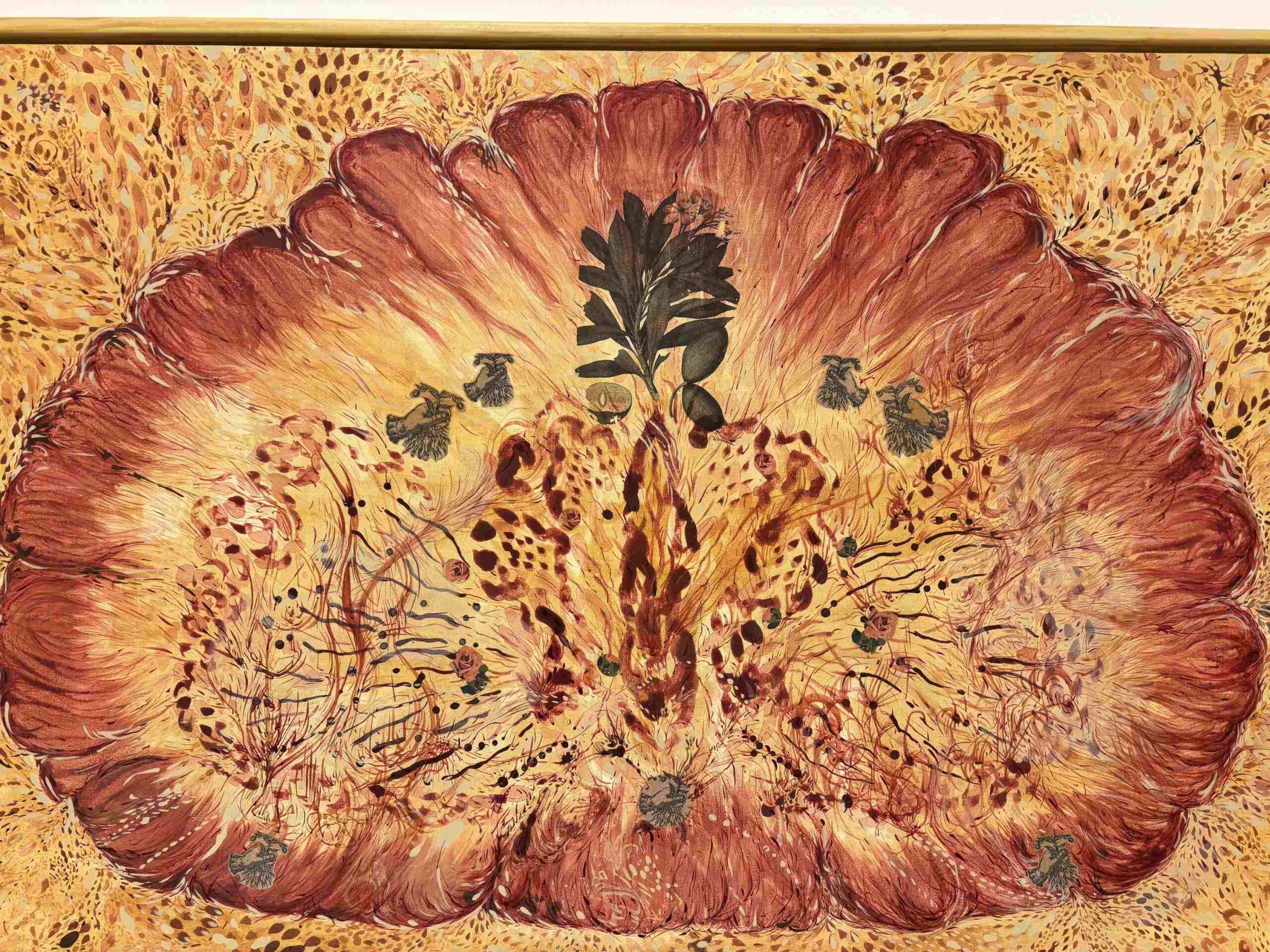
The This Leprous Brightness series appears next like a suite of small, elegant detonations. Imran Qureshi’s famous vocabulary, floral motifs ruptured by the violence of red, replays itself with a deceptive gentleness. The wasli surfaces glow with miniature precision, yet the compositions insist on discomfort, reminding us that ornament is never innocent.
In the context of this exhibition, Qureshi’s works feel like hinge pieces, sitting between the canonical lineage and the younger artists’ experimental impulses. They anchor the show while quietly encouraging rebellion.
Asim Akhtar’s hybrid creatures, aquatic anatomies grafted with human affect, read like allegories for emotional taxonomy. These forms hover between tenderness and critique; they are whimsical, but not unserious. Their anthropomorphism exposes human vulnerabilities more clearly than portraiture often does. The drawings’ delicacy, rendered in pencil and arches paper, extends the miniature’s obsession with detail into a more psychological terrain. These works are soft rebellions disguised as biology.
Elisa Caldana’s jewelled falconry bells arrive with a backstory heavy enough to outweigh their size: migration, loss, survival, craftsmanship, and the falconer’s uncanny intimacy with history. Her Sound Note series transforms these bells from ornament into witness. The tiny objects resonate, literally and metaphorically, with the politics of displacement, making them one of the show’s most quietly powerful gestures. They are proof that sometimes the loudest critique arrives in the smallest form.
Kamran Saleem’s snow leopard works compress ecological grief into the deceptive calm of archival inkjet prints. The 4×6 inch scale is almost cruel, the vulnerability of a species reduced to postcard-sized relics. This smallness, however, sharpens the argument: extinction often begins in silence, with the kind of indifference we pass by without noticing.
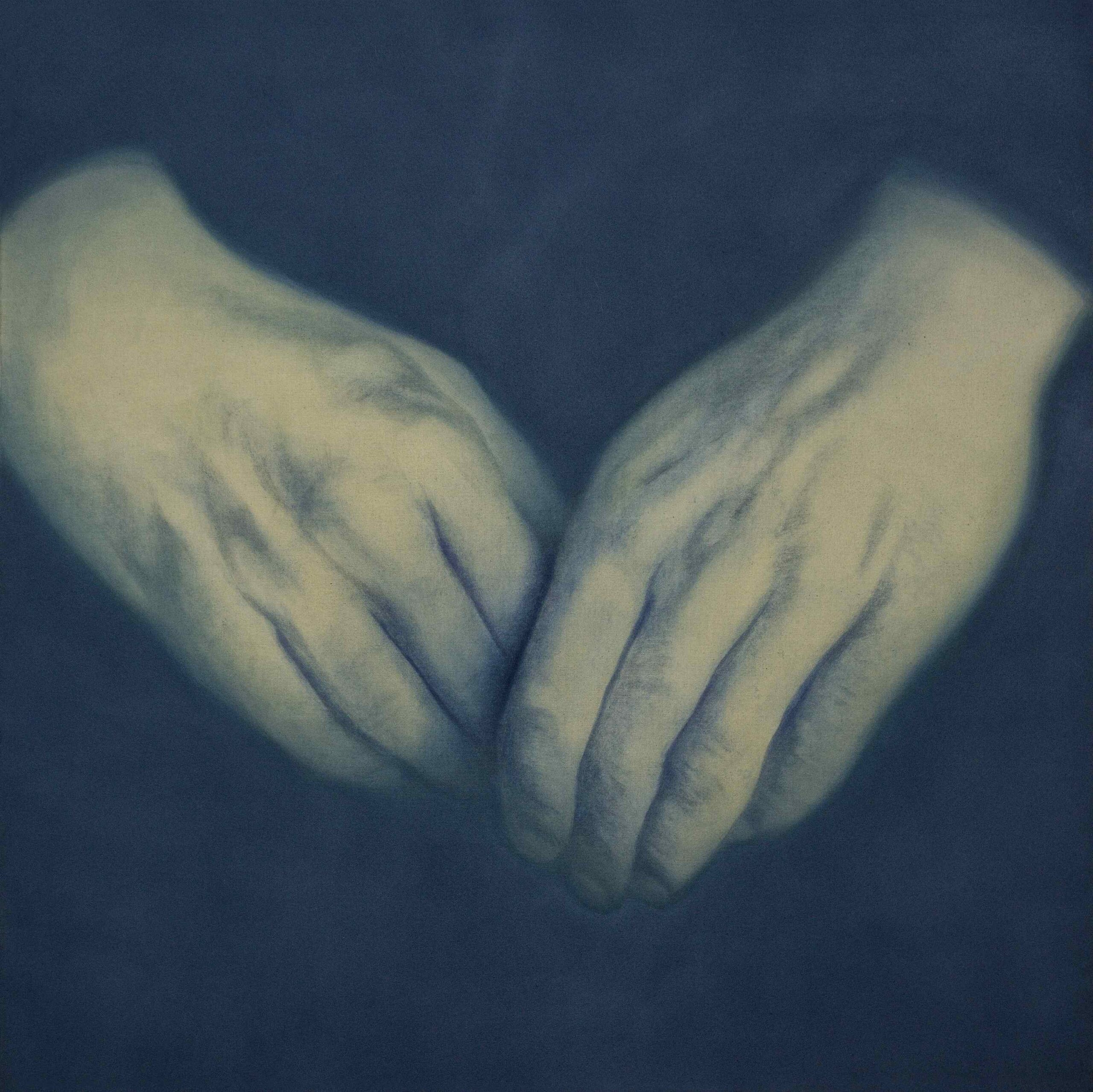
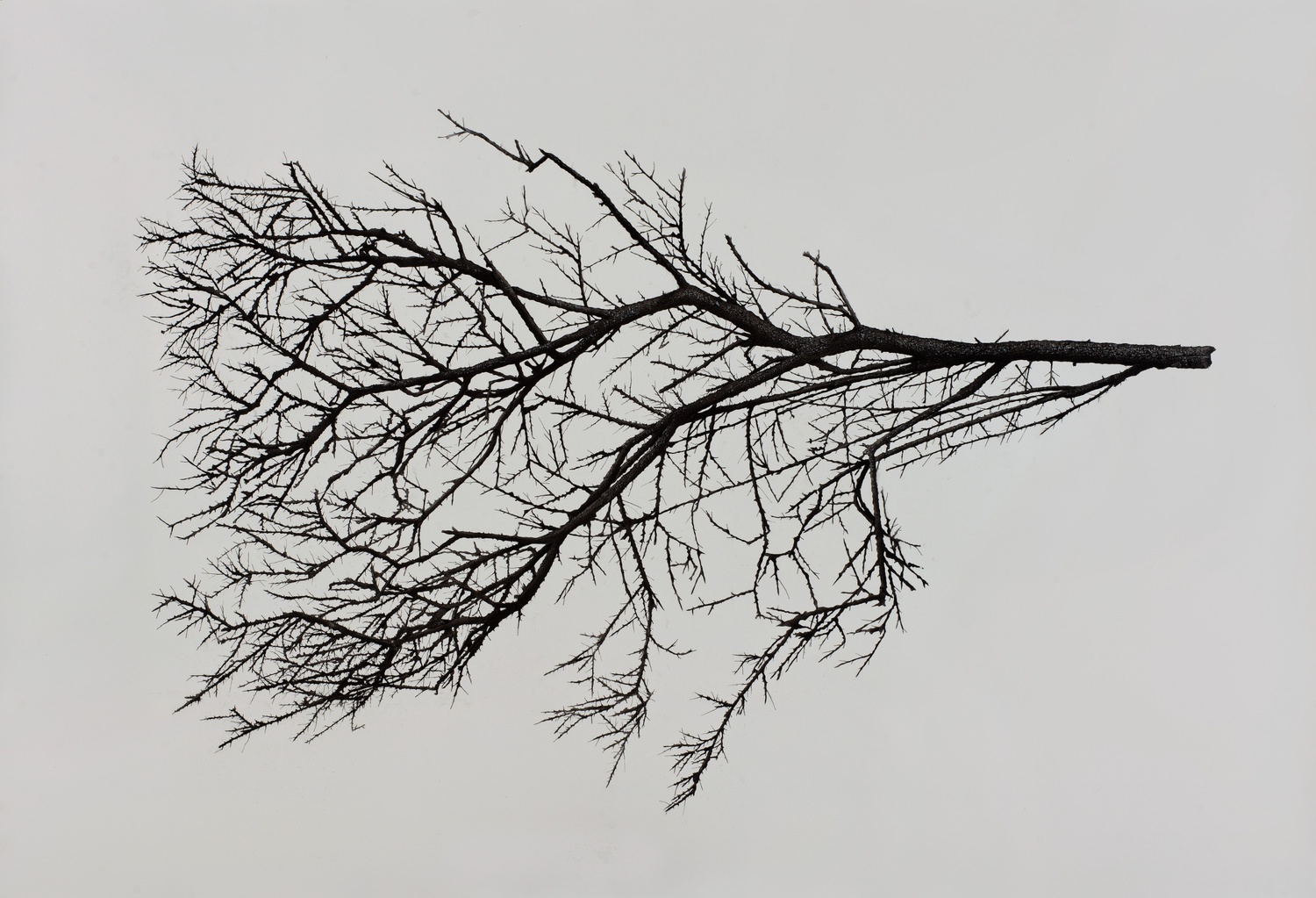
Musawir Shabbir’s drypoint etchings merge his own portrait with that of abandoned animals, collapsing species boundaries through a shared sense of isolation. His visual empathy turns the dog, historically both companion and outcast, into a stand-in for human precarity. The works feel like whispered self-portraits, as though drawn from the fragile threshold where identity dissolves into reflection.
Seema Nusrat’s acrylic-sheet sculptures, derived from urban barriers and security architectures, are some of the exhibition’s most analytically charged works. Their aesthetic clarity belies a commentary on the militarized city, Lahore’s barricaded psyche transformed into soft-spoken geometry. The works enact a kind of conceptual judo: converting the heavy apparatus of control into translucent minimalism.
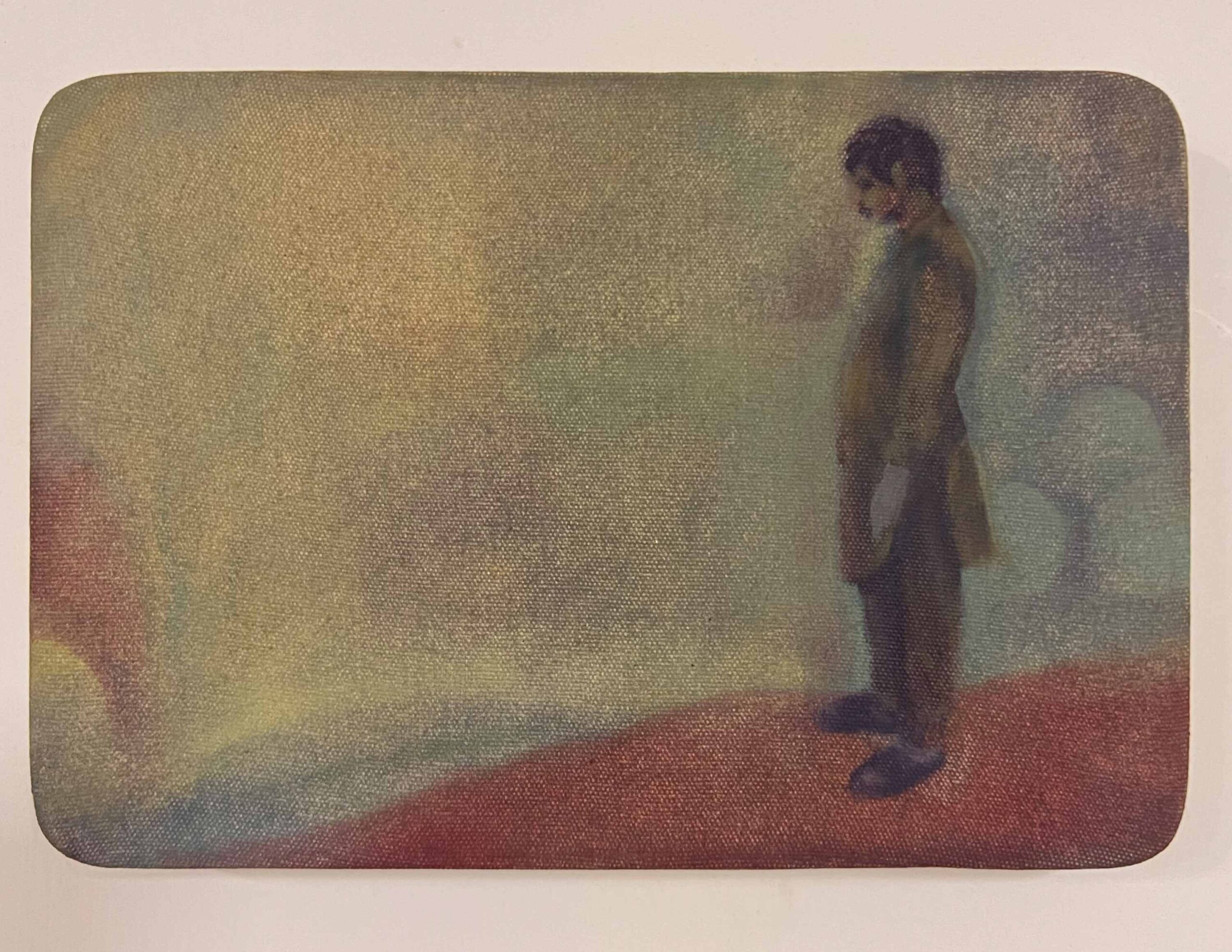
Inaam Zafar’s oil painting, small and contemplative, offers a counterpoint to the show’s more conceptually dense works. His gestures are modest but intentional, hints of narrative suspended in thickened paint. The canvas acts like a quiet pause midway through the exhibition.
Ashkan Sanei’s meticulously assembled paper mosaic is both homage and hallucination: Lahore seen through the eyes of a visitor who reads the city as a garden of intricate detail. The layered Pakistani papers mimic miniature conventions, but in expanded, almost architectural form. His work underscores how the gallery’s transnational dialogues have begun taking root.
The Folly diptych is a study of decay through tenderness. Dry flowers, vernacular archives, found textures: these materials are less collage and more memory sediment. Sahyr Sayed’s compositions assemble domestic remnants into fragile monuments, works that simultaneously cohere and disintegrate.
Yawar Abbas’s painting leans toward dreamlike perception, a landscape slipping into pseudo-abstraction, suffused with colour and movement. His artist statement gestures toward altered states; the painting follows through with optical drift.
Nausheen Saeed’s sculptural slabs of reinforced concrete resemble archaeological fragments — maps of places that may or may not have existed. Their rough surfaces resist nostalgia, insisting instead on the weight of material memory. The slabs feel unearthed rather than crafted, as though they have arrived carrying secrets.
Rehana Mangi’s Garden Series stitches human hair into charsooti cloth, turning the most intimate of materials into a meditative surface. Her practice challenges what counts as permanence, using fragility to build endurance. Hair; that which is shed, discarded, forgotten, becomes a script for presence.
Sana Zaidi reclaims the scribbles of her children as co-authors, blurring lines between miniature discipline and domestic spontaneity. The works embrace unpredictability, transforming the home into a site of artistic method rather than interruption.
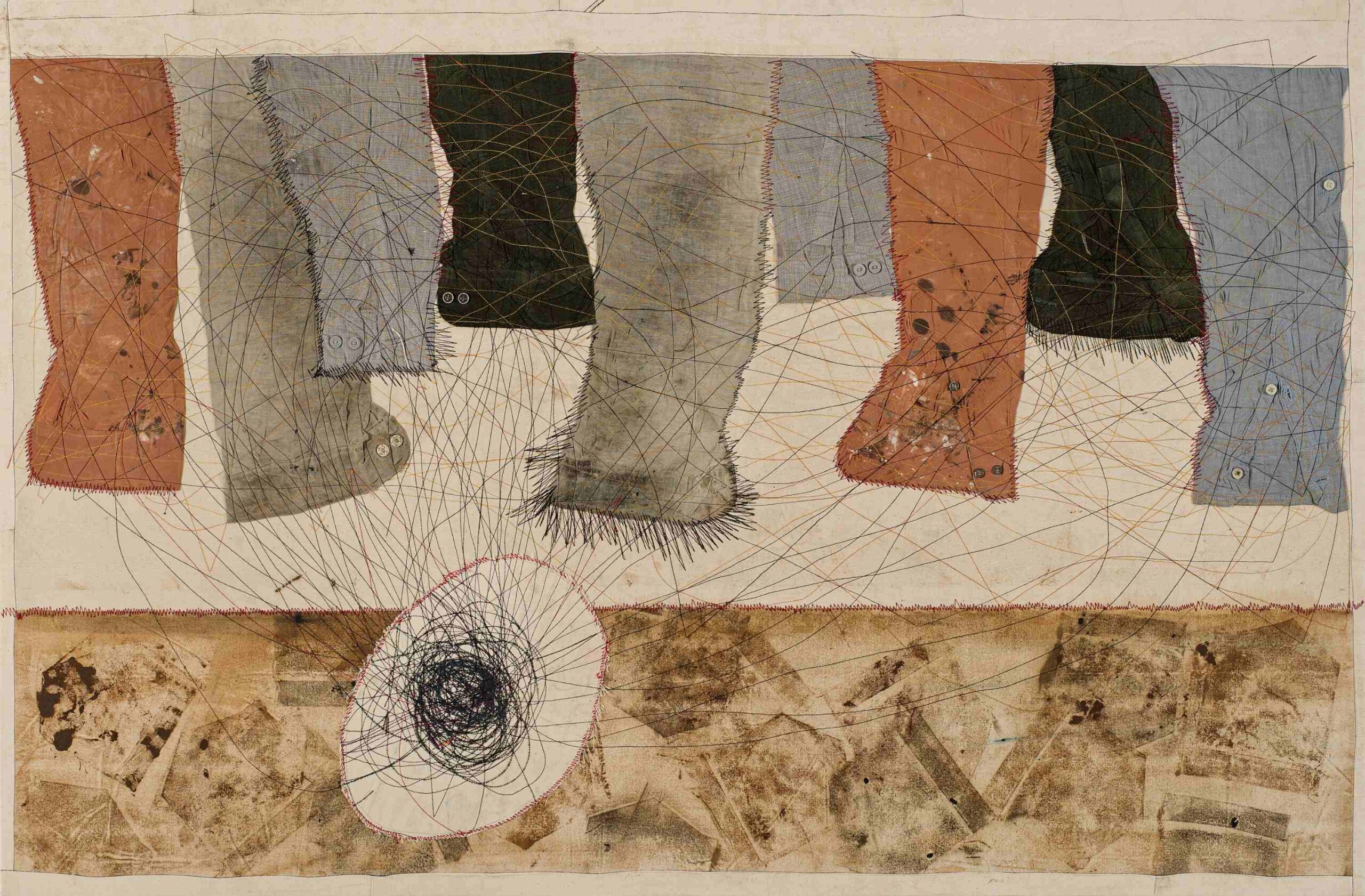
Attiya Javed’s mixed-media works articulate trauma through transparency, thread, and rupture. Her titles, The Language of the Wound and When the Thread Learned to Bleed, frame the pieces as metaphors for emotional thresholds. These are works that pulse, refusing closure.
Seen together, these works reveal a year’s worth of aesthetic and conceptual risk; all carried gently, and sometimes mischievously, by a gallery that looks like a white cube but behaves like an experiment in progress.
Another Milestone reads, ultimately, like White Wall Gallery’s own thesis:
that the white wall, long associated with purity and commercial neutrality, can be reimagined as a site of dialogue, challenge, intimacy, and thoughtful disobedience.
The gallery may be only one-year-old, but its walls; ironically, defiantly white, have already learned how to speak.
But Another Milestone does not end in Lahore.
As if performing its own metaphor, that the “white wall” need not be static or territorial, the exhibition transforms into a travelling show, crossing borders to open in Dubai under Mussawir Contemporary, a newly founded gallery located near the city’s creative nerve centre.
And here, the story expands.
The exhibition’s journey across cities and contexts reveals something unexpectedly poetic: a “white wall”, often accused of neutrality, stasis, and elitism, can indeed move, adapt, translate, and carry stories across borders.
This is the paradox made manifest.
The white wall, once a symbol of stillness, is now in motion.
And it speaks; in Lahore, in Dubai, and everywhere it travels next.