In the corner of my garden lives a pomegranate tree quietly growing next to a sweet pea vine, a lime tree, a citrus tree and shaded by towering date palm. This winter, though, was the first time I noticed how truly bare these fruit-bearing trees can be during their seasonal hibernation.
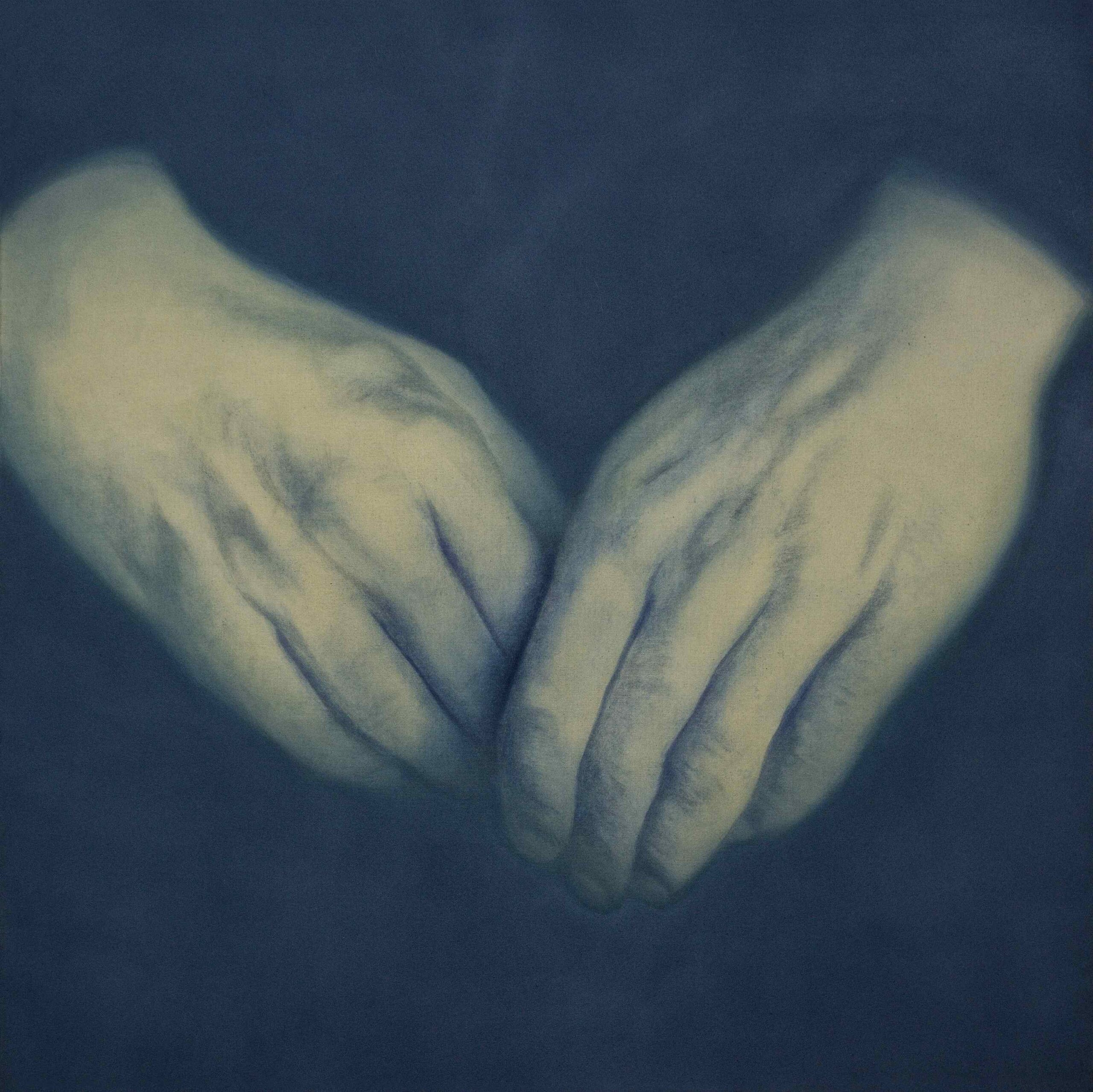
Last December, as I stepped up to inspect the pomegranate tree, I saw, as if with new eyes, how withered the winter branches are, how bare and spare, spreading in various directions like veins on emaciated, aged hands. It looked old. Old—yet, it is barely more than an infant, only three years since it was planted. No further attention was paid till a few weeks ago, when a green glint caught my eye, and stopped me in my tracks.
Leaves.
Or, rather, the beginning of them. A late afternoon spring sun was bouncing its rays off impossibly small leaves that had pushed themselves out of empty branches, covering the tree in blink-and you-miss it foliage. On a chilly February evening, the pomegranate tree decided it needed to teach me the miracle of life anew. Much is made of the miracle of animal life; more should be made of the miracle of plant life, as it is hard not to be entranced by this most elemental process once you begin to look. Now imagine, what a forest can do.
It is no surprise then that Karim Ahmed Khan, who comes from a land of ancient forests, has a practice that is so deeply attuned to the life cycle of trees, a practice that is moved by the destruction of this life through manmade means. And one that seeks to find meaning and magic amidst this chaos.
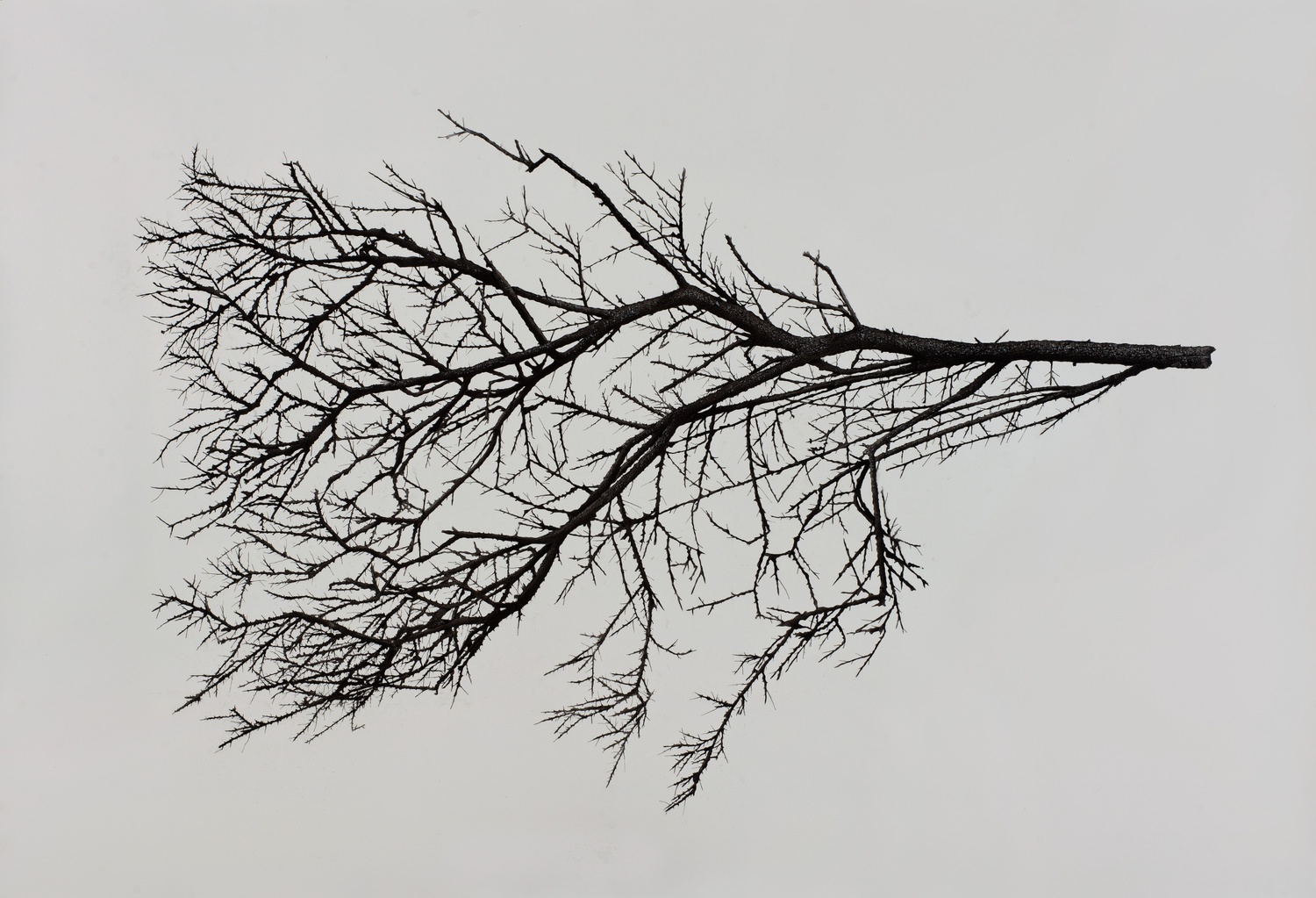
I first came across Karim’s work at the Lahore Biennale 03 (2024). A solitary fragile hand of a branch reached out across a white background. What I initially mistook for a photographic study turned out to be a charcoal one. It hung against barren concrete walls—the scene reminiscent of a dystopian room where the remnants of a prior civilisation and its plant life are only found in art. A piece framed as a promise of future and return.
And Yet, Green showcases his continued preoccupation with the arboreal world: its birth, its natural and unnatural demise, its resurrection. Karim is particularly sensitive to the plight of our forests, whether through direct human-led deforestation or as a result of climate change. This current body of work is an exhortation to reassess our role in this destruction and contemplate a return to more harmonious modes of coexistence with the natural world around us.
His site specific installations in Hunza, for instance, where he materially forges connections between decaying and upright trees through delicate wires and threads, depict the fragility of the ecosystem and our place in it. Looking at the photographs of these works, which are being displayed as part of this solo show, I am also reminded of how trees ‘converse’ with one another and ‘care’ for each other using
underground mycelial networks—a fact we have only recently begun to fully understand, thanks to the work of forest ecologist Suzanne Simard. Karim’s tree-thread installations and sculptures, a nod to his earlier training in sculpting, become two-pronged then: a warning to reconsider our precarious balance with nature, and a vision of the healing power of nature, not just figuratively, but quite literally as well.
The works on paper, which form the majority of the show, expand upon the artist’s meditative concerns. Created primarily using charcoal, with gouache making an occasional appearance, they are depictions of distinctly characteristic branches, leaves and twigs, echoing the visual and conceptual vocabulary of the work I initially encountered at the 2024 Biennale. Some of the pieces are of solitary branches, plaintively
suspended in stasis, while others are of scattered twigs and leaves. Karim renders these in an almost clinical manner; the effect is one of profound loss and grief. Viewing these works is akin to looking at carefully arranged forensic displays of archaeo anthropological objects—or criminal evidence. The crime: wilful ecological destruction. There is also a layer of reverent curiosity at work here. Karim’s broken twigs, empty branches and wilting leaves also recall scavenged, foraged objects—the sort that you collect while walking through a forest and proudly display on your dinner table. What is worrying is that they could very easily represent reliquaries in a dystopian future devoid of our arboreal companions.
However, Karim’s is not a body of work without hope. The couple of works that depict leaves sprouting on branches further signify this hope; they spotlight the miracle of life that so transfixed me in my own garden, and the healing and revivification properties of nature that occupy the artist’s mind, pointing towards a future that can still be reclaimed from the clutches of runaway capitalism.
Using trees as a motif to explore his concerns allows the artist to make emphatic statements about the global catastrophes in the wake of climate change. Their significance in various cultures, mythologies and literatures is widespread: from Yggdrasil to the Eden Tree of Knowledge; from Tolkien’s White Tree of Gondor to the Han Kang’s Yeong-hye’s tree transformation; from Japanese Shinrin-yoku to Scandinavian Friluftsliv. Simply put: trees represent life, their absence, death.
Karim Ahmed Khan in this show implores us to reckon with our participation in the ongoing assault on nature. There is helplessness in the aftermath of violence, but there is also hope in the reversal of our misfortunes. As I look to the pomegranate tree in my garden, now dense with foliage, teeming with life (seen and unseen), I think of these words by Larkin:
Begin afresh, afresh, afresh
Hassan Tahir Latif