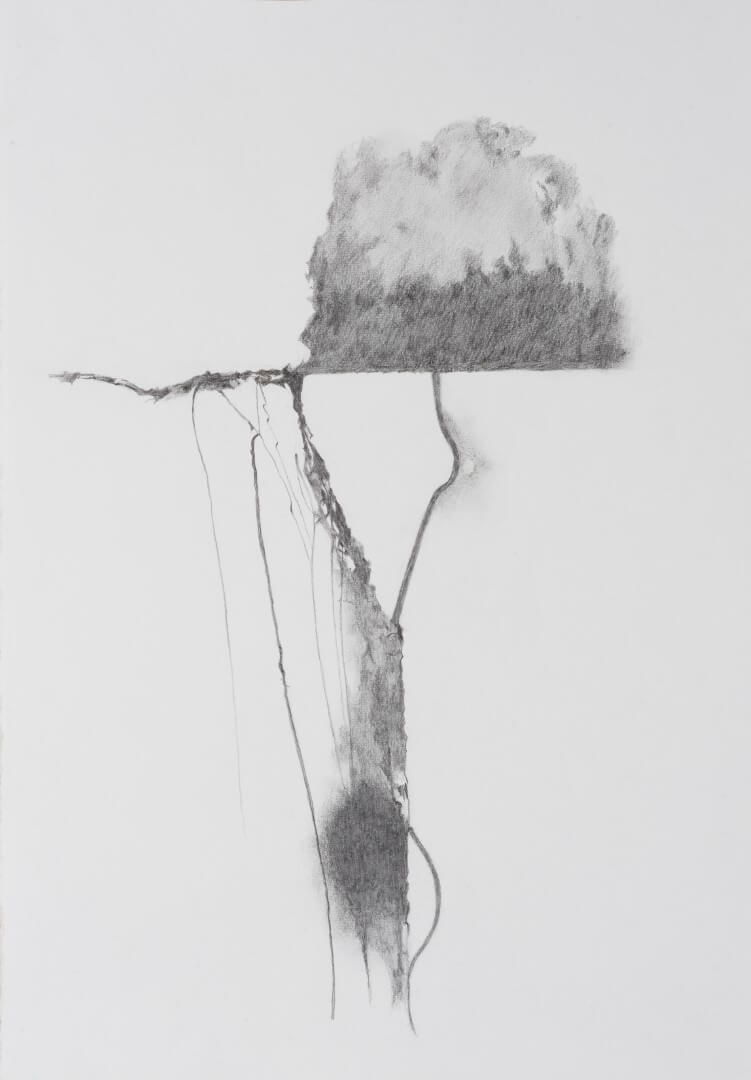
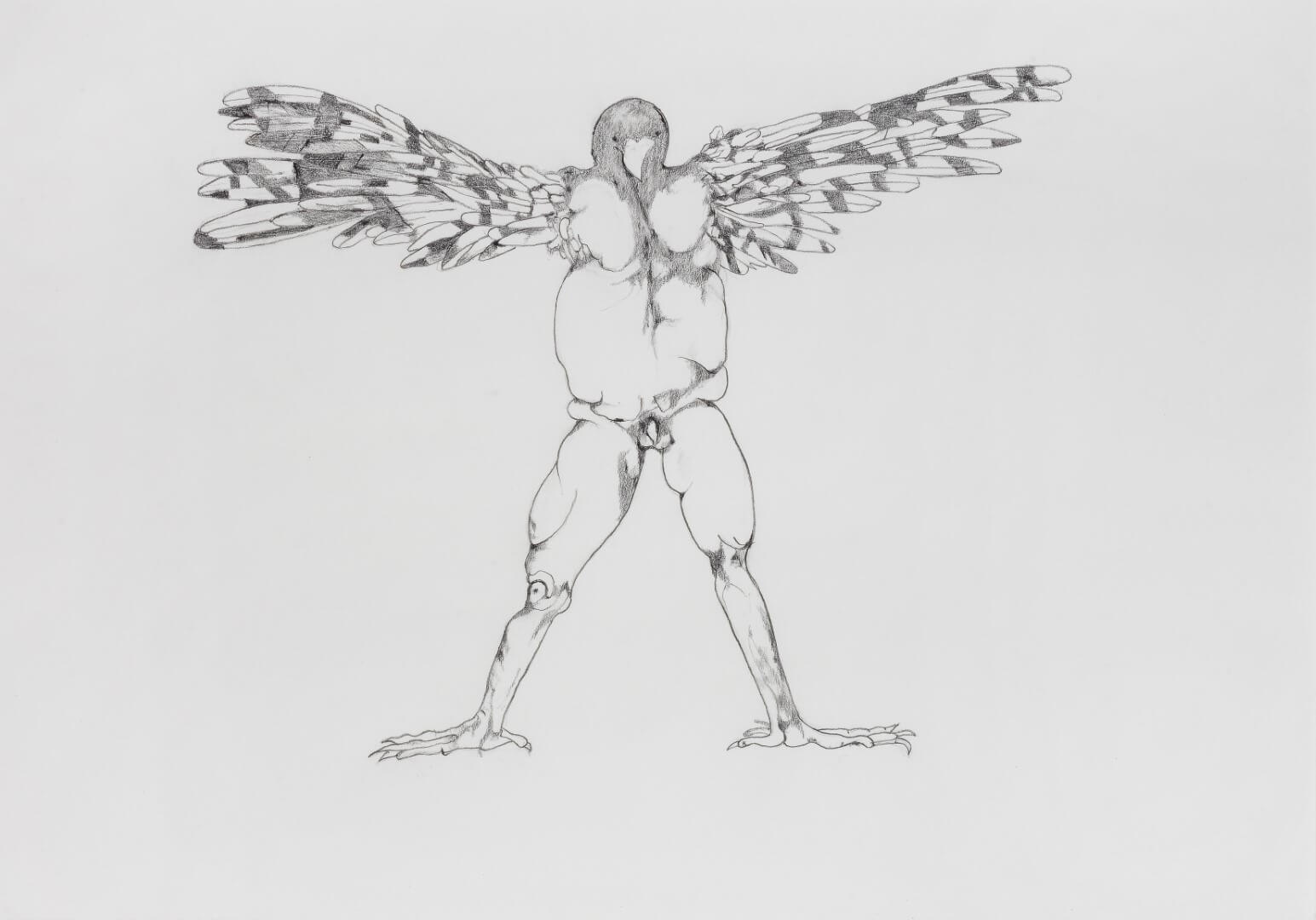
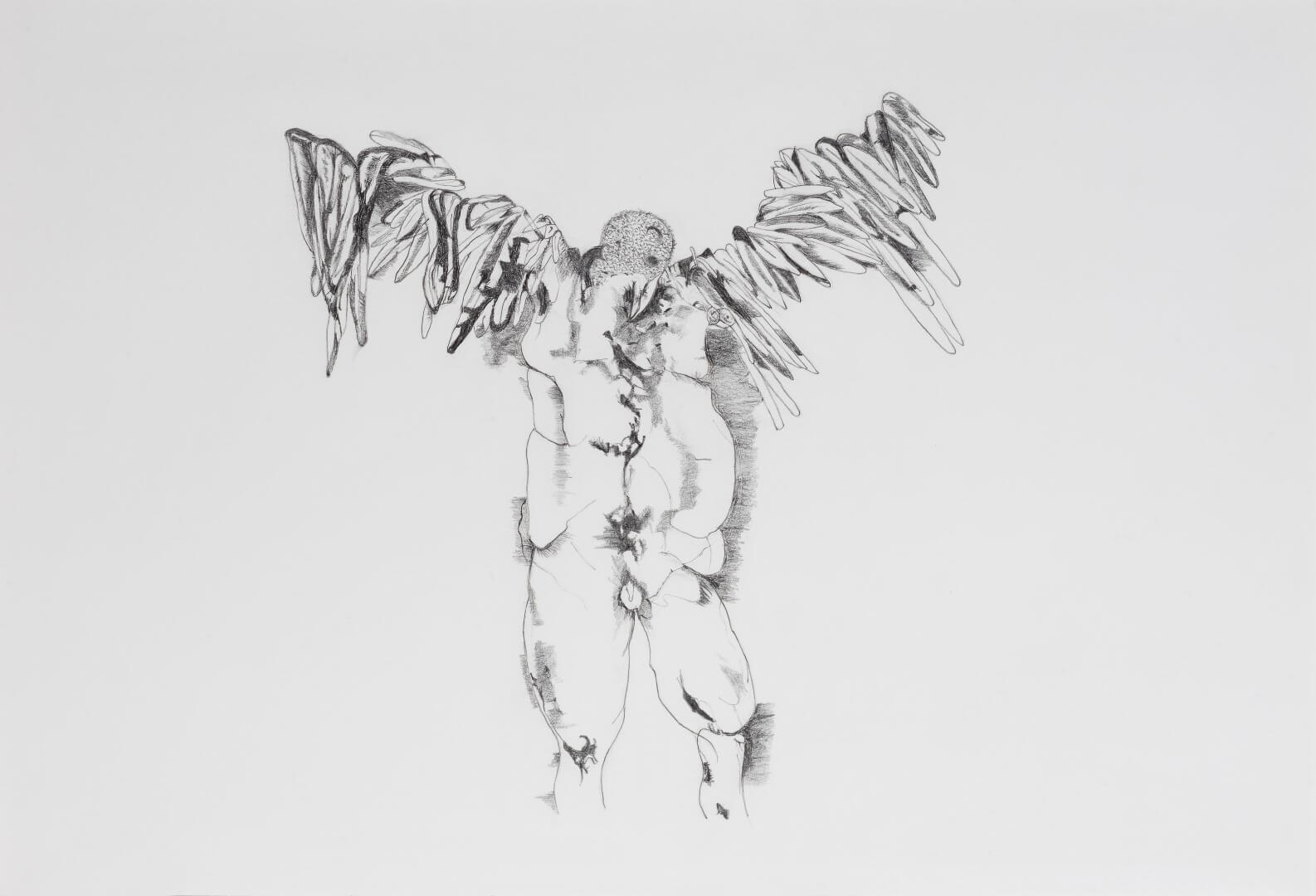
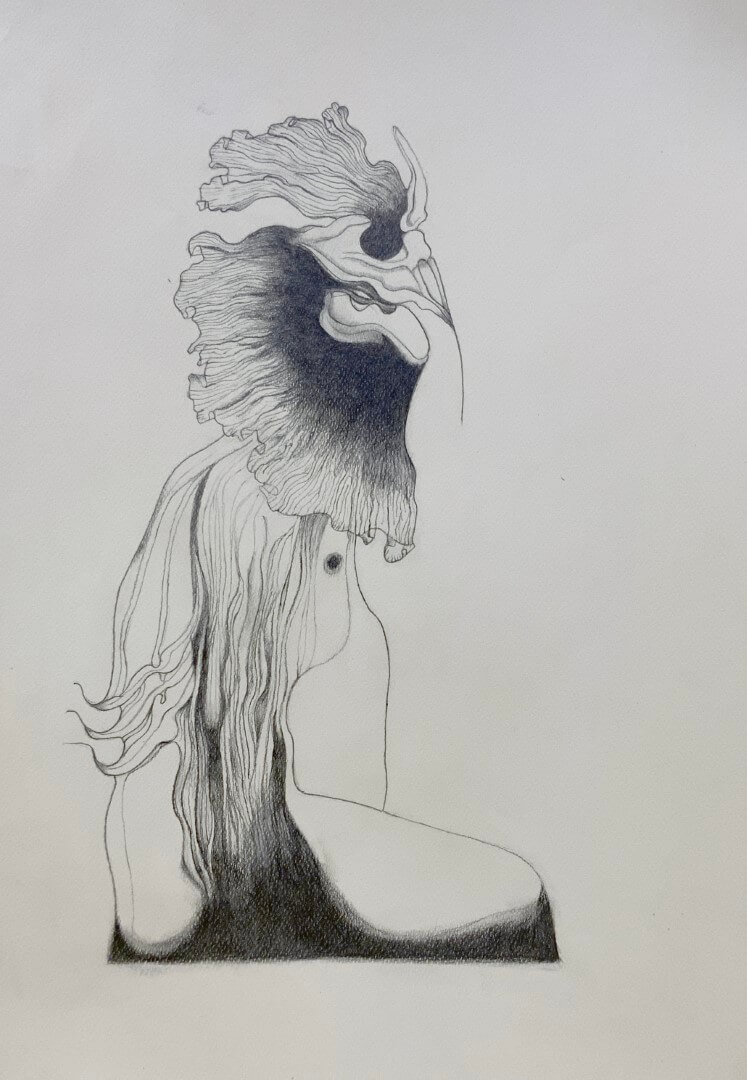
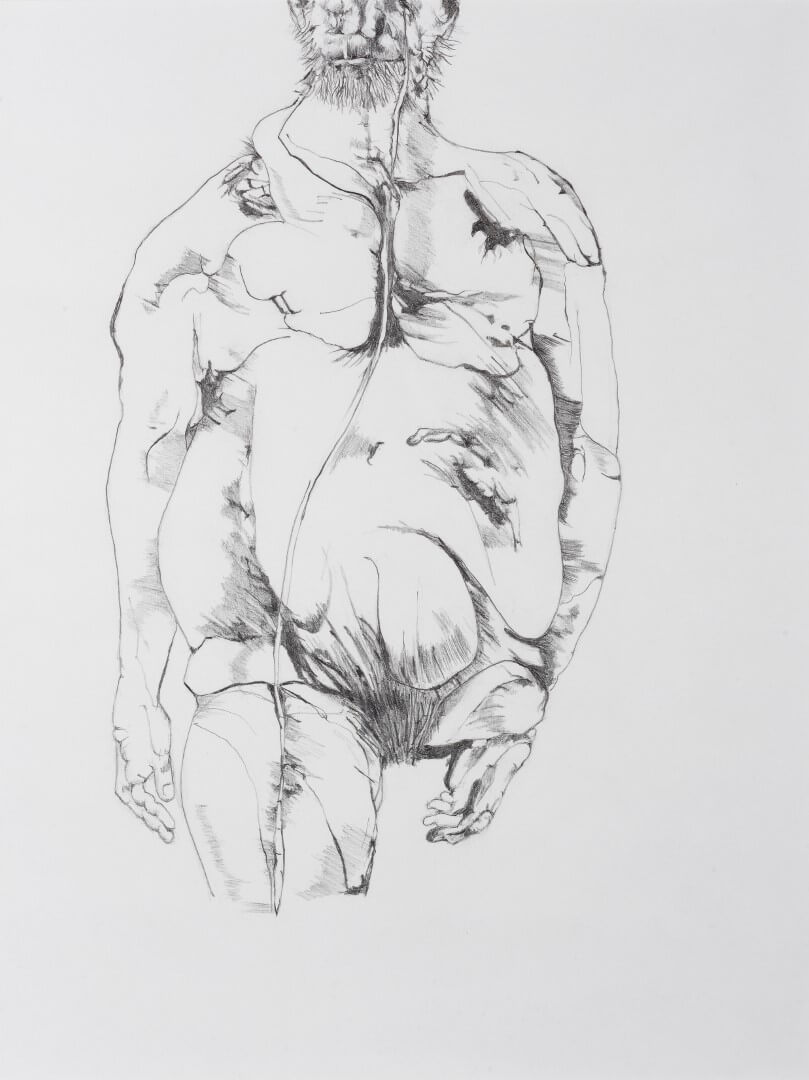
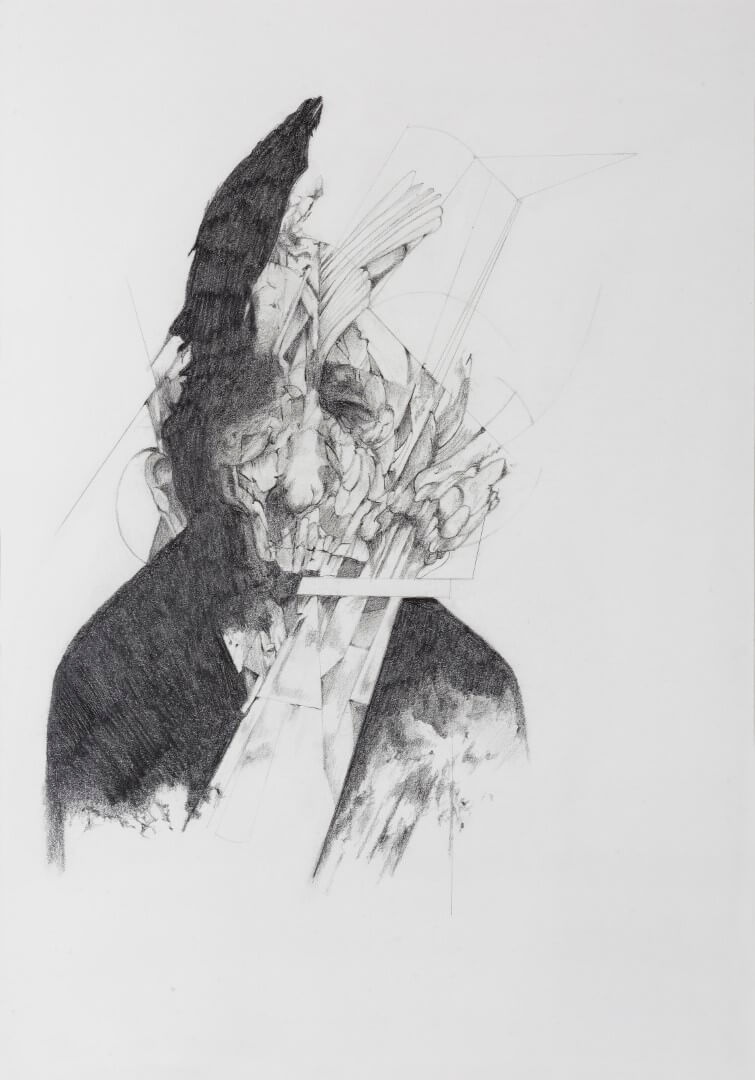
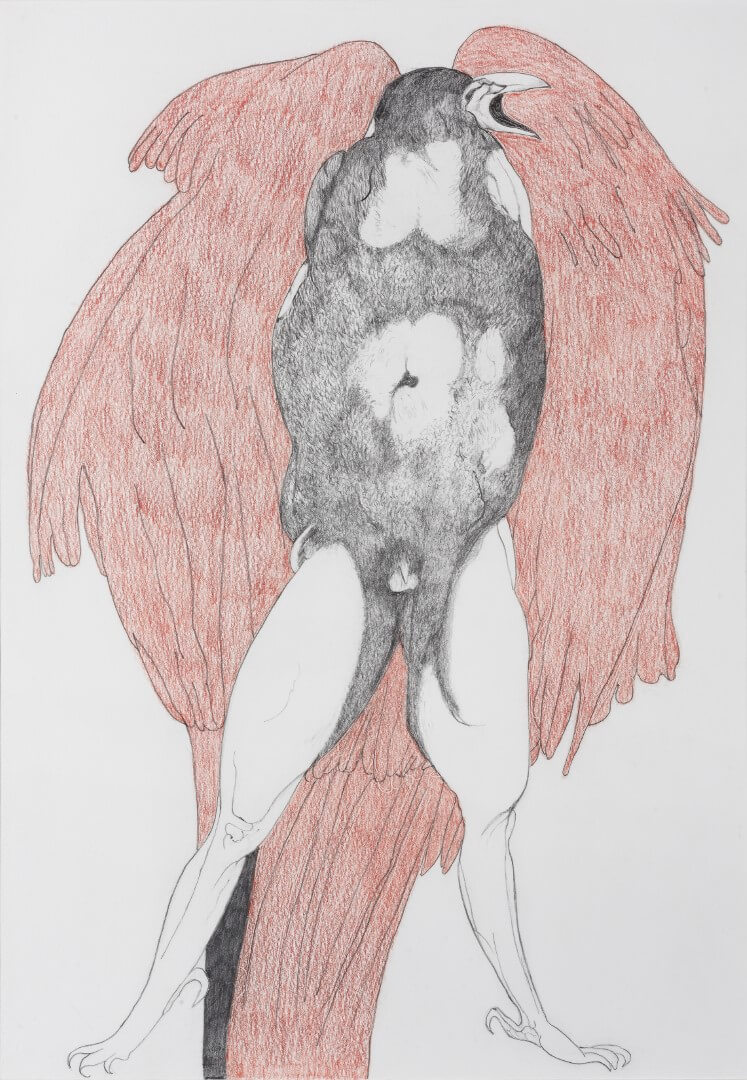
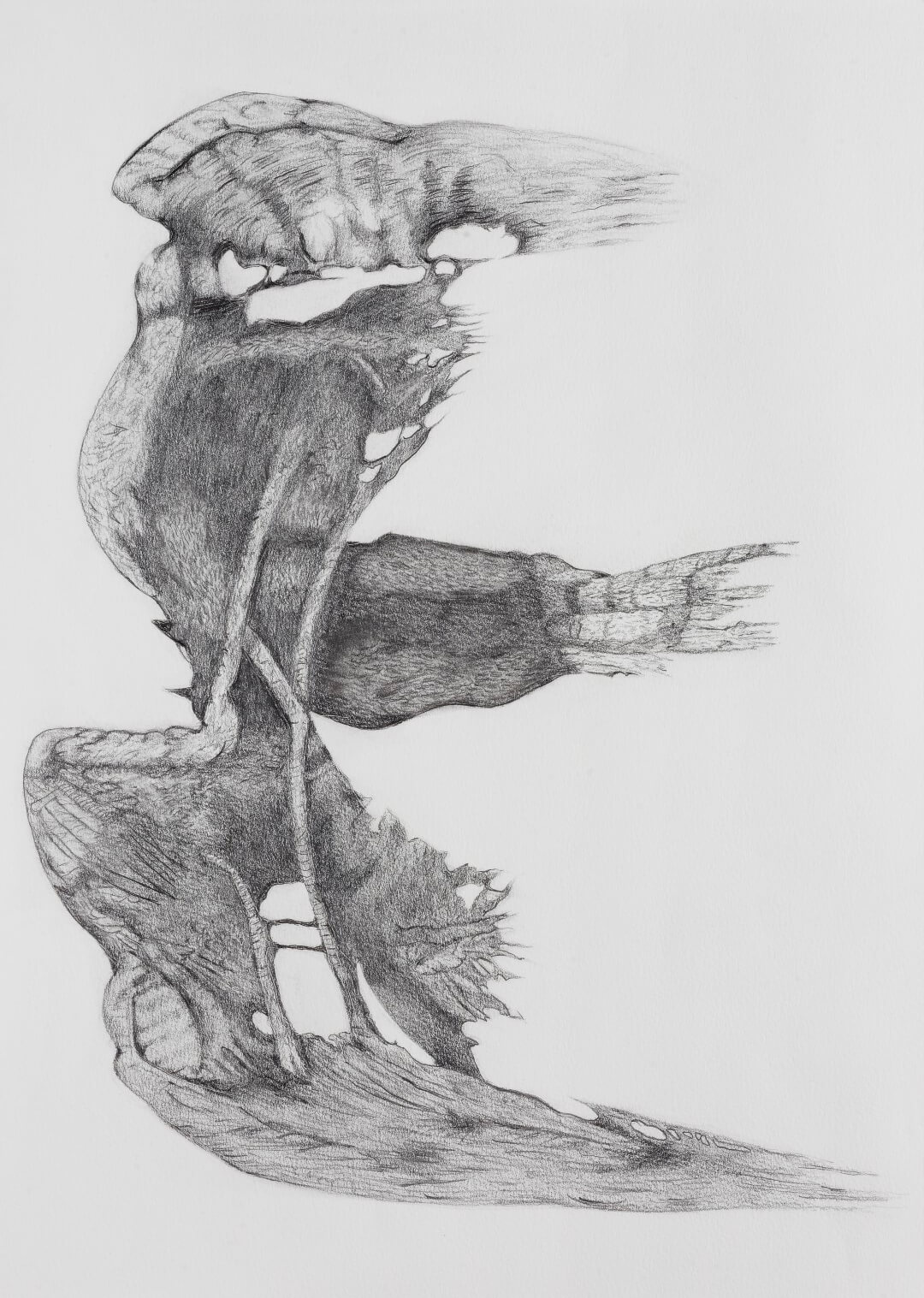
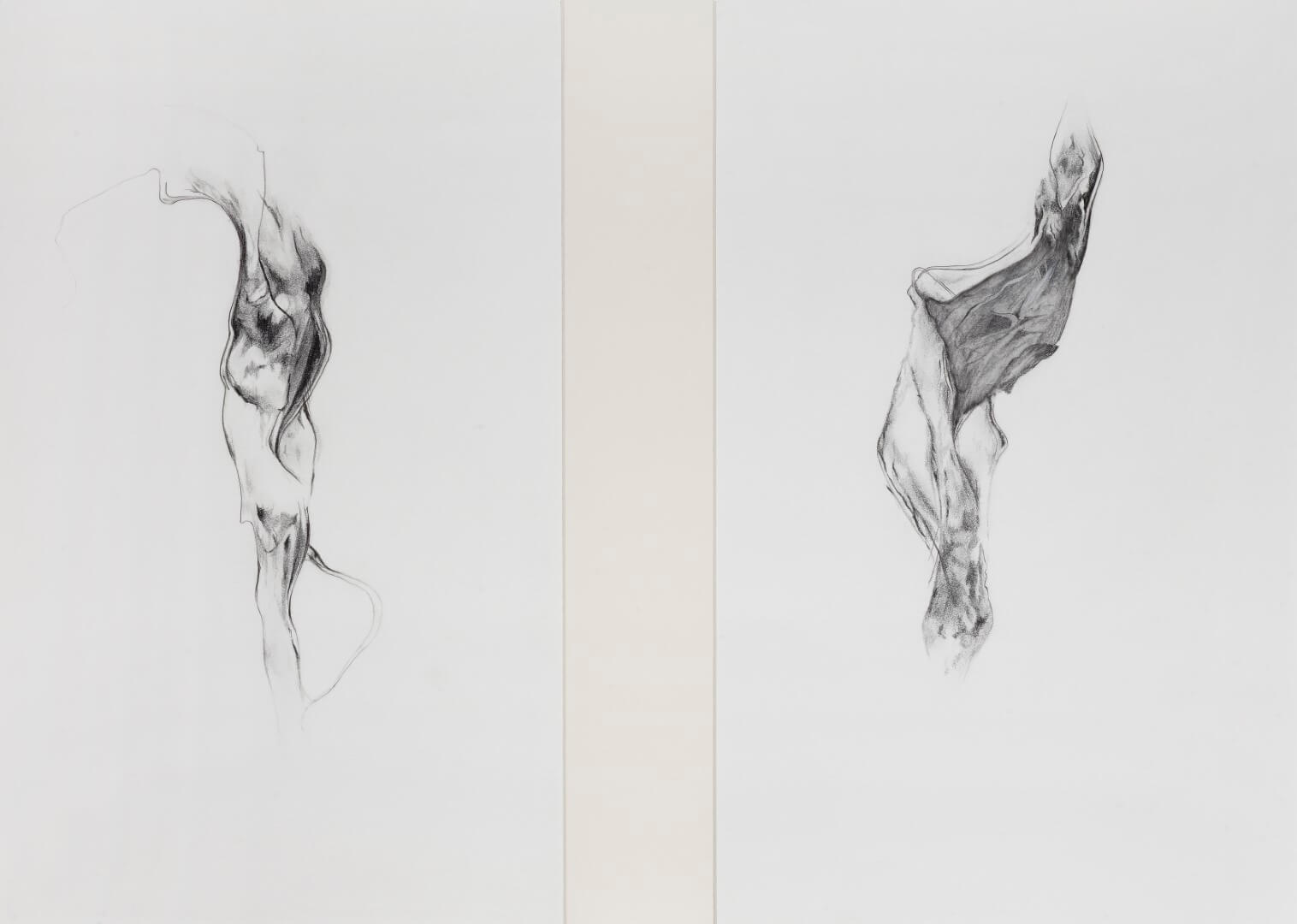
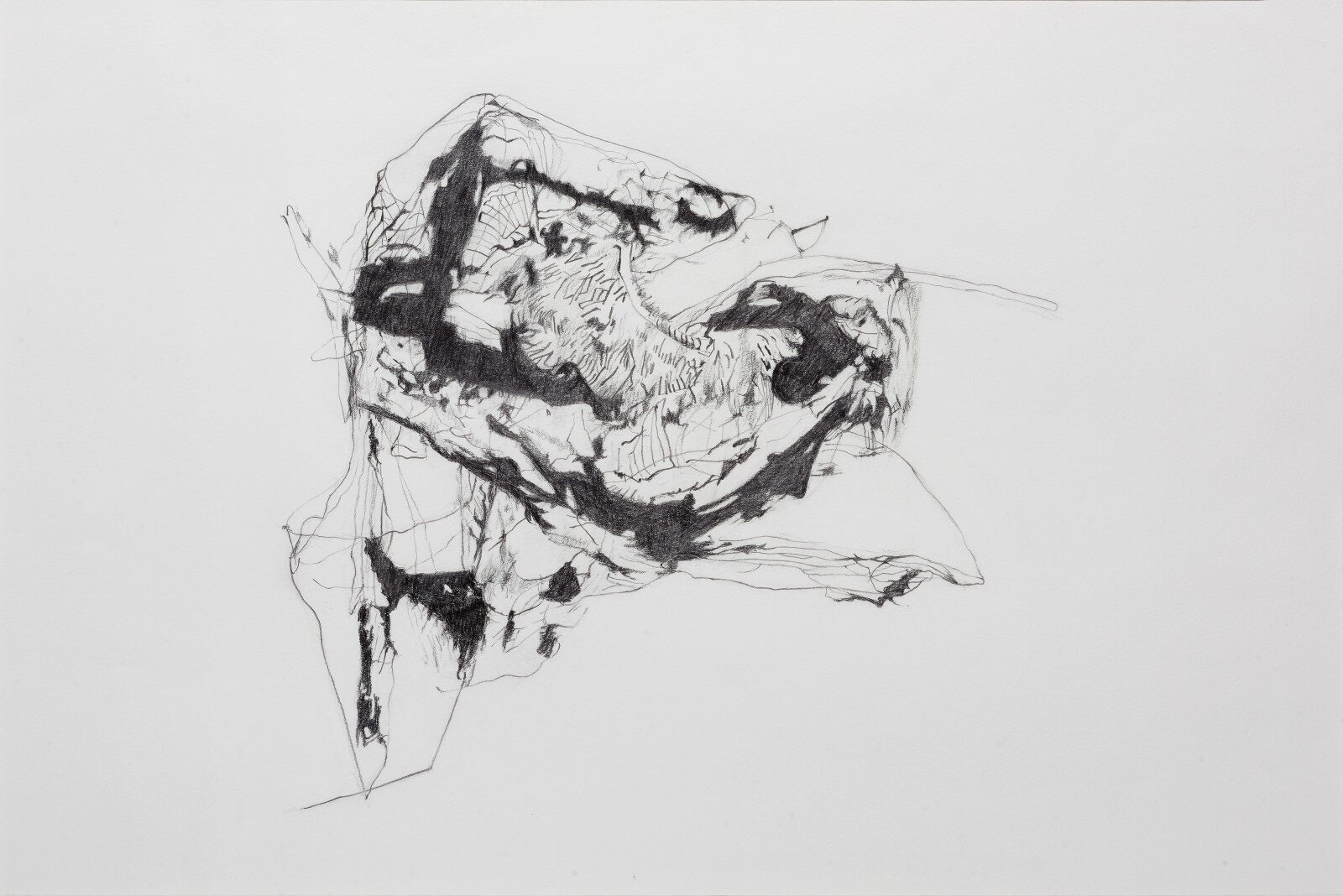
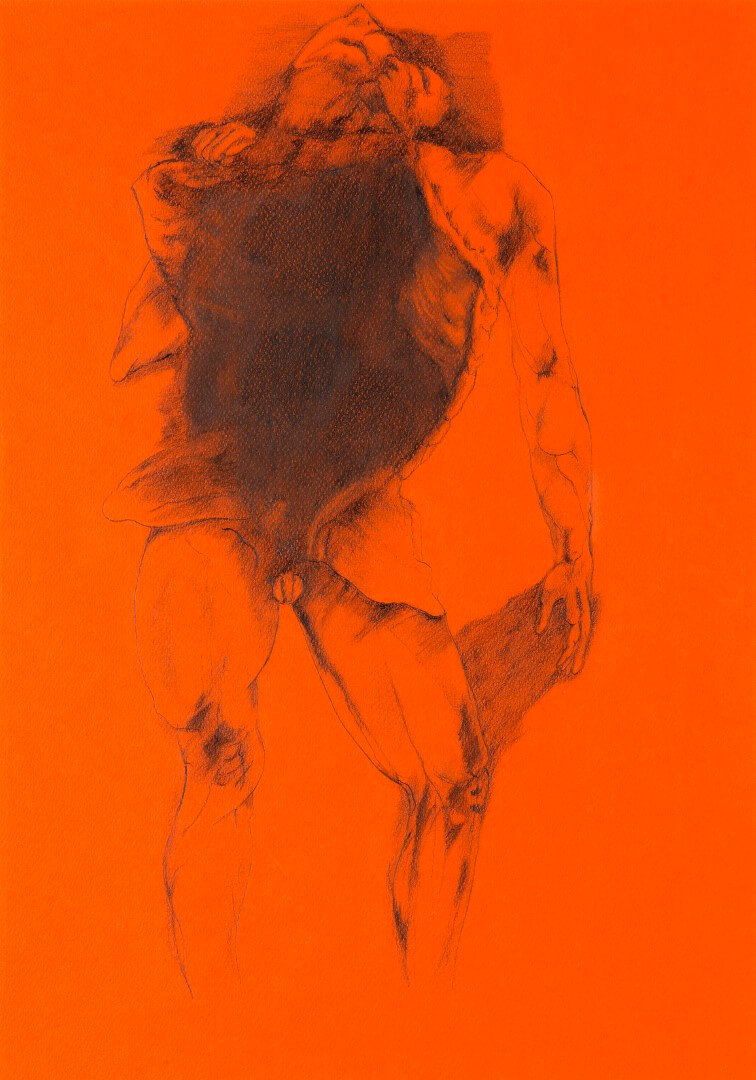
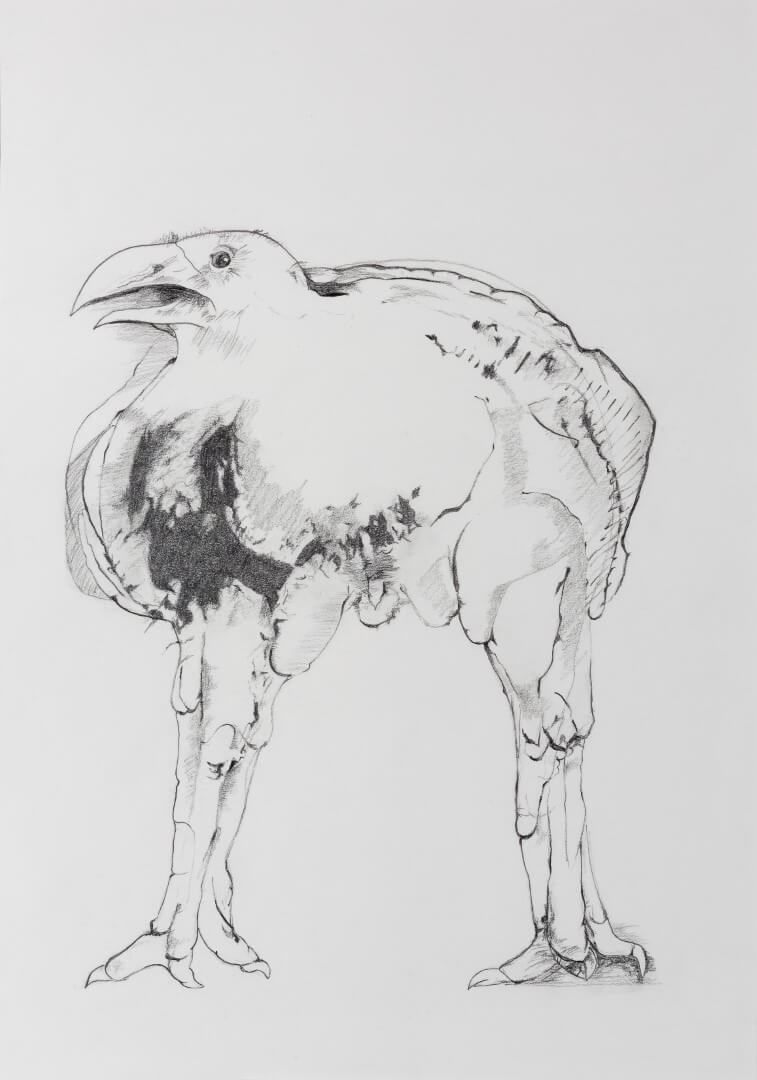
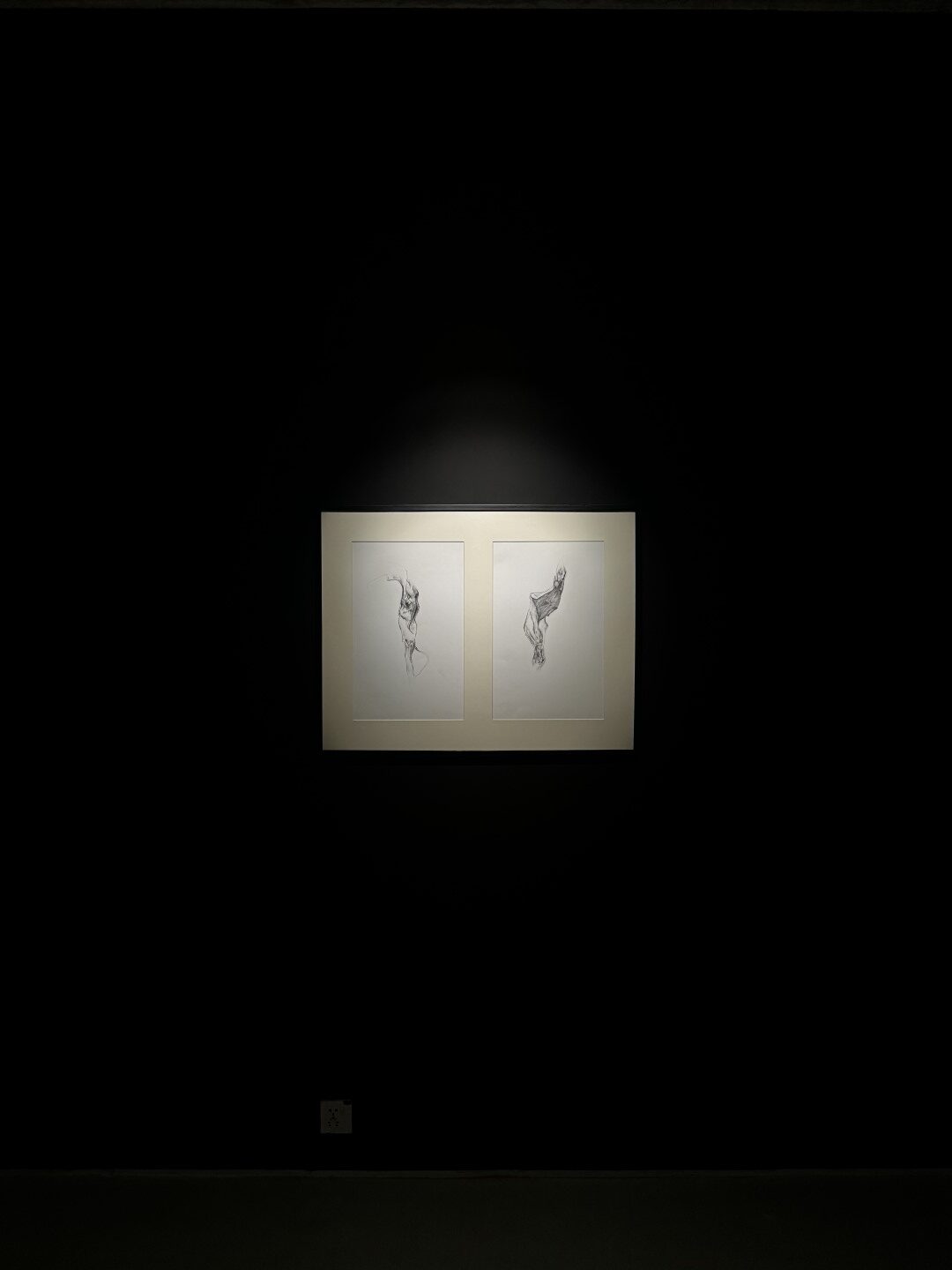
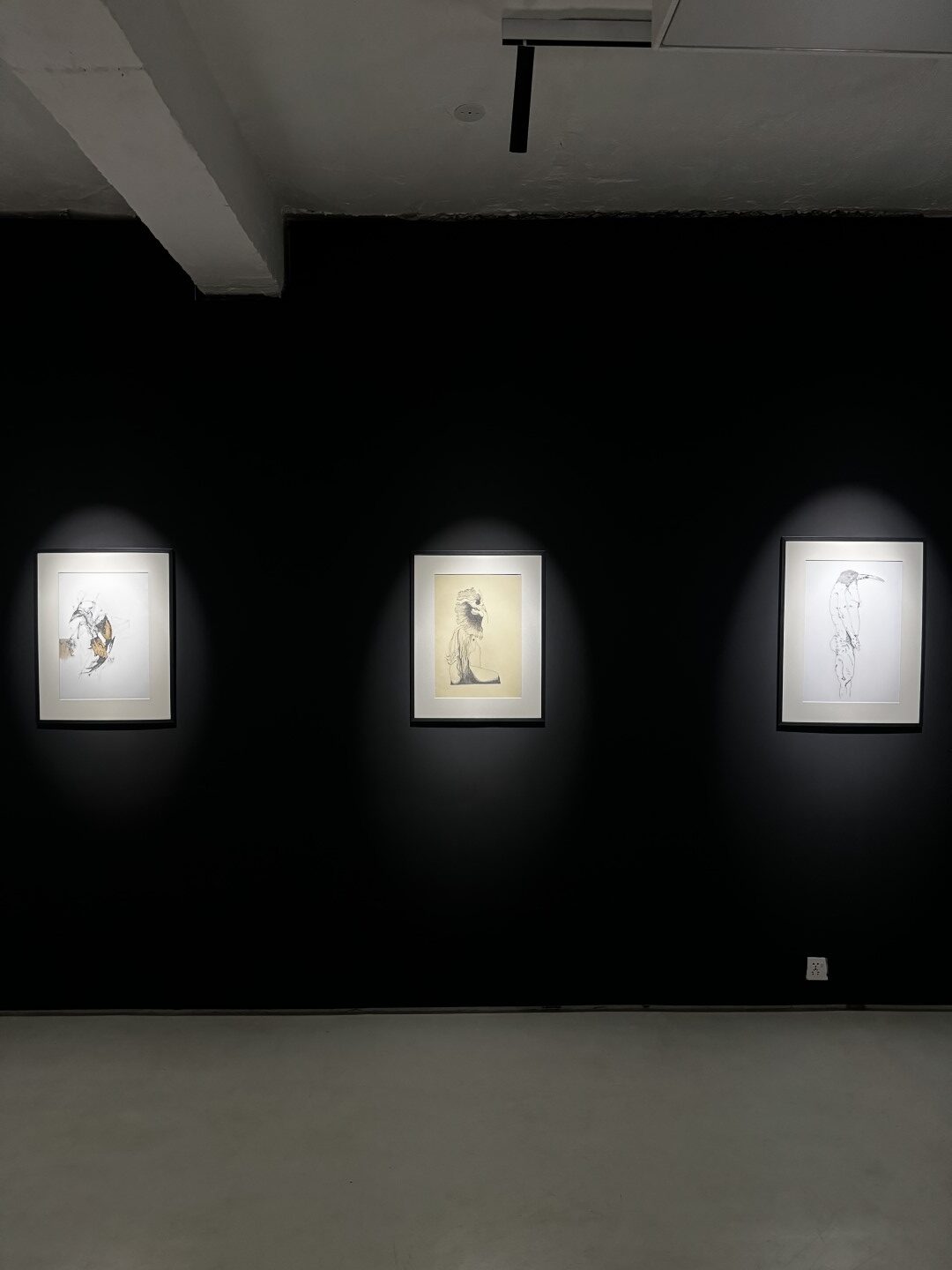
Learning to listen to the myriad other voices beyond the human, my recent suite of drawings titled, Scarecrow (an effigy shaped as a man to scare the birds away) is an effort to explore the ways in which language and culture are influenced by the non-human, and more-than-human, voices that permeate and shape our world.
What is it that makes Crow so contagious an image? What we often meet staring back at us from the crow’s ponderous, guilty face includes a burgeoning sense of unease and/or dislocation. The ecological thought concerns the all-pervasive entanglement of our immediate experience within a mesh – a strangely ungraspable web of relations wherein both other beings, and our own interconnected fields of experience, are deeply haunted by a sense of otherness.
In both art and life, the real, the tangible has come to mean to me the weight of our common suffering, for which the only whole and adequate symbol is the human form. The human form, however (as it appears in my work) is in a highly permeable state of flux, enduring constant incursions by other entities, and undergoing a prolonged, unstable mutation.
The crucial role of art in negotiating this territory right under our civilised feet may turn out to have less to do with objective dissemination than it does with art holding open a space within a dying way of life which had been used to accommodating intensity, shame, abjection, loss; used to welcoming persistent imaginal others to the table, familiar visitors who give tongue to whatever grieving, intractable dilemmas civilised humans find themselves in, unable or unwilling to speak within their death-phobic culture.
My drawn figures are girdled in a continuous silhouette within which form-building and form-destroying lines and blots and smudges and flecks and dashes and fillips and specks and splashes disport, granting meaning and reality to the drawing, or so I profoundly hope.
Distorted and aggrandised, unconcerned with scientific accuracy, while paying attention to the banality of our flesh, there is an urge to transcend it. Man must rediscover man, harried and brutalised, distended and eviscerated, but noble withal, rich in intention, puissant in creative spur, and enduring in the posture of love.
The works are not pretty, they do not lure with a cosmetic placidity. One may be shaken by their probity, how they communicate without a placating negotiation. One must see them on one’s own terms, but when one does, they might resonate with a savage beauty that is inescapable, straightforward and brutal.
Is crow a bad omen? Not quite in the culture that pervades South Asia:
Udd kothey utton kanwan vey
Meray dil da parońa koi na
Tenoon churiyan kyon panwan vey
reads a Punjabi film song.
The crow often augurs the arrival of a stranger or a guest or the beloved. Or does it warn of an impending disaster through its quizzical stare? Maybe that’s what we hear in its unkillable laughter, as it spraddles about, looking for stuff to eat. A curious thought, that nothing ecological crisis might.